



We may earn a commission when you buy through links on this page. It never changes what we recommend. How we pick
On this page9 parts
- Boiling Water Does Not Burn Coffee, but It Can Over-Extract It
- The Water Loses Degrees Before It Reaches the Grounds
- Light Roasts Take the Full Boil, Dark Roasts Ask for a Rest
- Each Brewer Handles Boiling Water Differently
- Three Kinds of Boiling That Get Mixed Up
- Ashy or Sour at a Full Boil? Which Change Comes First
- When the Water Is Not the Problem, and When a Dial Helps
- Switch Off, Wait, Pour, Taste
- Frequently Asked Questions
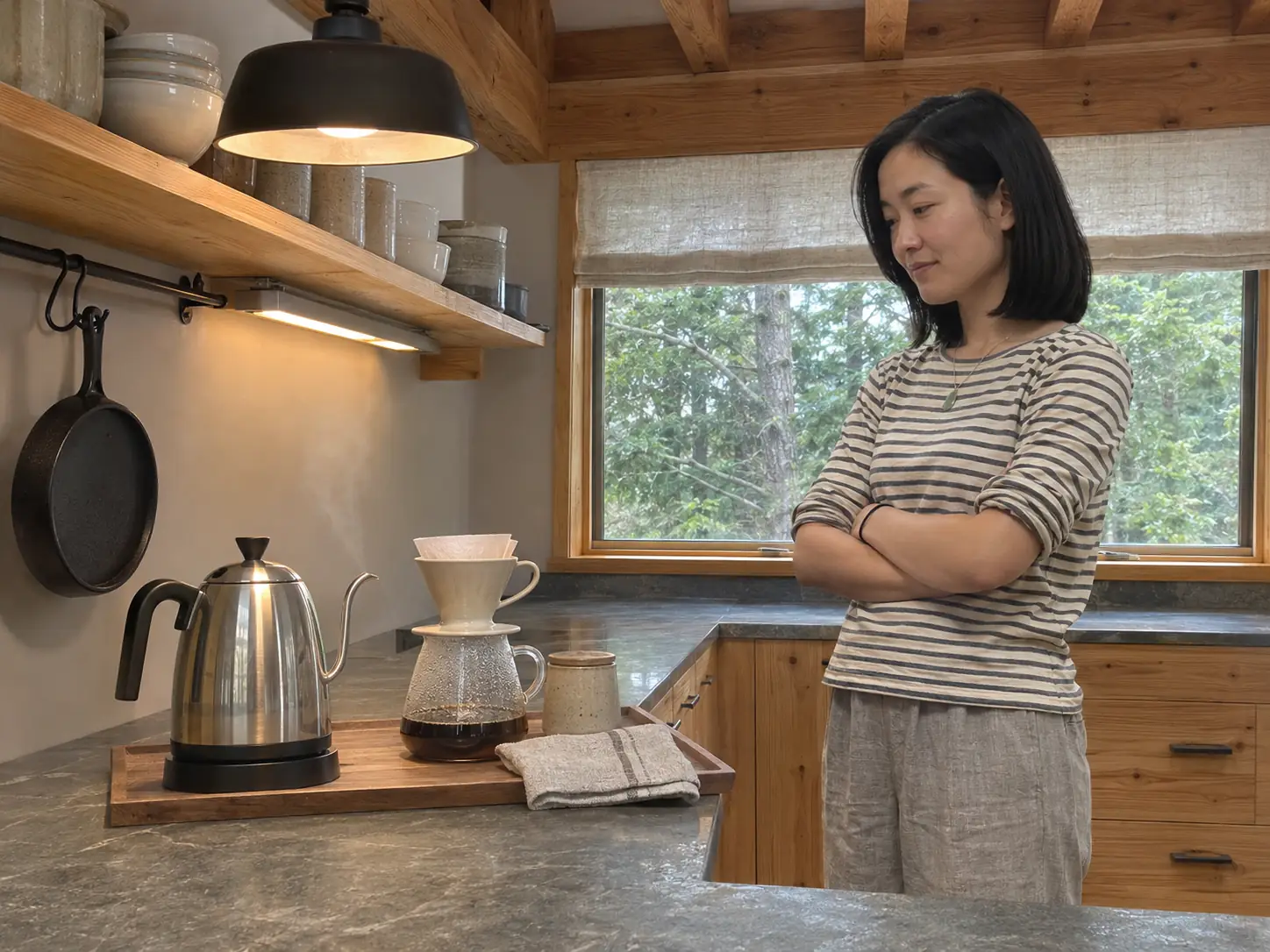
The kettle clicks off, the water goes onto the grounds that second, and the cup comes out dry and ashy, with the same beans and the same grind as yesterday’s round one. So should water for coffee be boiling, or did the boil do something to the beans? The beans left the roaster after passing well over 400°F, so 212°F water cannot scorch what the roaster already took further, and the temperature that matters is the one where the water lands on the grounds, not the one on the kettle. Below you will find what a boil does and does not do, how many degrees the water loses on its way, which roasts and brewers take the full boil, the three different things people mean by “boiling,” which free change comes first when the cup turns harsh, and when the water is not the problem at all.
Quick Answer
No. Boiling water cannot burn coffee, because the beans were roasted far above 212°F, but it can push extraction past the sweet middle, and the water already lands on the grounds near 195 to 205°F. Keep the full boil for light roasts and pour-over; rest it 30 to 60 seconds for dark roasts.
Boiling Water Does Not Burn Coffee, but It Can Over-Extract It
The old warning says boiling water burns the coffee, and yet plenty of kitchens pour the instant the kettle clicks off and never taste a problem. Both can be true, because what water does to roasted grounds is a matter of speed, and scorching has nothing to do with it. This section takes the myth apart and says which way the cup is off when a hard boil is the cause.
What the roaster already did to the beans
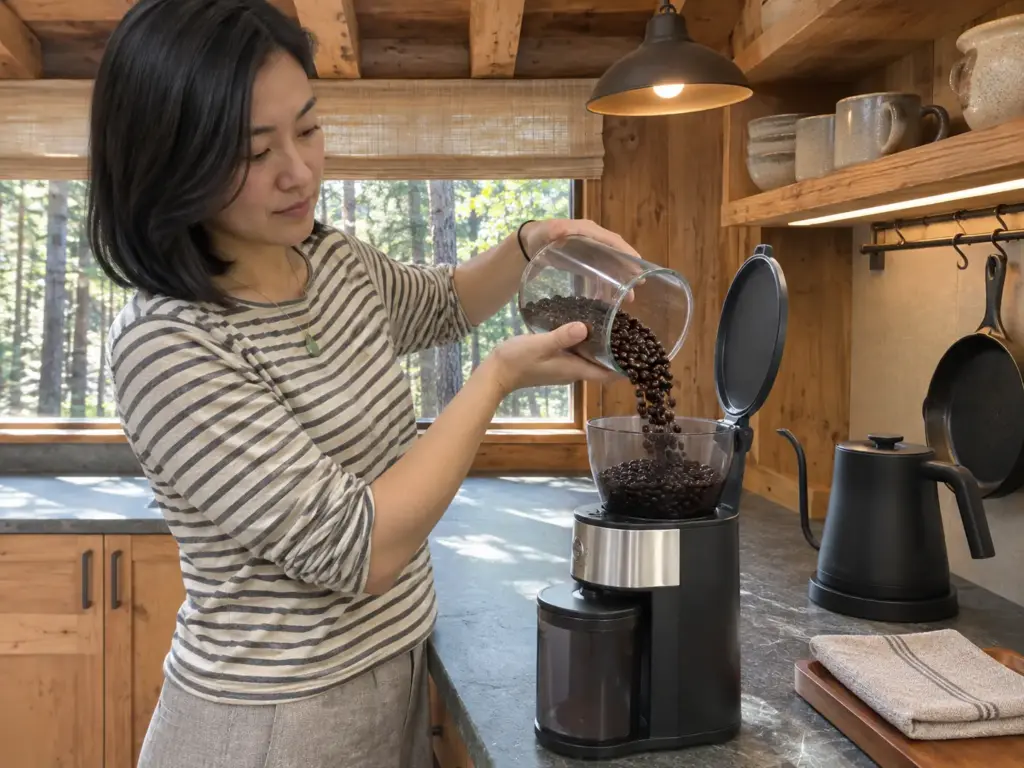
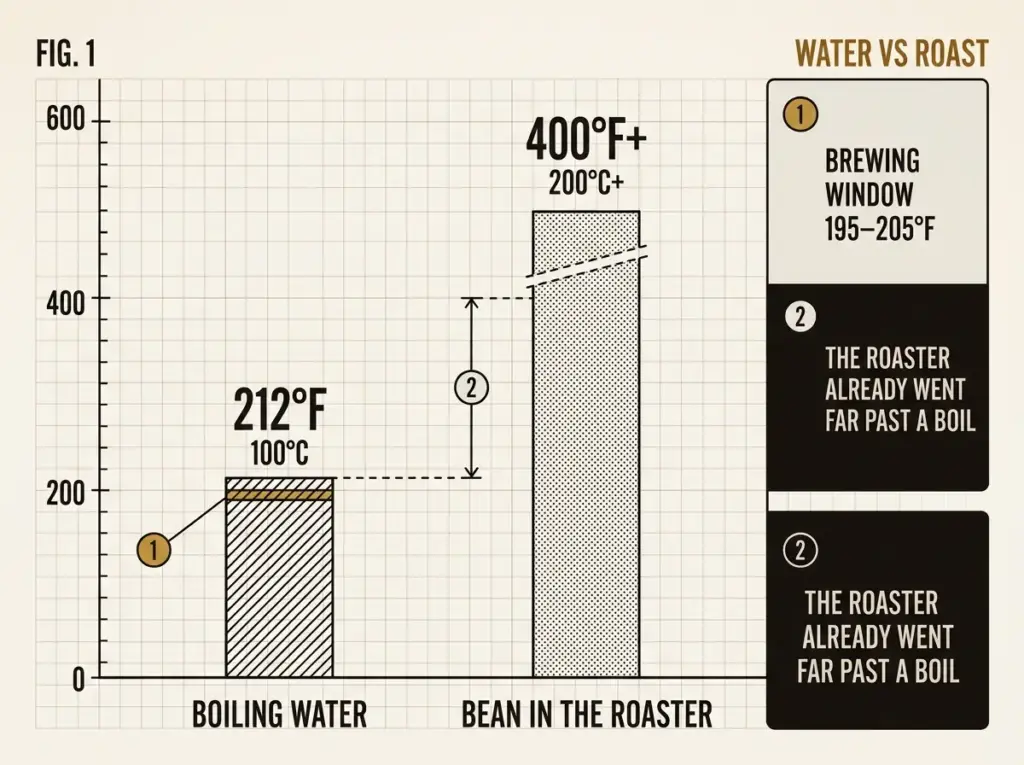
Water boils at 212°F (100°C) at sea level. A coffee bean passes well above 400°F (over 200°C) inside the roaster, so the kettle cannot scorch anything the roaster did not already take further. When a cup tastes burnt, the cause is over-extraction, or coffee that was old before any water touched it; the char was never added at the counter. Same bag, same grinder, same kettle, and the cup that was round yesterday goes dry the week the pour starts the moment the switch clicks: the only variable that moved was the water, and what it moved was the speed of the extraction.
What hotter water changes in the cup
Hotter water works faster. It dissolves more of the grounds in less time, and if the brew keeps going it carries the cup past the sweet middle into the dry, bitter, astringent end.
In work by the Specialty Coffee Association and the UC Davis Coffee Center, a trained panel could not tell cups brewed at 87, 90 and 93°C apart once strength (TDS) and extraction yield were held equal. According to the Specialty Coffee Association’s brew-temperature research, “it’s the destination that matters, not the route you took to get there.” The line is about strength and extraction, and it explains why a coarser grind can do the job a rest off the boil does: two cups that land on the same strength and the same extraction taste alike, however each one got there. Temperature is a lever on speed; the flavor comes from how far the extraction ran.
The direction a hard boil points
A hard boil points one way: ashy, dry and bitter, with a sweetness that goes flat and leaves a dry finish on the tongue. Water that is too cool points the other way, sour, thin and weak, which is under-extraction. The harshness from too much heat tends to show after the swallow, in the way the cup coats the tongue, and the first sip can still taste fine. Naming the direction comes first; the order of the fixes follows later in this guide.
The Water Loses Degrees Before It Reaches the Grounds
The kettle may say 212°F, but the number that counts is taken in the coffee bed, and the trip from the spout to the grounds already costs several degrees. This section shows how much of the boil survives the trip and how to land in the window with nothing more than a clock.
Why a rolling boil lands cooler than 212°F
The SCA certifies a home brewer’s brew temperature by a reading taken in the bed: at least 92°C (197.6°F) within the first minute, and never above 96°C (204.8°F). A kettle reading 212°F can pour about 200°F into a cold dripper and still sit inside that range, because degrees go to the air, the stream, the cone and the grounds. No fixed drop fits every setup, since it depends on the dripper and the pour, only that the loss is several degrees. A ceramic dripper and a glass server that spent the night in a cabinet take their share before the water has done anything, and no display shows it.
The free route: switch off, count, pour
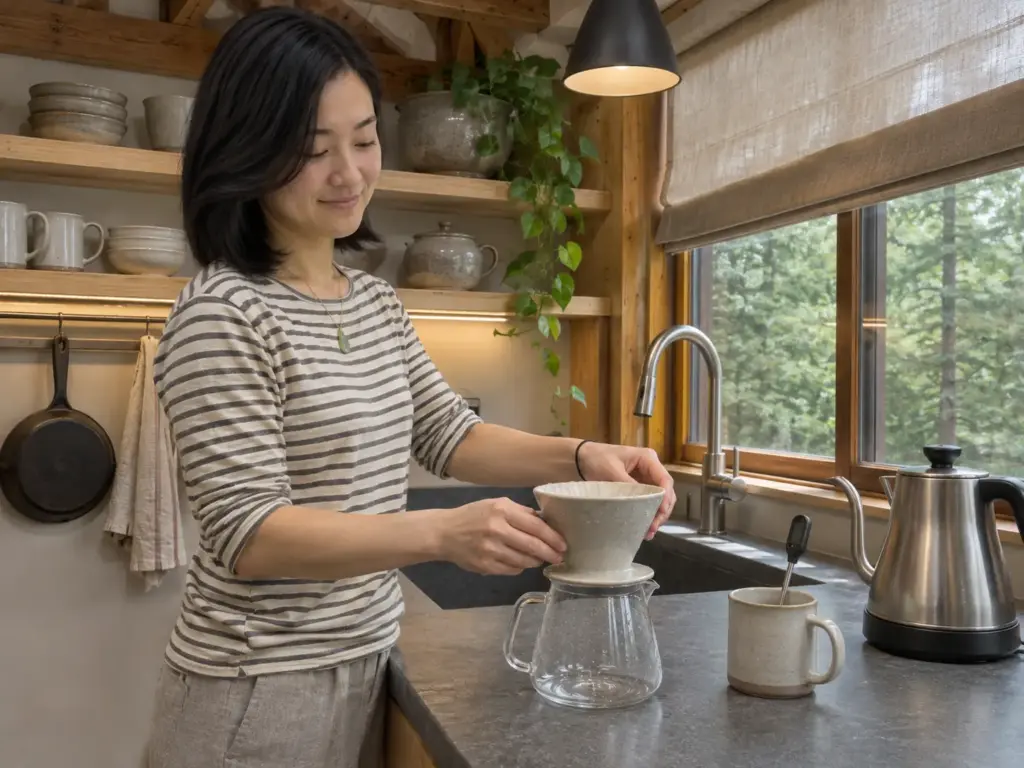
Bring the water to a boil, switch the kettle off, and wait 30 to 60 seconds before pouring. Thirty seconds is the least that does anything, and sixty is the dark-roast end of the habit. Pour a little of the hot water through the dripper and into the server first, then empty it, because a warm cone gives back some of what a cold one would eat.
Start the count at the click and keep the lid on while the kettle waits. A slow pour-over runs a couple of minutes, so the water left in the kettle keeps cooling through the pour; with a long pour take the shorter rest, and with a quick pour take the longer one.
When resting costs degrees you do not have
Altitude changes the arithmetic. Water boils at about 202 to 203°F at 5,000 ft and about 197°F at 8,000 ft, so up there a rolling boil already sits inside the window and a long rest drops it below. At that height, pour at the click, and keep the full 195 to 205°F window, with the altitude table at hand for the exact values.
Checking the bed with a probe
Put the probe of a thermometer in the slurry, never in the kettle. A kettle’s display can read right and still sit two degrees high, and that is a smaller error than the drop between spout and bed, so the bed is where the reading belongs. A probe thermometer is the proof of the rest and never the first purchase.
The ThermoWorks Thermapen ONE reads in about a second to within ±0.5°F, and it is the expensive one: some units stop working around the year-and-a-half mark. The TempPro TP19H keeps the check affordable, at the price of a looser ±0.9°F, and some of those break inside two years.
Light Roasts Take the Full Boil, Dark Roasts Ask for a Rest
A single bag decides whether the full boil is a help or a hindrance, because the roast level sets how fast the grounds give up what they hold. This section sorts the bags by what they do under hot water.
Why light roasts want the heat
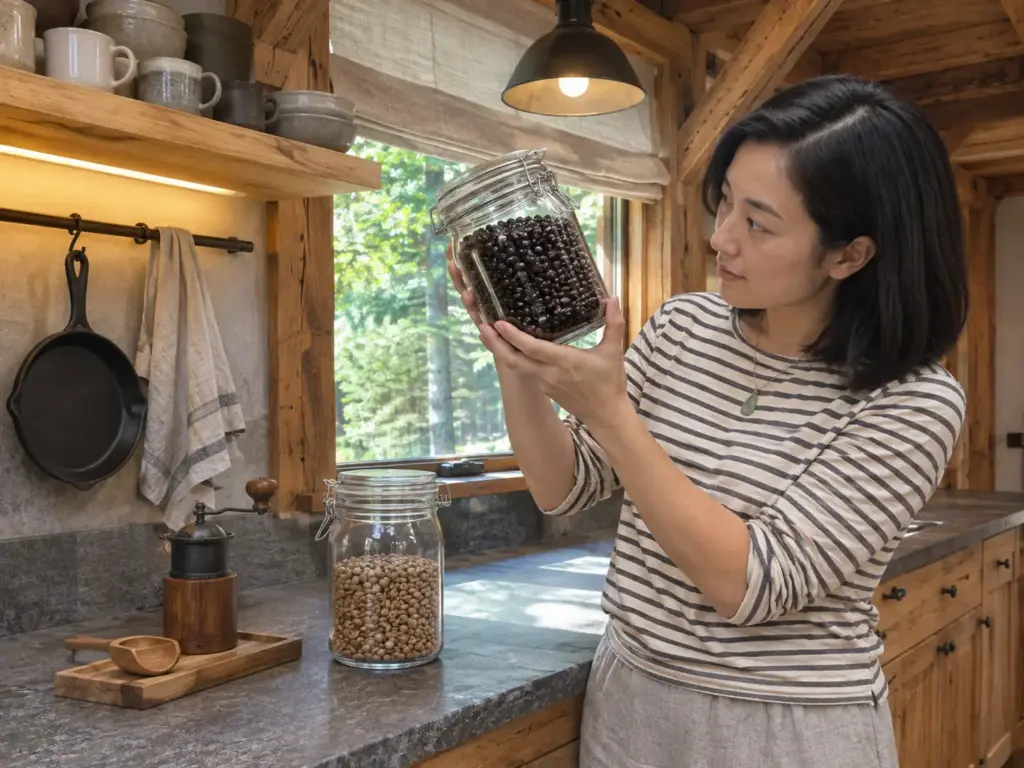
Light roasts are denser and hand over their soluble material slowly, so they take the hot end of the window and a full boil does little harm. A sour light-roast cup poured at a boil points at the grind, because the roast needed the heat and the grounds were too coarse to give up enough. That separates the sour light-roast cup from the ashy dark one, and why one roast goes sour and the other goes harsh explains the split in full.
Why dark roasts turn ashy first
Dark roasts are more brittle and extract faster, so the same boil carries them past the sweet middle into the ashy, dry end. These are the beans that traveled furthest in the roaster, far beyond the temperature of any kettle, which makes them easy to blame on the water; the water is only speeding up what the roast already made quick.
The oily shine on a dark bean and the dry, powdery finish in the cup are two ends of one cause, how quickly everything came out. Rest the full 60 seconds or go one step coarser, since the window itself is one standard across roasts. A medium roast sits between the two and takes the shorter end of the rest.
A rule for the bag in the cupboard
Taste a dark bag after the full-minute rest and a light bag at the click, and move one thing only. For a direct comparison, a light and a dark bag brewed side by side in a pour-over lays out the same test with a dripper and a scale.
Write the rest on the bag with a marker the first time the cup comes out right, “60 s” on the dark one and “click” on the light one. With two bags open and one kettle, the habit that belongs to the other bag is the one the hand reaches for.
Each Brewer Handles Boiling Water Differently
The same kettle behaves differently depending on what it pours into: a wide French press loses heat, while the small chamber of an AeroPress barely does. This section goes brewer by brewer, from the hot end to the cold one.
Pour-over and drip: the hot end
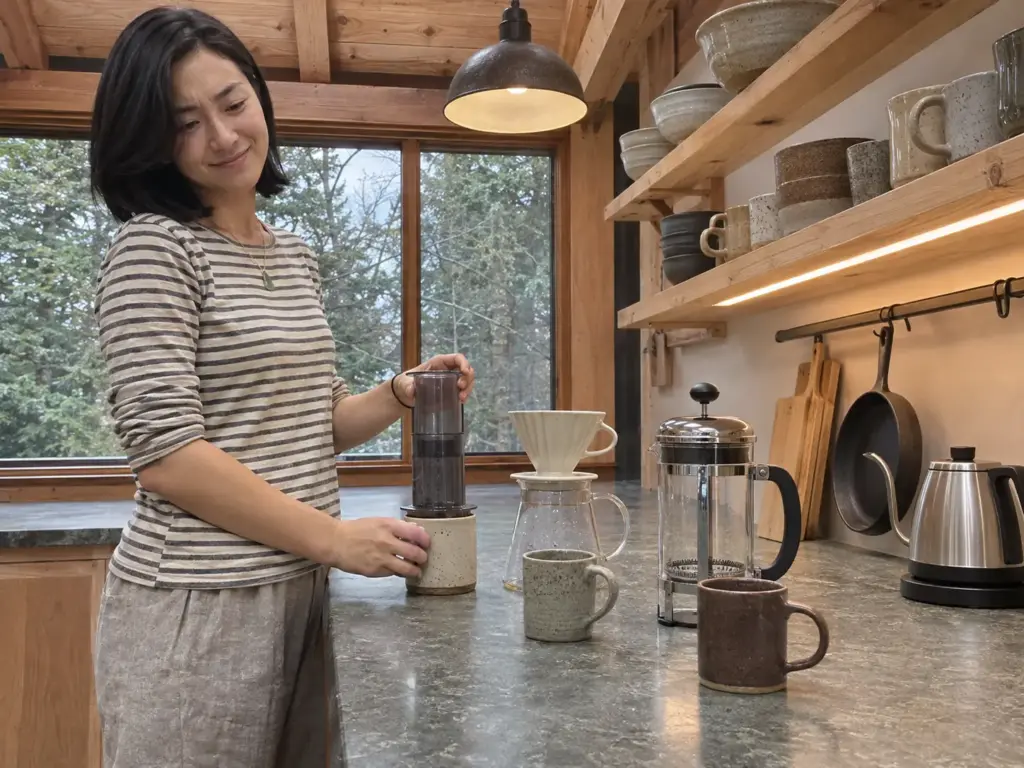
A quick pour off the boil into a warm dripper lands inside the window, and a thin stream cools the water further on its way down. A metal filter drains faster than a paper filter, which cuts the time the hot water sits on the bed. Of all the common methods, this is the one that takes the full boil best, so a light roast here can go at the click and a dark roast can take the shorter rest.
French press: start hot, it cools while it steeps
A four-minute steep is the longest contact time of the common methods and loses the most heat, so the press starts hot, and a rest here is the dark-roast choice and never the default. The glass beaker also starts as cold as the kitchen, which makes the first minute of the steep cooler than the kettle ever was; a splash of hot water swirled in beforehand takes care of it. The grind that suits a French press decides what that hot start does to the cup.
AeroPress: cooler and shorter
The AeroPress wants cooler water, and a short steep forgives a hot one, so the kettle can rest a little longer here than anywhere else. How the steep length moves the AeroPress grind covers the grind side of that trade.
A moka pot and a drip machine: the water is not yours to rest
A moka pot is usually filled with water that is already hot, which shortens the time the pot sits on the flame, and what the settings disagree about on a moka pot covers the rest. A drip coffee maker heats the water itself, and so does a pod machine, a Nespresso or a K-Cup brewer, so a kettle rest does not apply and the real question is whether the machine holds its temperature. How a drip machine boils its own water shows why the machine sets the number, and a probe in the bed during a brew answers it.
Cold brew, the other end
Cold brew uses no heat at all and steeps for 6 to 24 hours. It is the plainest proof that temperature and time trade places: take the heat away and the hours make up the difference.
Three Kinds of Boiling That Get Mixed Up
The warning about boiled coffee is old, but it was written about something other than pouring water off the boil. “Boiling” can mean the water you pour, the coffee you boil, or the instant you dissolve, and the three behave nothing alike.
Water poured off the boil
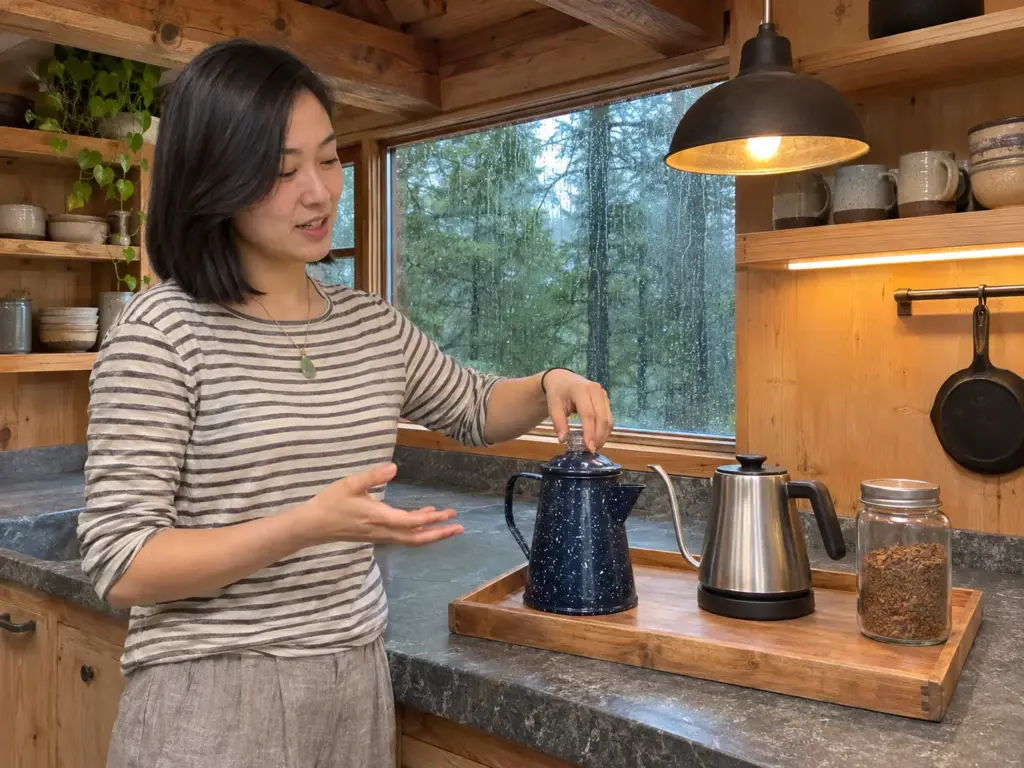
Water poured off the boil touches the grounds once. A certified brewer allows 4 to 8 minutes of contact, and the bed temperature is what the standard measures. One pass through the grounds, one drain, and the water is gone from the coffee; whatever happened to the cup happened in that single trip.
Coffee boiled in the pot
Coffee boiled in the pot is a different thing. A percolator lifts near-boiling water up a stem, sprays it over the grounds and drains the brew back down to be heated again, cycle after cycle, while cowboy coffee and Turkish coffee put the grounds in the pot with the water. That repeated pass through the same grounds, not a single pour off the boil, is where the reputation for burnt boiled coffee was earned.
A percolator’s brew tastes harsher the longer it perks, and a kettle’s rested water tastes rounder in the same cup. Heat control and time are what fix a percolator cup, and a different kettle does nothing; what grit means for a percolator grind covers the grind that suits the repeated pass.
Instant, where boiling is simply right
Instant is already brewed, so there is nothing left to extract and the question turns into one of taste. The National Coffee Association (NCA) guide to instant coffee puts the ideal water slightly below boiling, around 80°C (176°F), at about one teaspoon of granules to six ounces of water. A kettle that has rested long enough not to scald the granules covers that, and the boil itself is no problem.
Stir the granules with a splash of water first, until they dissolve into a thick paste, then top the cup up. The granules never meet a full stream of hot water at once, and no lumps float on top.
What a hard boil does to the water itself
A hard boil does change the water. According to McGill University’s Office for Science and Society, “Boiling drives oxygen out of the water and deoxygenated water tends to taste more flat.” Dissolved oxygen is the part that leaves, and the change is small next to what temperature does to extraction, so it never explains a dark roast gone ashy; it is a mild extra reason to take the kettle off at the click instead of leaving it at a rolling boil, because the same kettle taken off early gives a rounder cup from the same bag and the same grind.
Ashy or Sour at a Full Boil? Which Change Comes First
With the verdict and the cases sorted, a harsh cup still needs a fix, and two free ones compete. This section says which direction the cup points and which change goes first, so the reader never moves two things at once.
Reading the cup: dry and ashy or sour and thin
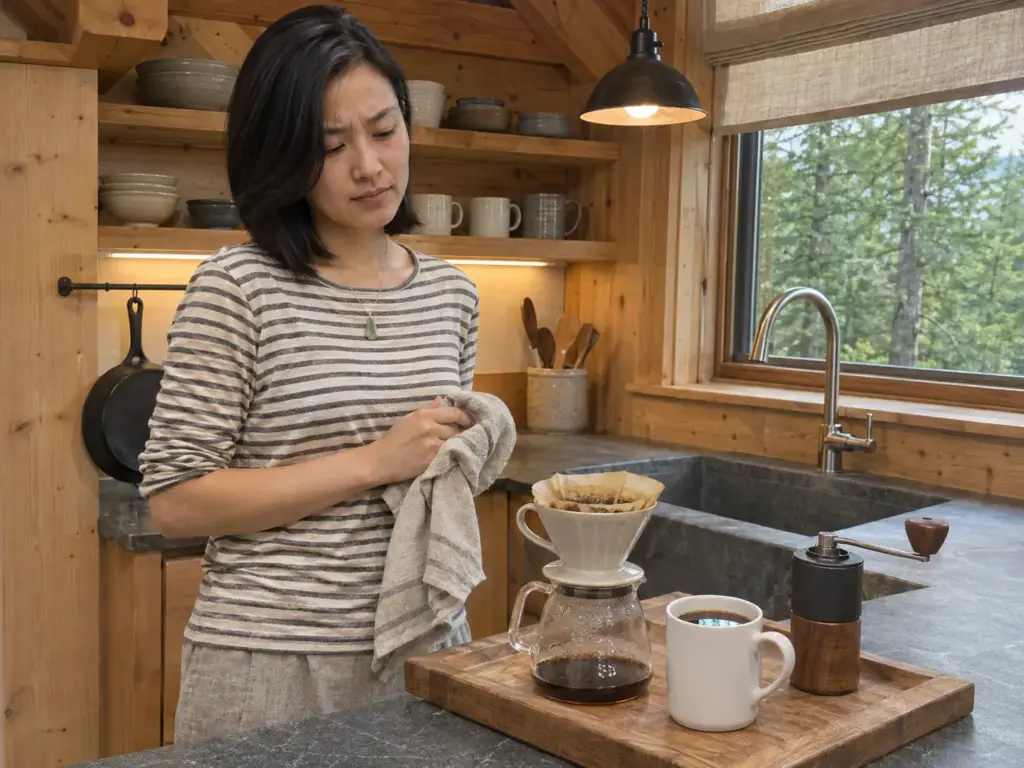
Dry, ashy and bitter points to too much extraction, and the first changes are a longer rest or a coarser grind. Sour, thin and quick to fade points to too little extraction, and the first changes are a finer grind or a shorter rest. Each direction names the change that follows, and which of the two goes first depends on where the cup has been, as the next two parts explain.
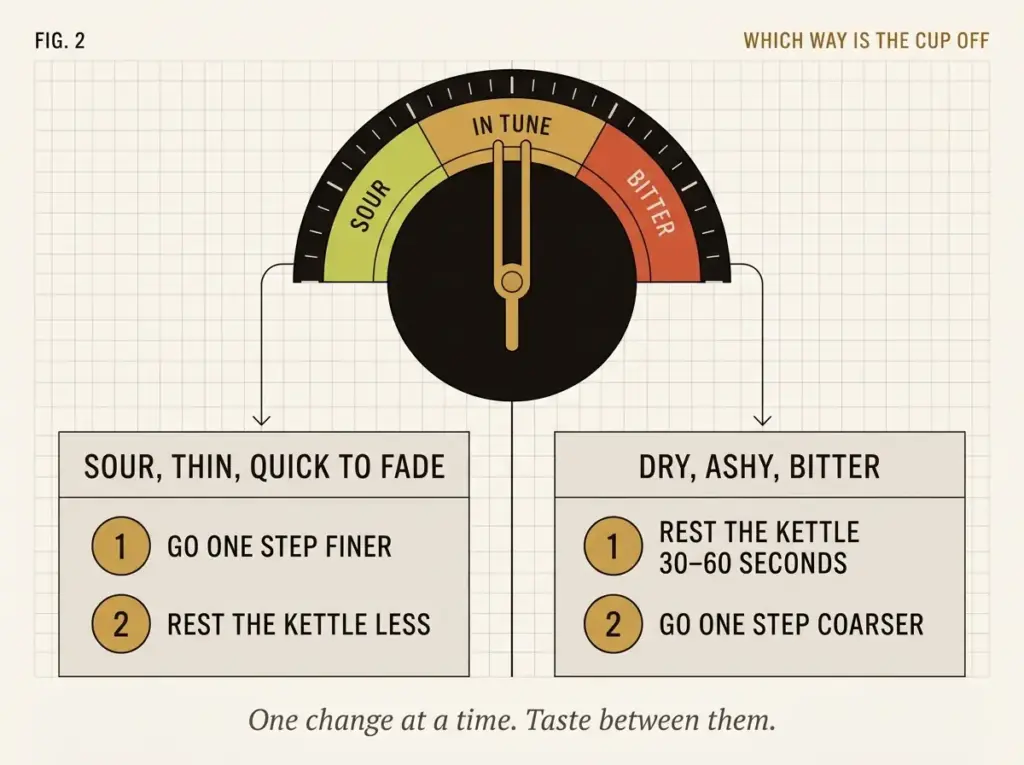
The rest first, if only the water changed
Strength and extraction are what a taster perceives, and the temperature that produced them stays invisible, so the grind already in the grinder decides which fix goes first. If the grind was right yesterday and the only thing that changed was the water, rest the kettle 30 to 60 seconds and taste. The next cup should come back rounder with the dry finish gone; if it turns flat and thin, the rest overshot, and the next pour waits a shorter time.
Coarser first, if the cup has drifted for a week
If the cup has been going dry for a week across several kettles, the grind is the suspect. A grinder that drifts coarse or fine over weeks changes the cup slowly enough that the kettle takes the blame. One step coarser comes before any purchase, and then the cup gets tasted again.
When the harsh cup is a darker roast, weighing the dose before turning the dial for a darker roast applies the same roast-versus-temperature move as a grind move, and how grind size moves the cup from sour to bitter owns the full reading. A second adjustment waits until the first cup says the first was not enough.
When the Water Is Not the Problem, and When a Dial Helps
After the rest and the grind, a harsh cup at a sensible temperature means the water was never the issue. This section names what else gives the same cup and, only then, with its flaw attached, says when a kettle that holds a number earns its shelf space.
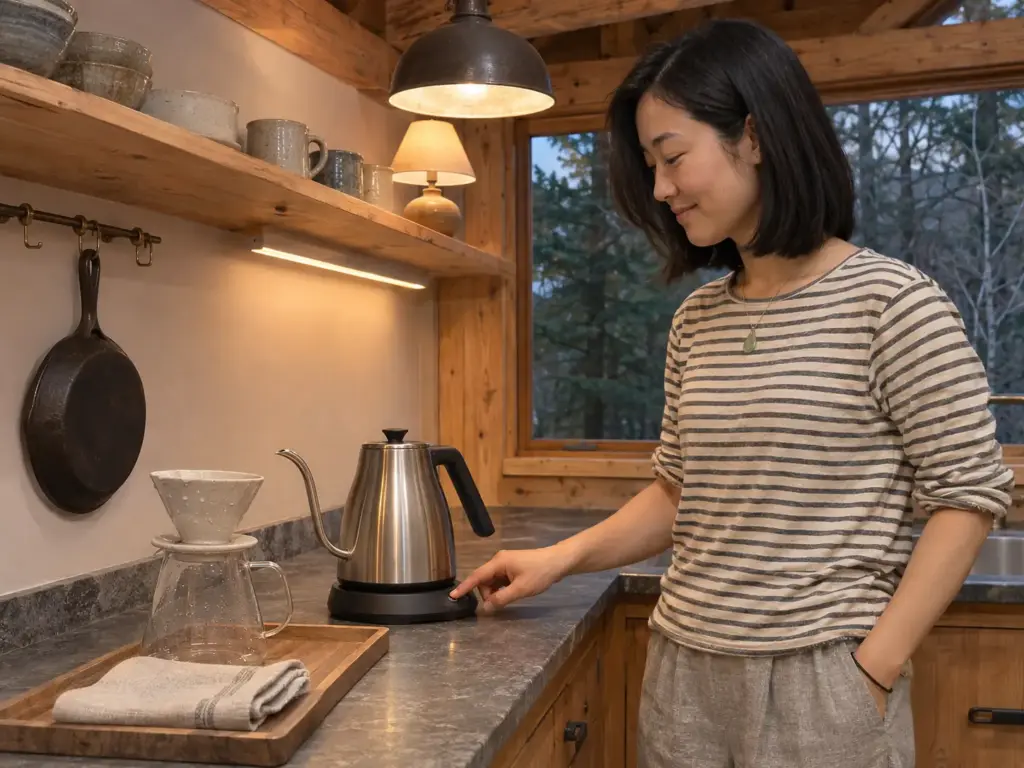
A kettle that scales up and a cone that is cold
Limescale on the element slows the boil and can read metallic in the cup, so a kettle that takes longer than it used to is the first thing to check. Hard tap water, with its high mineral content, builds it faster, and water hardness is the first thing to look up if the kettle scales every few weeks. A cold ceramic cone and a cold server cost degrees the kettle already paid for, which is the preheat from earlier showing up again.
Time a full fill from cold to the click once while the kettle is clean and write the number on a sticky note inside the cabinet door. After a season of daily use, time the same fill again; a clearly longer time is scale on the element, and descaling is the next move.
Beans past their date
Beans past their date read flat and dry before any temperature can fix them, and a rest or a coarser grind only rearranges a cup with nothing left in it. How to tell if beans have gone stale, from smell to cup covers the check.
When a dial earns its place
A dial buys repeatability, and it comes after the free fixes. A gooseneck kettle with a variable temperature setting removes the guesswork between two mornings. The OXO Brew Pour Over Gooseneck Electric Kettle held a set temperature within about one degree for 30 minutes in America’s Test Kitchen’s measurement, though it settles around 2°F above the set point and some units break inside a year. The Bonavita Cosmopolitan 1.0L is the plain, no-app option and holds for an hour where the OXO holds for thirty minutes, with a less refined finish and earlier units that were slower to heat, which suits someone making several rounds in a row.
The HARIO V60 Buono stovetop gooseneck has no electronics and no dial, and it is the honest budget answer, since the wait off the boil does what a dial does. On a stove it takes over 12 minutes to boil, and rust inside is the split complaint.
The Fellow Stagg EKG is the design benchmark the reader will have heard of, and it leaks from the lid when tipped far and is the priciest of the group, so it only gets named here.
Any kettle with a dial can sit two degrees off its display, a smaller error than the drop between spout and bed, so a dial replaces the guessing and leaves the measuring to the probe.
Switch Off, Wait, Pour, Taste
Boiling water does not burn coffee; it extracts faster. That is why the dark roast takes the rest and the light roast takes the boil, and why the water that reaches the bed is already cooler than the number on the kettle. Coffee boiled in a pot and instant coffee are separate cases with their own rules, and when the cup comes out harsh the free change comes first, with a taste in between.
Watch the clock on the kettle too. A longer wait for the click points at scale, and a cup that drifts dry on the same settings points at the grinder.
Tomorrow, take the kettle off at the click, wait the full minute if the bag is dark, and taste. If the cup is still harsh, go one step coarser and taste again.
Strength is set by the brew ratio, near 1:16 for most cups, and temperature only sets the speed. The starting ratio that sets how strong the cup is is the next number to settle, and a kettle that holds a set temperature becomes worth considering once the free fixes have run out. A drip reader, whose machine heats the water and never meets the kettle, can look at a drip machine picked by the water temperature it reaches.
Frequently Asked Questions
01Are you supposed to boil water for coffee?
Bring it to a boil, then switch it off and wait 30 to 60 seconds before pouring. For a light roast or a pour-over the full boil is fine; a dark roast and a French press ask for the rest.
02Does boiling water burn instant coffee?
No. Instant is already brewed, so it does not extract further. The National Coffee Association puts the water slightly below boiling, around 80°C, at one teaspoon of granules to six ounces.
03Can I drink coffee without boiling water?
Yes: instant dissolves in water that is hot but not boiling, and cold brew uses no heat at all and steeps for 6 to 24 hours. Hot brewing methods need the water close to the 195 to 205°F window, though.
04Can you boil ground coffee in water?
Cowboy and Turkish coffee do it by design, with the grounds in the pot. It over-extracts quickly, so keep the heat gentle and the time short; a percolator repeats the pass and tastes harsher the longer it perks.
05What temperature is that in Celsius?
90 to 96°C, the same as 195 to 205°F. Boiling at sea level is 100°C, so a short rest after the boil gets a kettle into that range.



How did your cup turn out?
No comments yet. Tell us what you changed — and whether the needle moved.