
We may earn a commission when you buy through links on this page. It never changes what we recommend. How we pick
On this page9 parts
- 195 to 205°F, Measured at the Grounds
- Reaching the Window With a Kettle and a Clock
- How Roast and Brewer Move the Window
- Just Off the Boil or Under 205°F? What Controlled Brews Show
- Sour or Bitter, and Which Change Comes First
- What Your Drip Machine Actually Sprays at the Basket
- When a Kettle With a Dial Earns Its Place
- Tomorrow's First Pot, and What to Re-Check as Scale Builds
- Frequently Asked Questions
The kettle clicks off, the water goes over the grounds, and the cup is sharp and thin one morning and dull the next, with the same bag and the same scoop. The first suspect is the water, so the question becomes what temperature should water be for coffee, exactly. The answer is a window of 195 to 205°F (90 to 96°C), but the number that counts is the one where the water lands on the grounds, and what a few degrees do to the cup depends on what the grind is already doing. What follows covers where the window is measured, how to reach it with what is on the counter, where roast and brewer move you inside it, why the degree matters less than the grind, which way to turn a cup that is off, what a drip machine really sprays by month six, and when a kettle with a dial earns its place.
Quick Answer
Use 195 to 205°F (90 to 96°C), measured where the water meets the grounds: pour-over and drip at the hot end, French press starting hot because the steep cools, AeroPress cooler. A stable few degrees beats a number you cannot hold, and the grind moves the cup more than the degree does.
195 to 205°F, Measured at the Grounds
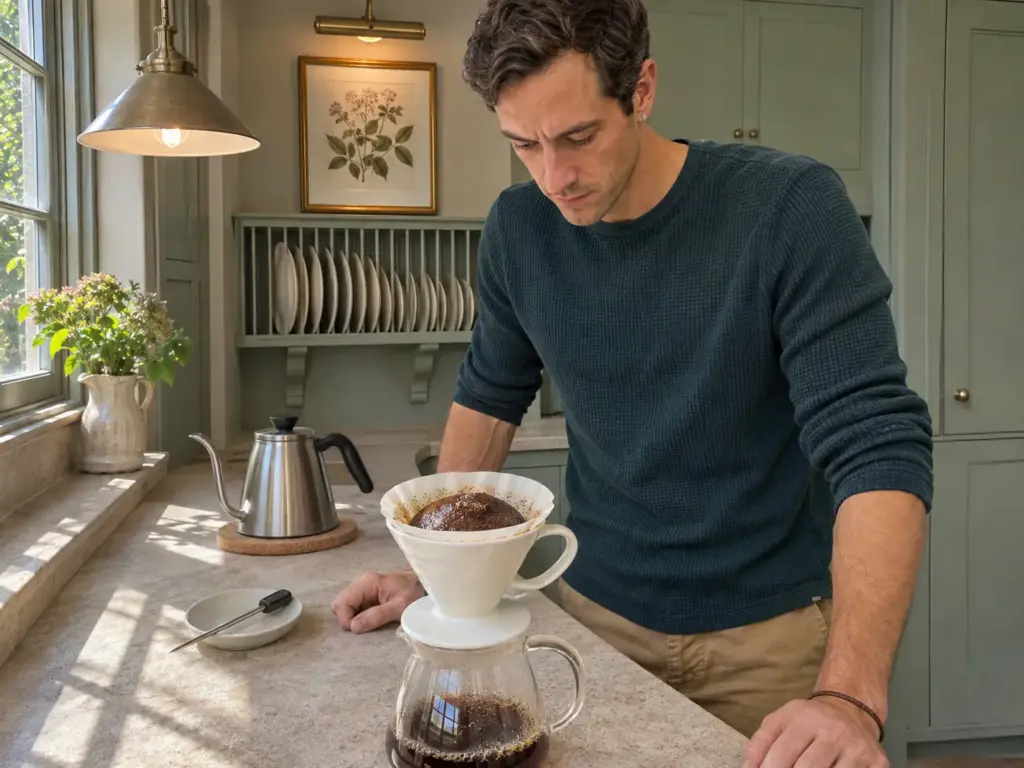
The window is easy to state and easy to misread, because it describes the water at the point where it meets the coffee, a spot almost no kitchen measures. What sits on either side of it matters as much as the range itself, and the number on the kettle’s display belongs to a different spot altogether.
Where the 195 to 205°F window comes from
The Specialty Coffee Association tests a home brewer with a sensor placed in the coffee bed, floating in the slurry, so the slurry temperature is the number that counts. To pass the Specialty Coffee Association’s brewer certification, a machine must reach 92°C (about 198°F) inside the first minute, stay at or above it, and never pass 96°C (about 205°F). The National Coffee Association gives the range as 195 to 205°F (90 to 96°C), and that is the version repeated on nearly every brewing page. Two ways of writing one window, and it is the one used from here on: 195 to 205°F (90 to 96°C), taken at the grounds.
What sits on each side of it
Water hotter than the window over-extracts: it pulls out the bitter, ashy, astringent end of the coffee along with the sweet middle, and a burnt edge follows. The boiling point at sea level is 212°F (100°C), which already sits above it. Water cooler than the window under-extracts and leaves the cup thin and sour, because the sweetness never finishes dissolving and the acidity is all that is left. You can usually tell which side you are on from the taste long before a thermometer confirms it, and the order of changes for each direction comes further down.
Why the display and the grounds disagree
A variable temperature kettle measures the water at its base and shows you that number. By the time the water has left the spout, crossed the air and landed on a cold dripper, it is a different number. A machine’s hot-water setting runs into the same problem, and a hot-water tap against the brewing window shows how far the label and the bed can sit apart.
The size of the drop is measured. In a study of how heat is lost between the brewer and the cup, the brew lost about 14°F (8°C) meeting room-temperature grounds and a thermal carafe, and about 22°F (12°C) more going into a room-temperature cup. A 6°C range of brew temperatures, 87 to 93°C (188 to 199°F), came out of the carafe at 79 to 85°C (174 to 185°F). Tasters in the same work rated coffee highest at 58 to 66°C (136 to 151°F), which is the far end of that ladder and a question about drinking, taken up in the drip-machine section.
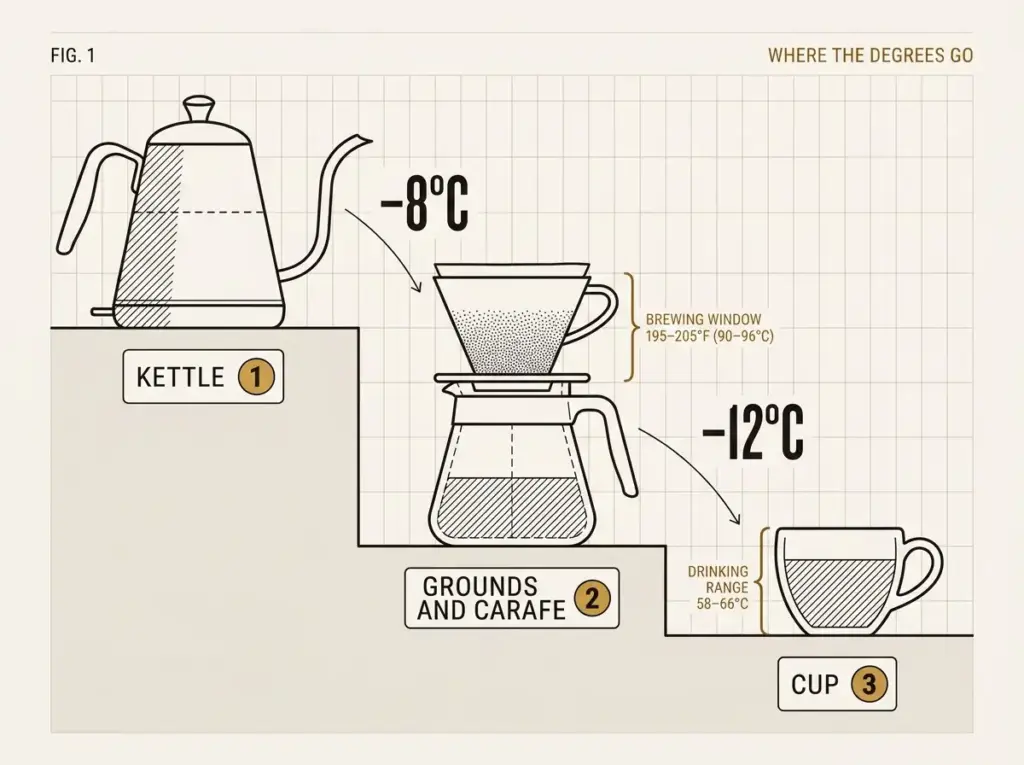
A ceramic dripper and a glass server from a cold cabinet take their degrees before the water has done any work, and that is the part of “temperature” the display never shows. Rinsing them with hot water first is the free way to take some of it back, and that rinse is the first habit below.
Reaching the Window With a Kettle and a Clock
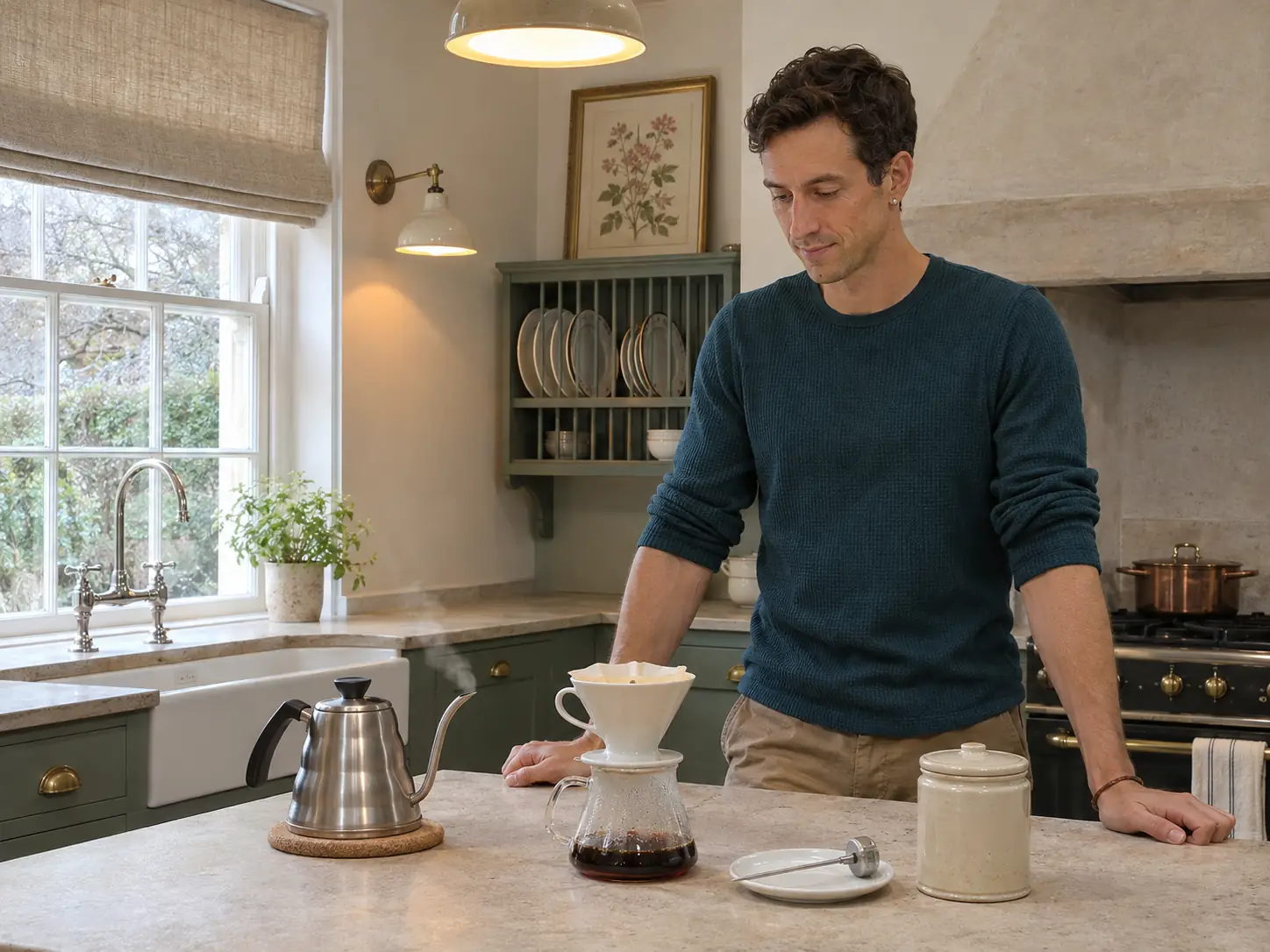
The window is wide enough to hit without an instrument, and the free way is a habit: let the boil rest, warm what the water will touch, and check whether your altitude has already done the resting for you.
Rest the boil for 30 to 60 seconds
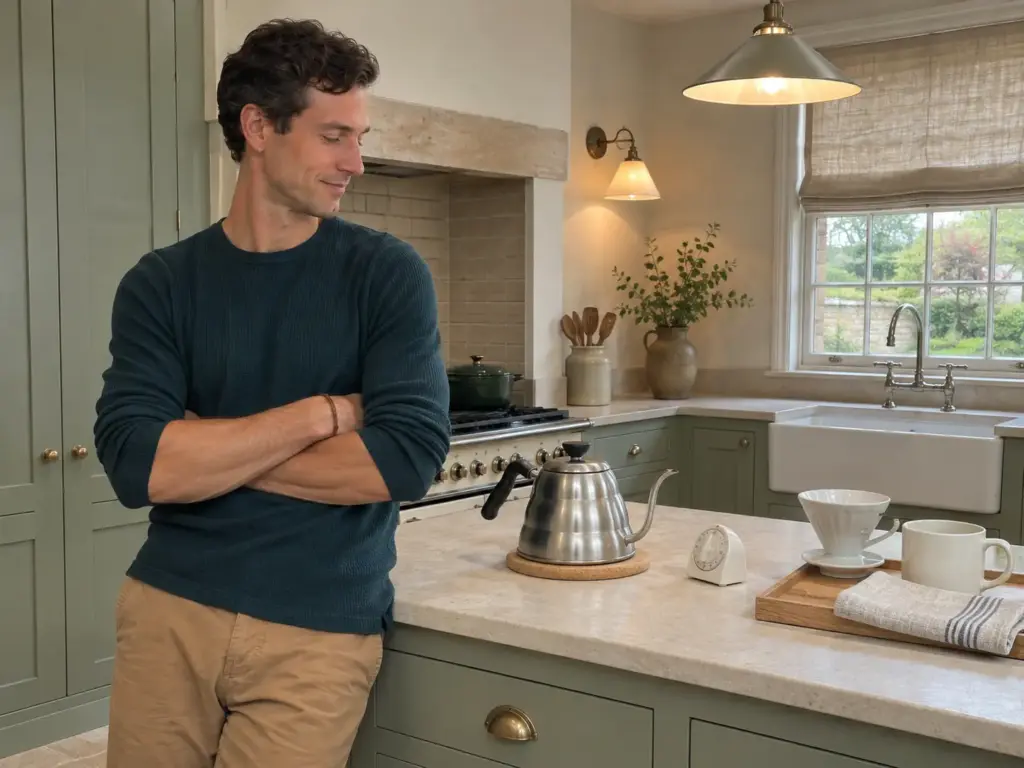
A full boil is 212°F (100°C) at sea level, above the window, and 30 to 60 seconds off the heat brings it inside. The National Coffee Association’s French press guide puts that brew at 93 ± 3°C (about 195 to 205°F) and reaches it exactly this way, with the water rested about 30 seconds and no thermometer needed. For any brew, the habit does the work of the instrument (half a minute of standing at the counter looks like wasted time, and it is the cheapest step in the routine). The dose side has a no-gear route too, the no-scale way to measure the coffee itself, which costs a set of level spoons.
Count the pours as well: the second pour from the same kettle lands cooler than the first, and a stovetop kettle left off the heat has lost its edge before the third.
Higher up, the boil does the resting
Water boils at a lower temperature the higher the kitchen sits.
The USDA boiling-point table kept by the University of Georgia gives 212°F at sea level, 204°F at 4,000 feet, 197°F at 8,000 feet and 194°F at 10,000 feet. A kettle at about a mile up boils near 202°F, already inside the window, so resting it only wastes heat: pour straight off the boil. Even at 8,000 feet the boil still lands inside the 195 to 205°F range, and only around 10,000 feet does it dip just under. The altitude argument is smaller than it sounds.
Warm the dripper and the mug first
Preheating is the whole habit: rinse the dripper, the server and the mug with hot water before the coffee goes in. Those are the three surfaces that take degrees, and ceramic or glass that has been sitting in a cold cabinet takes the most. It costs nothing. And it is the first change to make for a cup that tastes flat even though the kettle was at the right temperature.
The budget route before any dial is a stovetop gooseneck, a timer and the resting habit. The Hario V60 Buono Stovetop Gooseneck Kettle, a 1 L steel pot with about 800 ml of usable volume and a thin spout for a slow pour, does the same job for one cup as a temperature-controlled kettle, with no electronics to fail and at less than half the cost of one. It has no dial, no hold and nothing that reports the temperature. On some units the inside starts to rust, and the value is thin for what is a plain pot with a spout.
Pour the rinse water through the dripper and into the mug while the kettle rests, then empty the mug just before the brew goes in. One rinse warms all three surfaces at once, and the resting time stops being dead time.
How Roast and Brewer Move the Window
The window has a hot end and a cool end, and where to stand in it depends on two things: how dark the roast is, and how long the water stays on the coffee. Two bags on the counter and one kettle can want different water.
Light, medium and dark roasts
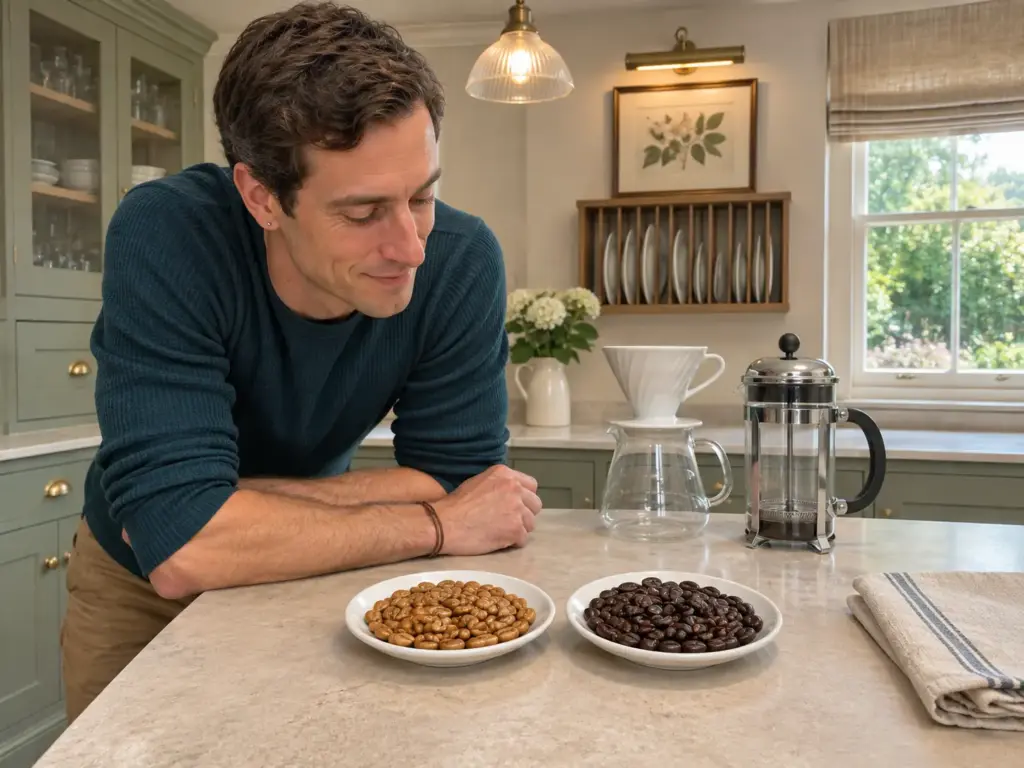
The sub-ranges below are rules of thumb from specialty coffee practice, and no standard sets them. Light roasts sit at the hot end, about 200 to 205°F (93 to 96°C); medium roasts around 198 to 202°F (92 to 94°C); dark roasts pulled back to about 195 to 198°F (90 to 92°C). The reason is mechanical. A light roast is denser and gives up its flavor reluctantly, so it wants the hotter water, while a dark roast extracts easily and turns bitter and ashy when pushed, which is why one roast goes sour and the other harsh.
The Specialty Coffee Association’s review of the brewing research lists roast level among the variables that change what is in the cup, while temperature, once strength and extraction were held, changed almost nothing. When a roaster’s bag prints a lower number than the window, say both: the window is the standard, and the bag’s number is a habit. For a sour light bag, one bag of each roast through a pour-over shows what the hot end does and the order to change things in.
Pour-over, drip, French press and AeroPress
Pour-over and drip sit at the hot end, 198 to 205°F (92 to 96°C), because the brew time is short and the water has to do its work quickly; a bloom of a few seconds with the first pour does not change that. That is also why the grind each pour-over dripper wants is the first thing to settle. A French press starts hot, 93 ± 3°C, because the water cools over the four minutes it steeps, and the full boil with a rest of about half a minute is how it gets there. An AeroPress usually works cooler, about 185 to 194°F (85 to 90°C), with a longer or inverted steep that makes up the difference in time.
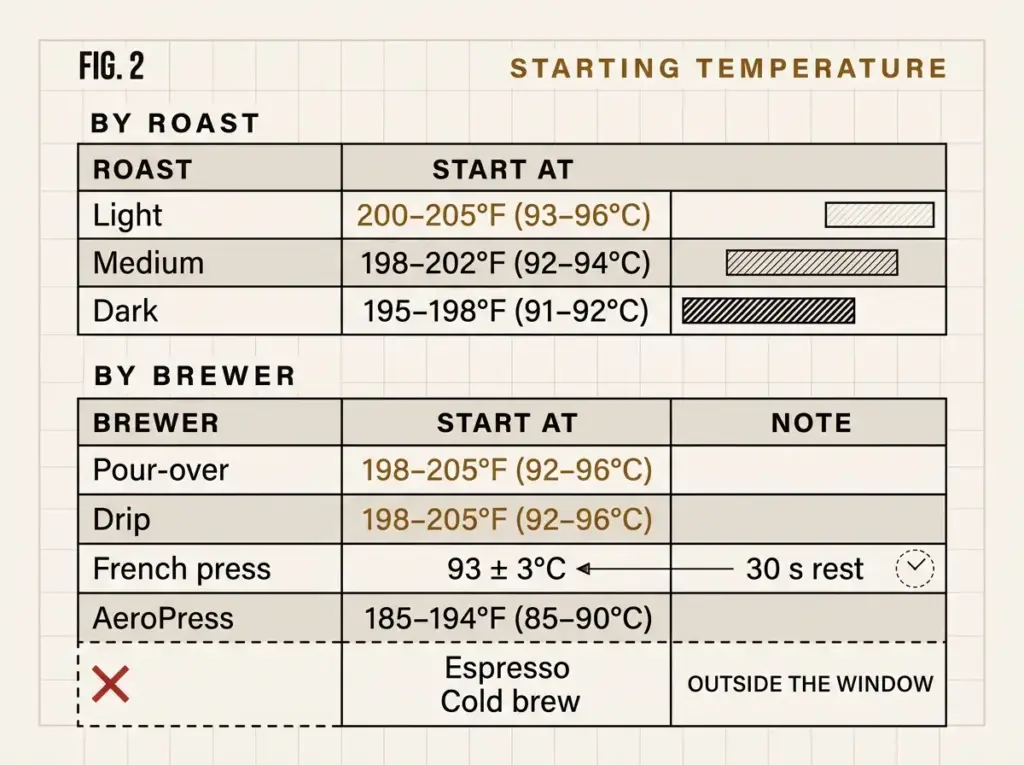
The same kettle and the same bag can give a flat cup in a French press that went in at the low end, because four minutes of steeping ate the degrees.
For a flat French press, rest the kettle only about 30 seconds, the figure the National Coffee Association gives for this brew, before anyone touches the grind. The steep will take its share of the heat either way, so the water should start high in the range.
Espresso and cold brew sit outside the window
Espresso is set by the machine, which holds its own temperature in the group head, so the number belongs to the machine. Cold brew sits outside the scale entirely: the water never gets hot, the steep runs for hours, and the 195 to 205°F range does not apply to it. The same goes for a moka pot, where the stove sets the heat, and for iced coffee, which is brewed hot and chilled afterward.
Just Off the Boil or Under 205°F? What Controlled Brews Show
Specialty coffee says to pour just off the boil, and brand pages say never go above 205°F. They sound like opposite advice, and the controlled brews show they are closer than they look, and which lever to touch first.
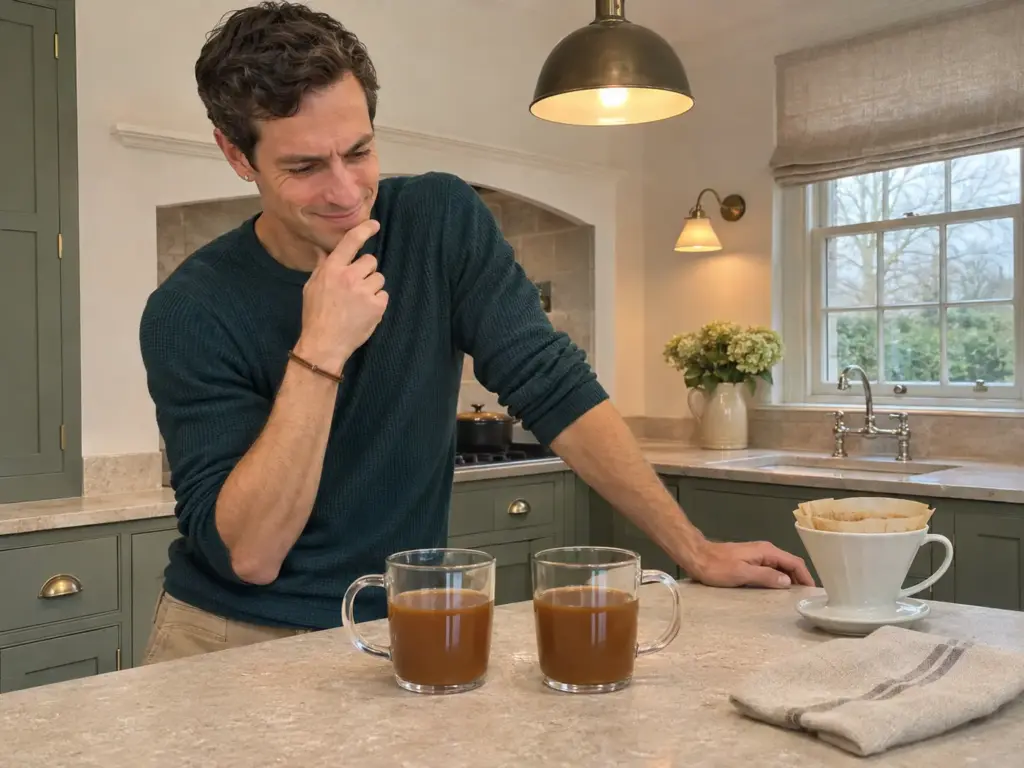
The two camps are one window
“Just off the boil” is a habit. At sea level it lands at the top of the window, or a few degrees over it, depending on how long the kettle rested. “Never above 205°F” is the National Coffee Association’s ceiling. At a mile up, off the boil is about 202°F, which is already inside the window, and the two pieces of advice turn into the same piece.
What controlled brews showed
In a controlled test at the UC Davis Coffee Center, the same roasted coffee was brewed 27 ways: nine combinations of strength and extraction, each at 87, 90 and 93°C (188, 194 and 199°F), with grind size and flow adjusted so that strength and extraction matched across the three temperatures. A trained panel and 118 consumers tasted them, and according to the drip-brew study from the UC Davis Coffee Center, “surprisingly the brew temperature had no appreciable impact”.
The Specialty Coffee Association reached the same place in its review of the brewing-temperature research: “Did we find any differences in flavor when we changed water temperature at a fixed TDS and PE? In short, no.” TDS is strength, how much coffee is dissolved in the cup, and PE is extraction, how much of the grounds ended up in the water. Hold those two steady, extraction yield included, and the degree has little left to say.
What that changes about the order
None of this means temperature never matters. It matters when nothing else is adjusted: the same grind at a lower temperature extracts less, and the cup goes sour. The study held extraction steady by moving grind and flow, so the lever doing the work was the grind. For a kitchen, that sets the order: grind first because it is free, dose second because it is free as well, with the ratio that sits behind both camps as the reference brew ratio, and the degree last.
On the morning a fix that worked yesterday fails, a grinder sitting one notch off is the likelier cause, not a kettle that lost a degree. A kettle that lands within a few degrees every day beats a perfect number you cannot hold.
Sour or Bitter, and Which Change Comes First
A cup points in a direction, and the direction decides the change. Sour means the water left before it finished; bitter means it stayed too long. The free change goes first, and the one that costs a degree goes last.
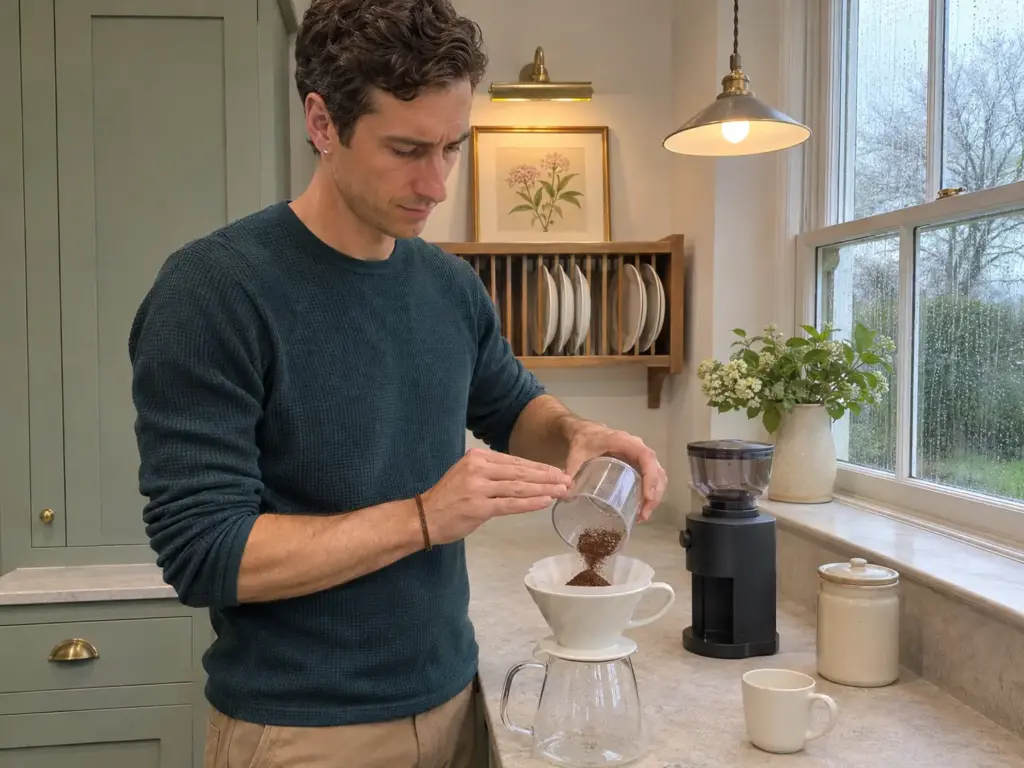
Sour and thin: finer first, then warmer
Sour is the water leaving before it finished, an under-extraction of the grounds, and the first change is a step finer on the grinder, the lever that shows how a finer or coarser grind moves the cup from sour to bitter. Brew the same dose the same way and taste. A rounder, sweeter cup means the grind was the problem; if the finish turns dry and bitter, the step was too far, and half a step back is right.
If the cup is still sharp, the water is next: hotter by a few degrees, or a shorter rest of the boil, and taste again. Only when the cup is also thin does the dose come into it. The Specialty Coffee Association’s review of the brewing research found sour strongest in coffees low in extraction, around 16 percent, against the 18 to 22 percent the Golden Cup standard aims for. A sour cup is the grind until proven otherwise.
Bitter and ashy: coarser first, then cooler
Bitter and ashy is the opposite reading, an over-extraction that comes with a longer contact time, so the first change runs the other way: one step coarser, same dose, same method, taste. Dial numbers vary between makers, and a step on one grinder is a different size on another, so what the number on a grinder’s dial means is worth knowing before comparing settings with anyone else’s. Still harsh after that, lower the water by a few degrees or rest the boil longer, and taste between. If the next cup comes out thin and sour, you have gone past it, and the answer is half a step back.
A grinder keeps some grounds inside it, so the first brew after a notch change still comes out partly at the old setting. Run a spoonful through and discard it before the real dose, and the cup you taste reflects the change you just made.
Flat and weak is usually the ratio
A cup that is flat and weak usually points at the ratio, and weighing the coffee and the water (a scale changes more cups than a new machine does) settles it faster than any degree does. When none of the changes above moves the cup, the cause may not be the water at all: stale beans, a dirty carafe, scale in the machine, or a mug that still tastes of last week. Check those before any purchase.
What Your Drip Machine Actually Sprays at the Basket
The drip coffee maker on the counter is the brewer most readers own, and the one whose number goes unchecked. The check takes five minutes and one probe, and it explains why a machine that was right in March can brew thin by autumn.
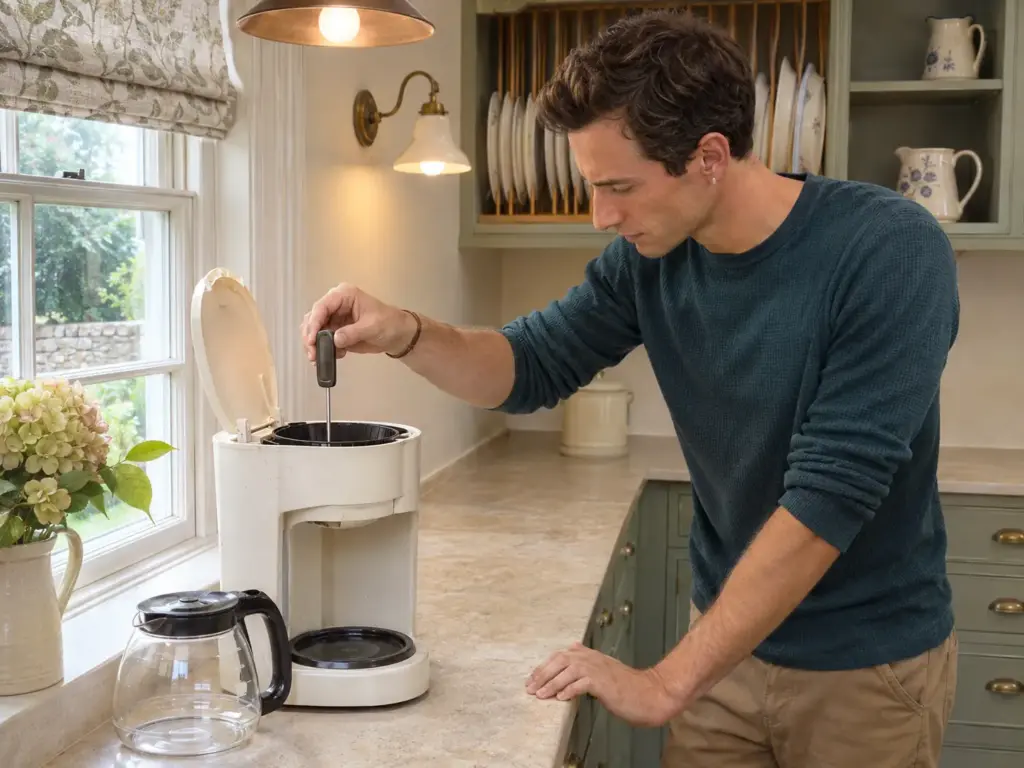
The five-minute check
Stand a probe thermometer in the empty basket, clipped in place so the spray never lands on a hand, with the tip clear of the filter. Run one cycle (an instant-read thermometer is the right tool here) and read it at the start, in the middle and at the end. The water should reach the low end of the window early and stay there.
It is the home version of the Specialty Coffee Association’s test, which puts the sensor in the bed and asks for 92°C in the first minute and never above 96°C, and it measures the spray at the basket, the end of the trip described in how a drip machine lifts and sprays the water. Never read it from the tank or the showerhead.
A food thermometer that already lives in the drawer does the job if it reads quickly. For a kitchen without one, the TempPro TP19H is the budget probe that makes the check possible for roughly the price of a bag of beans, and it is waterproof, so it can be rinsed. Its specification is ±0.9°F, nearly twice the error of the better probe, and it takes three to four seconds to settle, so it decides a five-degree window and cannot separate one degree from the next.
The ThermoWorks Thermapen ONE is the fast one: a one-second reading at ±0.5°F, a 4.33-inch probe, IP67 sealing and NIST certification. A slow probe cannot tell 198°F from 203°F while the water is still moving, and this one settles before it stops. It costs about five times what a basic probe does, and some units fail early, so the price is the product.
Write the three readings on a sticky note and keep it near the machine. After the next descaling, run the same cycle and compare: a jump at the start of the brew tells you what the scale was costing the pot.
Why a machine drifts by month six
Scale on the heating element (limescale, in the plumber’s word) and a tired thermostat, a slow thermostat drift, move a machine’s brew temperature without any setting changing, and the carafe slowly stops holding heat. The loss happens in the basket and the carafe, exactly where scale and a worn part do their work, so a machine that hit the number in March can sit several degrees under it by autumn. Scale also shortens the same fill line, so a pot that comes up short is the next thing to check, starting with how much water the tank line really holds.
Brew hot, drink cooler
Brewing temperature and drinking temperature are two different questions with two different numbers. In the same study that measured the heat lost to the cup, maximum consumer acceptance came at 58 to 66°C (136 to 151°F), and tasters stopped calling the coffee too cold somewhere around 68 to 70°C (154 to 158°F). How hot a cup is pleasant to drink is a matter of taste, so it changes nothing above.
A glass carafe on a warming plate keeps the pot hot and slowly dulls it, which is the drinking half of the machine’s heat. The difference is laid out in a thermal carafe against a glass one after the pot is done.
When a Kettle With a Dial Earns Its Place
After the free changes and a probe, the last purchase is a kettle that holds a set temperature. It is worth it for some counters and a flaw for others.
What the dial measures and where
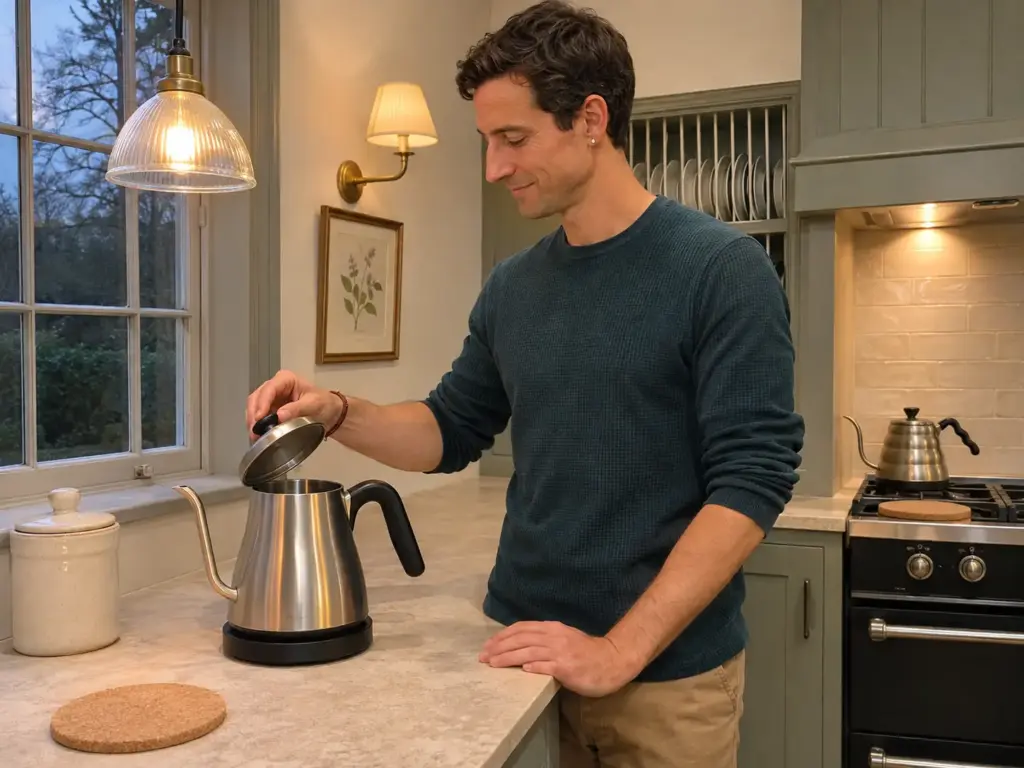
A variable-temperature kettle, including one with a PID controller, measures at its base and reports a number. The water loses degrees on the way down the spout into a cold dripper, and the display itself can be off by a few degrees. So the number to trust is the one taken at the bed with a probe, which is why the probe came first.
Two kettles, two flaws
A dial earns its place on a counter that pours two or three cups back to back, where a hold mode keeps the second cup right, or in a household that wants the number set once and left alone. For one cup a day, the stovetop gooseneck and the resting habit from earlier do the same job.
The OXO Brew Pour Over Gooseneck Electric Kettle (1 L, 104 to 212°F in 1°F steps, a 30-minute hold) is an electric gooseneck whose accuracy has been tested and published at coffee temperatures: it held each setting within about a degree through the whole hold. It settles about 2°F above the number set, so 200°F comes out near 202°F, and it drips from the lid when filled to the top. A kettle that overshoots by 2°F is still inside the window, and a 30-minute hold is only as good as the second cup.
The Bonavita Cosmopolitan 1.0L Gooseneck Electric Kettle (1 L, 140 to 208°F in 1°F steps, six presets and a full 60-minute hold on a glass touch panel) suits the counter that pours cup after cup without dialing a number each time. Its dial stops at 208°F, a few degrees short of the 212°F boil at sea level. For coffee, where the window tops out at 205°F, that costs nothing; it only matters for whoever wants a full boil out of the same pot.
The next decision: the machine that holds its heat
If the probe shows the machine is the weak spot, the purchase that follows is the brewer: a drip machine picked by how hot it brews is the place to start, and drip machines sorted by how hot the carafe stays narrows it for a tighter budget. One brand’s dial comes second to its grind setting, which is the order this whole article argues for, and it is covered in a machine whose temperature dial comes second to the grind.
Tomorrow’s First Pot, and What to Re-Check as Scale Builds
The number that counts is the one where the water lands, 195 to 205°F (90 to 96°C); the kettle’s display describes a different spot. Once strength and extraction are held, the grind outranks the degree. A drip machine earns trust from a probe in the empty basket, and a kettle with a dial comes last.
Put the probe back in the basket after a few weeks of hard water: the machine’s brew temperature is the first number to fall as scale builds on the element, and it falls with no setting moved. For tomorrow’s pot, rest the kettle, rinse the dripper and the mug, brew exactly as usual and taste, then move the grind half a step toward the direction the cup points and taste once more. A probe comes after that, then the machine that holds its heat.
Frequently Asked Questions
01Is 200 degrees too hot for coffee?
No, 200°F (93°C) sits inside the 195 to 205°F window, the hot end for a medium roast and a sound start for light roasts and pour-over. A dark roast may want it pulled back a few degrees, toward 195°F.
02Is 100 degrees too hot for coffee?
In Celsius, yes: 100°C is a full boil at sea level, 212°F, which sits above the window, so rest the kettle 30 to 60 seconds first. In Fahrenheit, 100° is far too cool. At about a mile up, water boils near 202°F and is already inside the window.
03What temperature should water be for coffee in Celsius?
Water for coffee should be 90 to 96°C, with pour-over and drip at the hot end and a French press starting near 93°C because the steep cools it. The Specialty Coffee Association measures 92 to 96°C at the grounds, so a kettle’s display can read higher than what the coffee sees.
04What temperature should water be for a French press?
About 93°C (200°F), plus or minus 3, which is a full boil rested for about 30 seconds, according to the National Coffee Association. The four-minute steep cools the water, so it starts hot, and a flat cup often means it went in at the low end.
05How can I tell if my drip machine brews hot enough?
Clip a probe thermometer in the empty basket and run one cycle, reading it at the start, the middle and the end; the water should reach the low end of the window early and stay there. A machine that stays low may be scaled.

How did your cup turn out?
No comments yet. Tell us what you changed — and whether the needle moved.