
We may earn a commission when you buy through links on this page. It never changes what we recommend. How we pick
On this page9 parts
- What the Box Calls a Cup, and the Numbers a Setup Has to Hit
- The Drip Counter, the One Most Kitchens End Up Wanting
- Around the Machine: Grinder, Scale and Water
- The Pod Counter, Where the Capsule Holds the Dose
- Where the Counter Goes: Reach, Water, Cords and Grounds
- The Espresso Counter, and the Minutes It Asks For
- What Each Counter Is Doing by Month Two
- Weigh One Dose Tomorrow, and Check the Reservoir in Eight Weeks
- Frequently Asked Questions
Three machines stand on the shelf, each one labeled the pick for the home counter, and not one box prints a temperature, a dose or the number of mugs it pours.
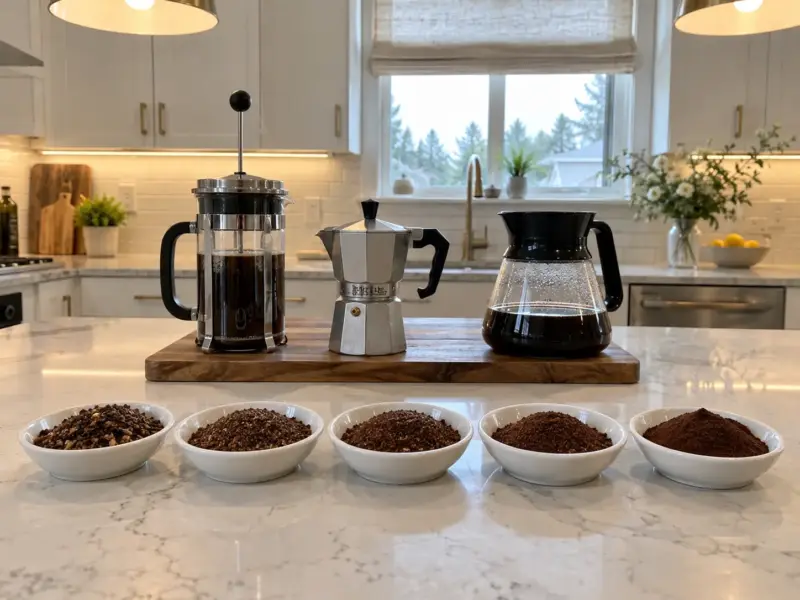
A best home coffee machine setup is a machine plus the three or four things that decide the cup, and the machine is the piece that moves it least. The coffee world’s own standard puts numbers on the brew (water at the grounds between 194 and 205 °F, about 13 g of coffee for an 8 oz cup), and most counters never reach them. What follows builds three counters, drip, pod and espresso, with what sits around each, where the whole thing goes in a kitchen and what each one is doing two months in. If the order to buy things in is still open, that page settles it, and which type of coffee maker fits a household’s mugs settles the type for anyone who has not picked one.
Quick Answer
Three setups are worth building: a pod machine, a drip machine, or espresso from a real grinder. The pick comes down to how many mugs you pour and how many minutes you will stand there; the spec sheet barely matters. Drip is the setup most kitchens end up wanting and the least likely to be abandoned by month two.
What the Box Calls a Cup, and the Numbers a Setup Has to Hit
The three counters below look nothing alike, yet each one is held to the same few numbers: the temperature at the grounds, the grams in each mug and the ounces in the carafe. Almost no box prints any of them. The yardstick comes first, so every machine after it can be judged against something besides a spec sheet.
What a “cup” on the box really holds
A cup on a coffee-maker box is 4 to 5 fluid ounces, a long way short of the 8 ounces most mugs hold. The Moccamaster’s 10-cup carafe holds 40 oz and the OXO’s 8-cup holds the same 40 oz, so each one fills five 8 oz mugs or about three 12 oz mugs, and the 12-cup number on a budget machine runs on the same arithmetic. For the coffee, the Specialty Coffee Association’s (SCA) brew standard asks for 55 g per 1.000 kg of water, about 1:18.2, which works out to roughly 13 g for an 8 oz cup and about 20 g for a 12 oz mug. Sizing a reservoir in full is worked through in how much water a coffee maker really takes per cup.
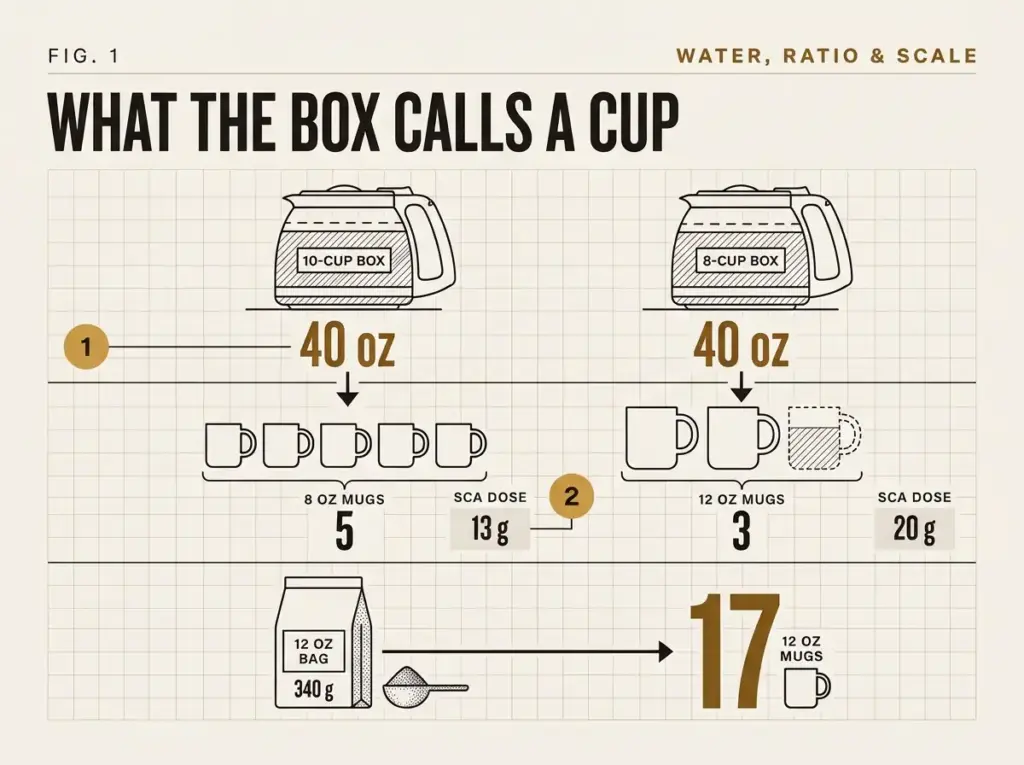
A scoop is not a dose, which is why the number that travels from counter to counter is grams: a level scoop of fine grounds and a level scoop of coarse grounds weigh different amounts. As a rough translation, 13 g is about 2½ level tablespoons and 20 g about 4, and both move with the grind and the roast. The bag sets how often the shopping happens far more than the machine does, since a 12 oz bag (340 g) pours about seventeen 12 oz mugs at that dose. A ratio nearer 1:16 makes a heavier cup, and that is a taste call; the standard is the reference, and one small step toward 1:16 is the move if the first pot tastes thin.
The mug carries a number too. The FDA’s caffeine figures put a 12 fl oz cup of regular brewed coffee at 113 to 247 mg, with the reminder that “The amount of caffeine in specific products, and container sizes, can vary.” Read it as a figure for the mug you actually fill.
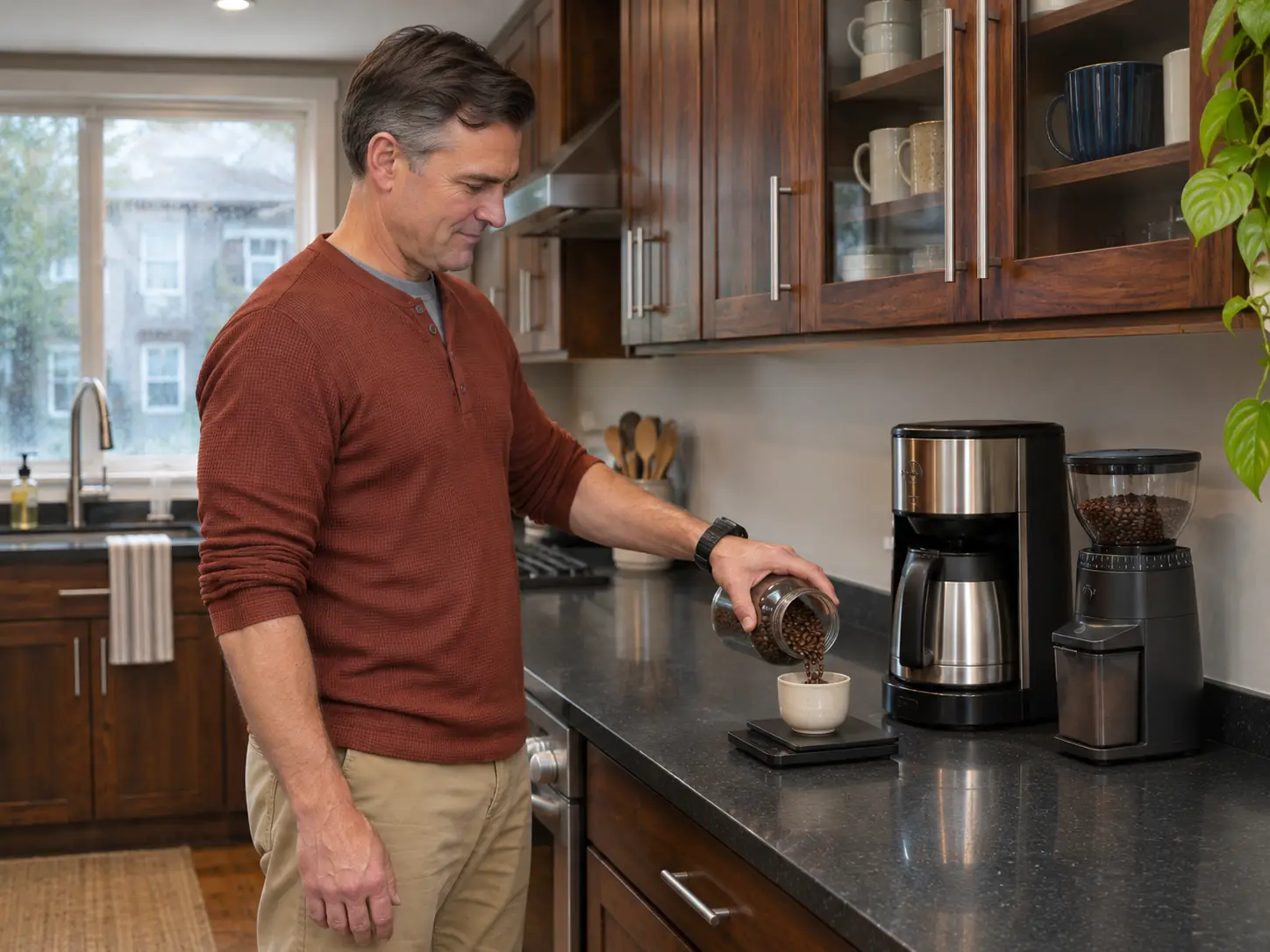
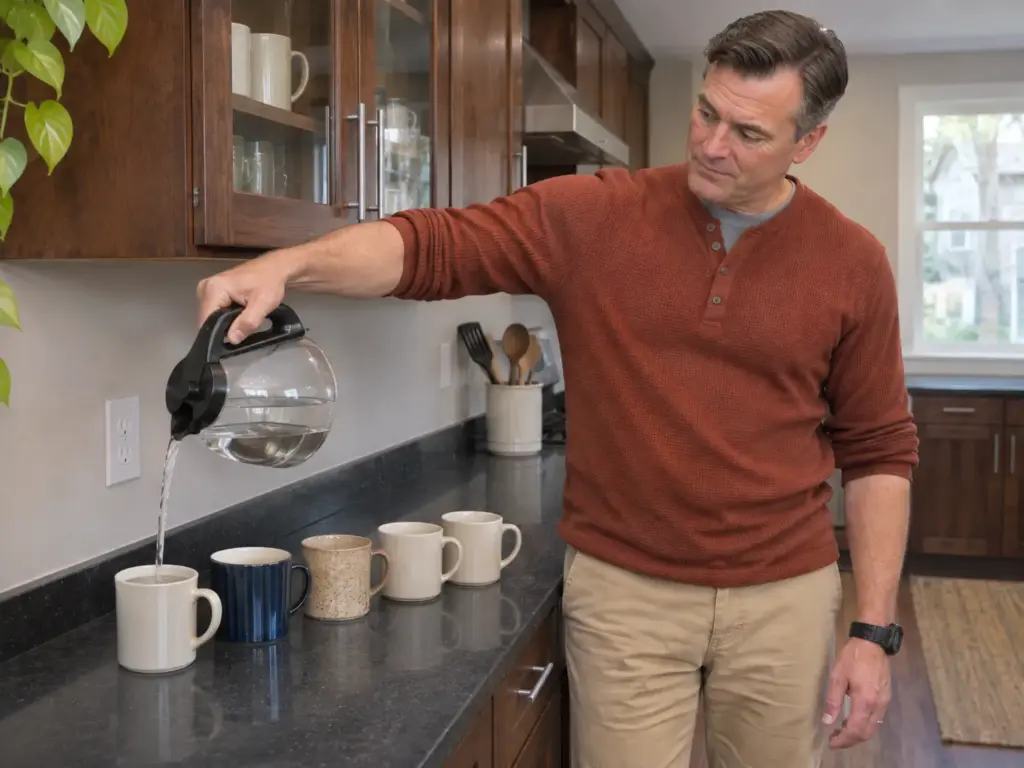
Before sizing anything, pour a full carafe of plain water into the mugs you actually drink from, once. The number of mugs it fills is the number to buy by, and it settles the question faster than any box.
The temperature that counts is at the grounds
The SCA wants the wet bed of grounds at 194–205 °F (90–96 °C) by the time a third of the water is down, and it wants it to stay there for the rest of the brew. That is a temperature measured at the grounds, so a machine that pours 200 °F water onto a cold basket is not brewing at 200 °F. The organization that certifies filter brewers against this window keeps the SCA’s certified home brewer list, and according to the SCA, “SCA Certified Home Brewers are coffee makers that meet SCA’s rigorous standards for brewing quality, consistency, and performance.”
Which counter can reach those numbers
A drip machine on the certified list can reach them and says so.
The standard covers filter brewers for home use, and by scope it leaves out pod brewers and espresso machines, which is the honest reason a pod counter cannot be held to the window: the SCA’s mark cannot be earned by one. For those two counters the numbers that matter move elsewhere, to the dose and the grind on espresso and to the capsule on a pod machine. What William Ristenpart of the UC Davis Coffee Center found points the same way: once strength and extraction are held constant, temperature changes how fast coffee extracts more than it changes the flavor. So the number worth holding is a steady one, and the grind and the dose do the rest.
The Drip Counter, the One Most Kitchens End Up Wanting
Drip is the only one of the three counters that can meet the standard and print the proof, and that is part of why most kitchens settle here. This section builds the counter whole, the machine plus what sits beside it, and says where it gives something up.
What a drip counter includes besides the machine
The counter is five things: the machine, a pitcher for the reservoir, a box of paper filters, a landing spot for the carafe and a scale. A full 40 oz pot takes 4 to 6 minutes on the Moccamaster, and the pitcher saves a trip to the sink with a dripping carafe every time. The scale is the cheapest piece and the one that changes the cup most.
The hot plate, the carafe and the free fix
Name the failure first. A glass carafe on a hot plate stews the pot: the SCA asks a brewer that heats the carafe to hold coffee at 176–185 °F (80–85 °C) for the first 30 minutes and never above 185 °F (85 °C), and a plate that keeps adding heat breaks that ceiling. Glass against thermal carafe, by how long the pot sits takes the whole argument apart.
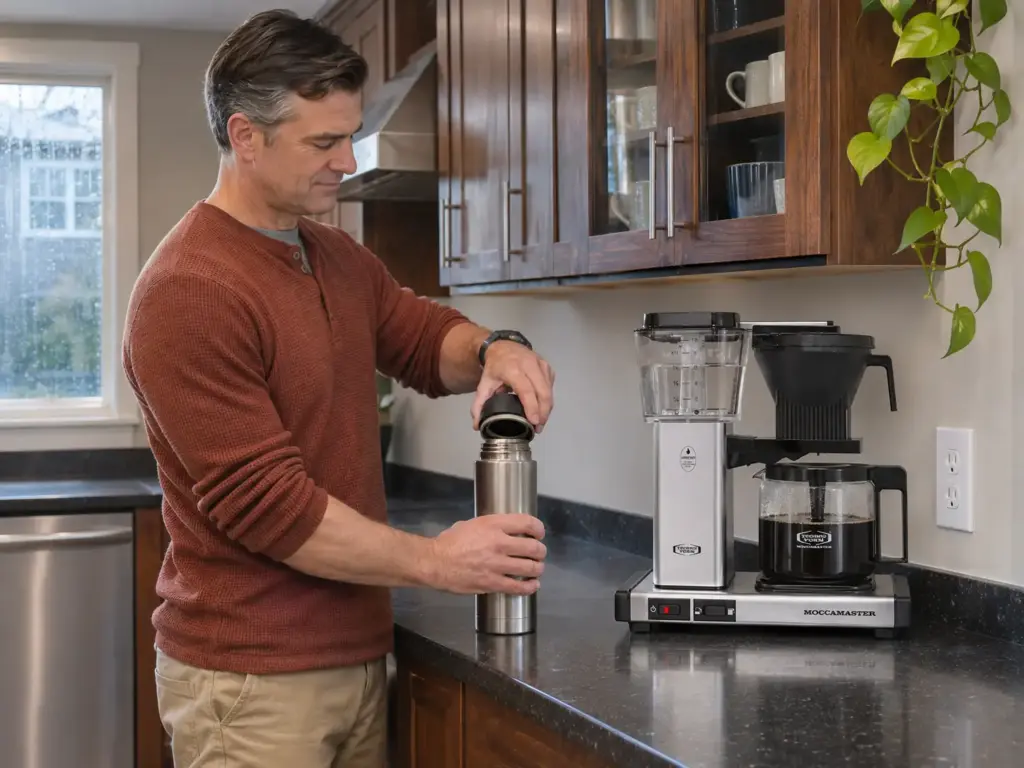
The free fix comes before any purchase. Pull the carafe off the plate the moment the brew stops, or pour the pot into a pump thermos and leave the plate off; the next cup should taste like the first one did, only cooler. If a pot still tastes of heat after that, the carafe lid is the next suspect.
Taste the first and the last mug from the same pot. If the last one is flat and bitter and the first is not, the plate is the problem, and a thermos fixes it for free.
The Technivorm Moccamaster KBGV Select 10-Cup sits on the SCA’s list, states its 40 oz capacity and its brew time, and has a half-pot switch (16 to 40 oz) that lets a two-mug household own a 10-cup box. The plate is where it gives something up: the glass-carafe version stews the pot within 10 to 15 minutes and the machine shuts itself off after an hour, so a forgotten pot ends up both stewed and cold, and the plastic parts feel thin next to what the machine costs.
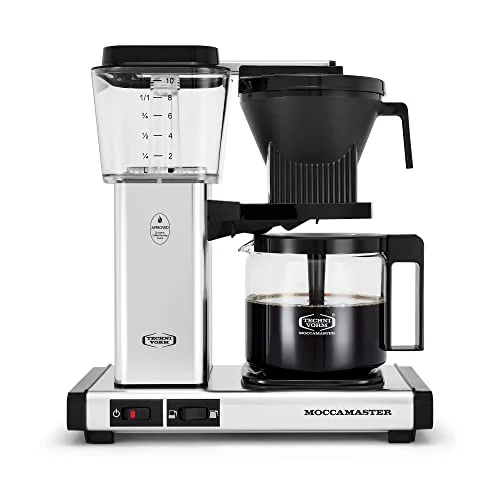
The cheaper route to the same counter takes the plate out of the question. The OXO Brew 8-Cup brews anywhere from 10 to 40 oz, a single mug straight into the cup included, into a double-wall thermal carafe, and OXO states 194–205 °F for it (the SCA’s list names the 8-cup in its glass-carafe form, so the thermal version sold here is not the certified one). The trade is heat retention: some units lose heat in the carafe, and some drip or overflow.
The pot, counted in mugs
At the half-pot setting, 16 oz is two 8 oz mugs; at full, 40 oz is five, and the OXO’s 10 oz minimum covers one mug with room to spare. At the SCA dose a full 40 oz pot takes about 65 g of coffee, so a 12 oz bag makes about five pots. Built-in and plumbed machines get a single sentence here: they need a cabinet cut and a service network, and they are not recommended. Which drip machine to pick by water temperature is the decision that follows once the counter is chosen.
Around the Machine: Grinder, Scale and Water
Whichever machine wins, three things beside it move the cup more than the machine does. The scale costs the least, the grinder comes next and the water is the slow one. They are laid out here in the order to deal with them.
Weigh before you buy anything
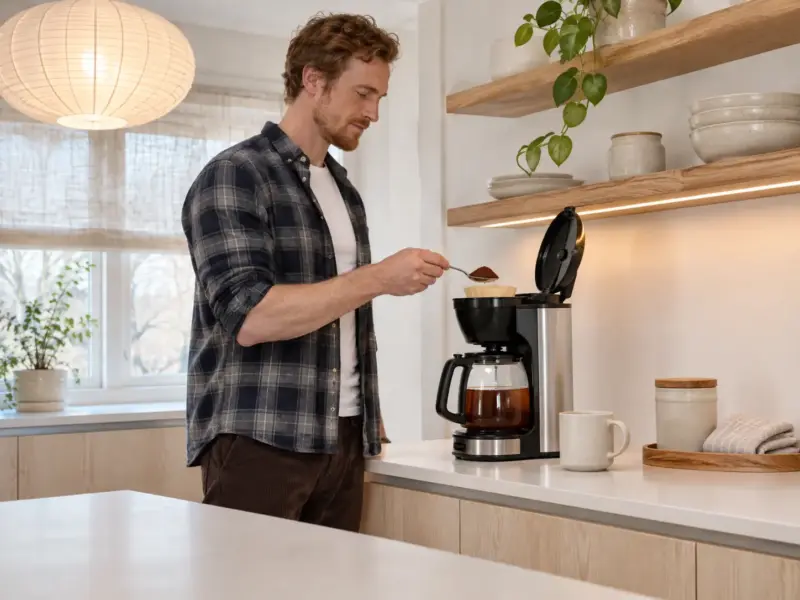
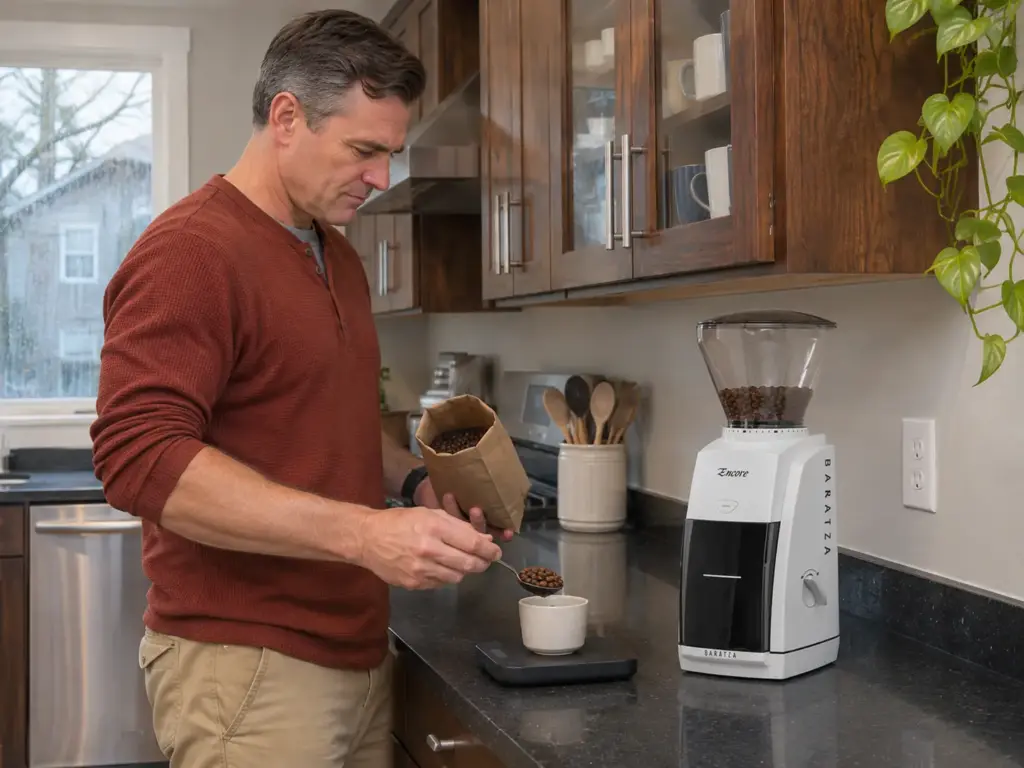
A scale changes more cups than a new machine does, because it turns every dose into grams and every complaint into a number. A kitchen scale is enough for drip, where the difference between 13 g and 20 g is the whole difference between a cup and a mug.
Espresso asks for 0.1 g resolution, since a single gram is about 5 % of a 19 g dose and the shot shows it. Weigh the beans before grinding, because the grounds that stay behind in the burrs make a weighed-out dose lie. With grams, a thin cup has a fix: add 1 to 2 g of coffee for the same water, and the next cup should taste fuller; go too far and it turns heavy and bitter, so come back half a gram. The full case against the scoop sits in a page on what the scoop gets wrong.
A real burr, and what wears out first
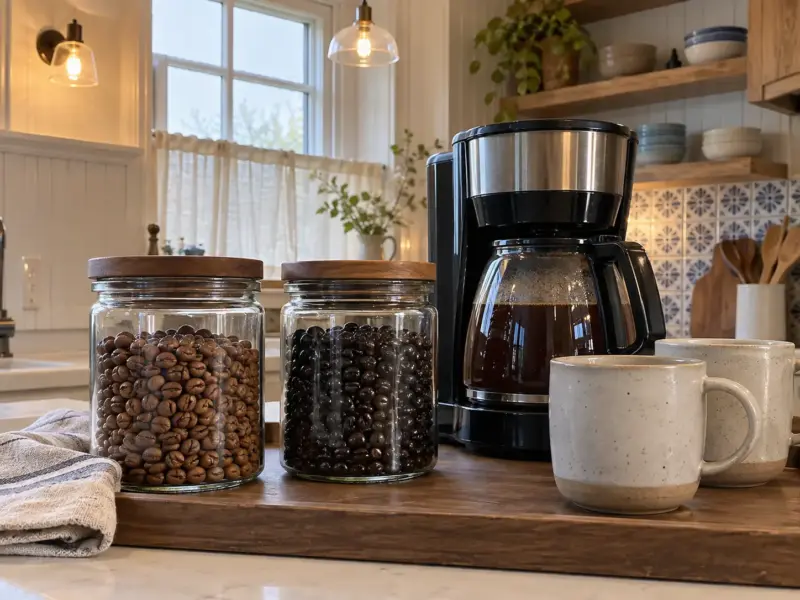
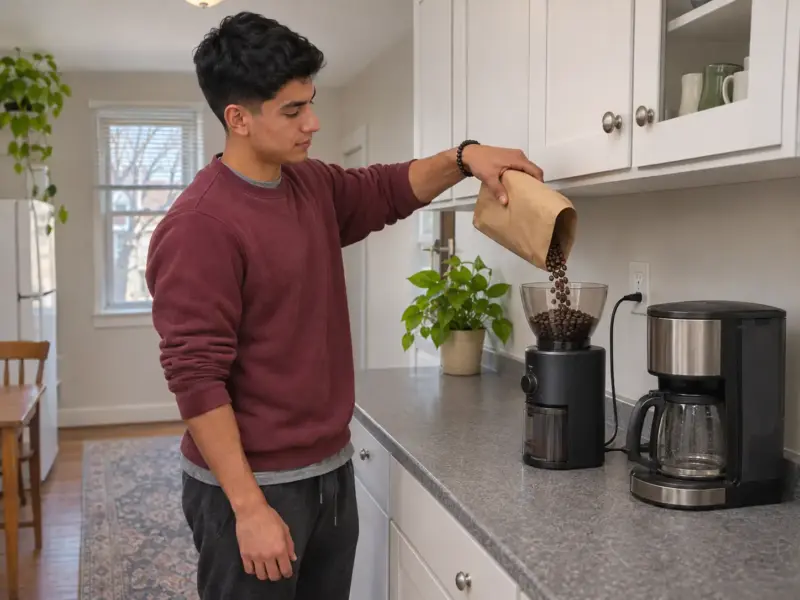
A blade grinder chops beans into dust and boulders at once, so the cup comes out sour and bitter in the same mouthful: the dust over-extracts while the chunks give up too little. Whole beans with a roast date on the bag, ground just before brewing, keep more of what the grinder is there to protect than a bag of pre-ground.
A burr set crushes to a far more even size, and it is the first purchase for a drip or an espresso counter, ahead of the machine. A cheap drip machine fed by a burr grinder beats an expensive one fed by a blade, because the grind decides the extraction before the water arrives. Burrs also keep grounds and oils inside, so a brush every couple of weeks and an emptied hopper keep one bag’s stale taste out of the next. A pod counter skips the question, since the capsule did the grinding already.
The Baratza Encore has 40 mm conical steel burrs and 40 grind settings, enough steps to move a drip cup one notch at a time (espresso asks for finer steps than a drip grinder gives, and that is a separate decision).
It gives up durability and quiet: some units break around two months in and others stop near six, the motor is loud and the cleaning is tedious.
The Capresso Infinity 560.04 is the budget burr, with conical steel burrs, 16 settings and an 8.8 oz hopper, for less than either pod machine here. Fewer steps mean coarser jumps between cups, some units break around six months and the cleaning is awkward. For anyone choosing between these two, which home grinders wear out first goes through the burrs and motors that give up earliest.
After moving the grind setting, throw away the first few grams. They come out at the old setting, left behind in the burrs, and they skew the very cup you are using to judge the change.
Water, and why the machine is a month-two problem
Hard water leaves scale in the reservoir, the heating element and the kettle, and scale slows the water and cools the brew, which is the temperature problem from the first section all over again. Filtered water slows the build-up, and a white ring in the reservoir shows it has begun; the ring a kettle gets is the same scale, and the same warning. Your water’s hardness takes a test strip or a look at the utility’s report, and how to read your water’s hardness walks through the numbers. And the grinder is where trouble shows first: burrs and motors fail long before the heater does.
The Pod Counter, Where the Capsule Holds the Dose
After two sections about owning the dose and the grind, the pod counter skips both on purpose, because the capsule has done them already. It is the setup for one mug and no mess, and its two dials, size and strength, are the only levers once the capsule is in.
Two dials, and why a weak pod cup is not a new machine
A weak pod cup is under-dosed: the capsule holds a fixed amount of coffee, and a bigger size stretches it across more water.
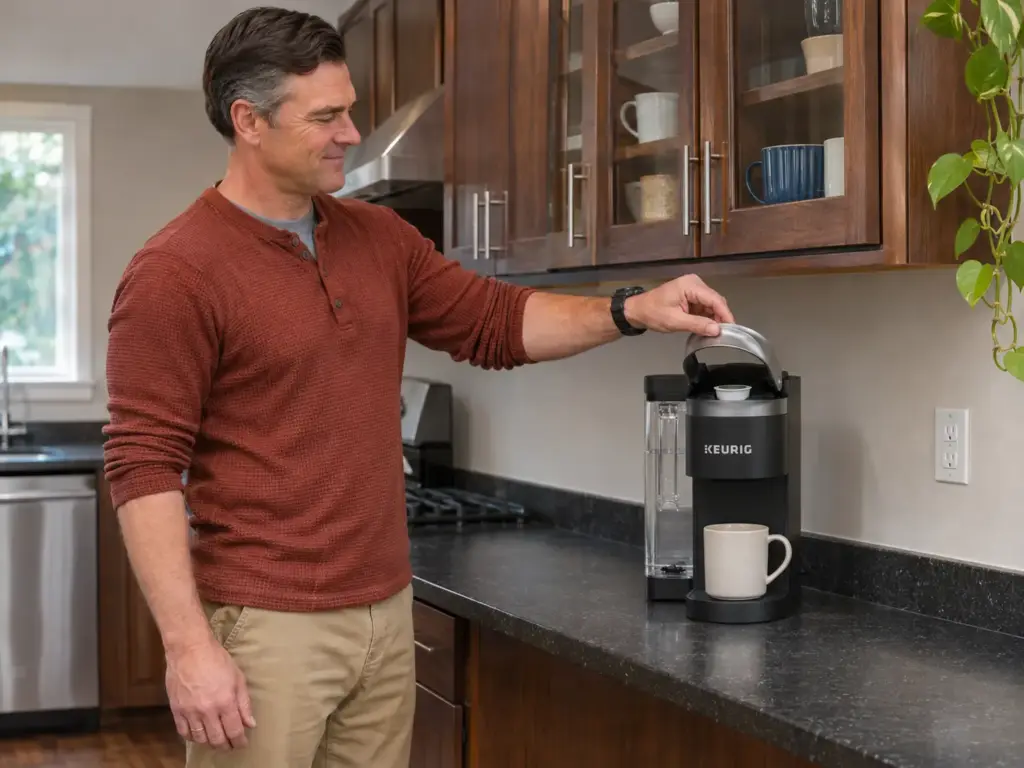
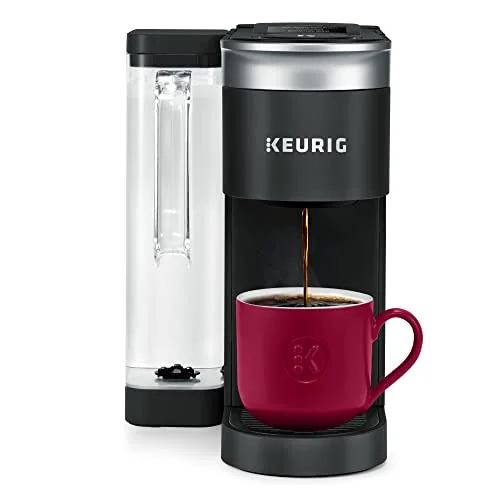
Where the dose lives is the whole difference from drip, and drip against single-serve, and who sets the dose takes it apart. On the Keurig K-Supreme SMART the dials are four sizes (6, 8, 10 and 12 oz) and five strength settings, so go down a size first and taste: the same capsule at 8 oz instead of 12 oz means a third less water, and the next cup should taste fuller. If it is still thin, raise the strength setting one notch. Overshoot tastes bitter and heavy, and the move then is half a step back.
It also has six temperature settings. It gives up reliability: some units quit after a few months, WiFi pairing can refuse to finish and some break inside six weeks.
The Nespresso Vertuo Pop+ reverses the arrangement: the barcode on the capsule sets the size from five (5, 8 and 12 oz of coffee plus single and double espresso), so strength changes only when the capsule does. It is the cheaper and smaller counter, with a 30-second heat-up, and it gives up quiet and reliability: some units stop without reason, the tank is small for two mugs and the motor is loud.
What the standard cannot measure here
The SCA’s filter-brewer standard leaves pod and capsule brewers out by scope, so no certified-brewer proof exists either way, and a 206 °F setting on a dial is a figure no standard checks at the grounds. The arithmetic changes as well: grams give way to capsules, one per mug, so what the counter costs to run is capsules per box set against mugs per week, a division you run with today’s price.
The descale light nobody answers
The descale prompt arrives on a schedule the machine sets, and a light left on for weeks turns into part of the counter. Meanwhile the cup starts to taste of the machine, and the manual is a page that was never opened. Descale when the light first comes on. The Vertuo’s 25 fl oz tank covers about two 12 oz mugs before a refill, so a two-mug morning means a trip to the sink in the middle of it, and the descaler bottle needs a spot on the counter as well.
Where the Counter Goes: Reach, Water, Cords and Grounds
The machine is one object on a counter that has to work for hands moving in a fixed order. This section sets what has to sit within one reach of it for each of the three setups, and where the water and the grounds go.
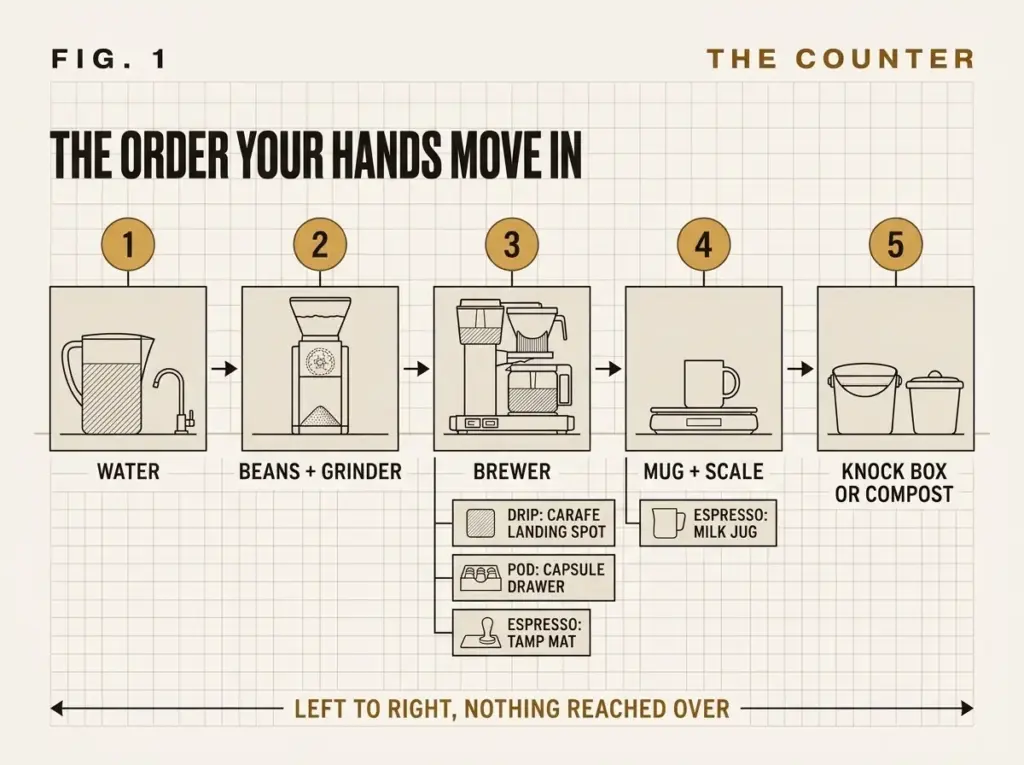
The order your hands move in
Each station is a handoff, and the hand that fills the pitcher should never cross the hand that holds the scale. Order the counter by the direction the hands travel: water first, then beans and grinder, then the brewer, then the mug and the scale, and the knock box or the compost at the end, so nothing is reached over a hot or wet thing. Water enters from the sink side and grounds leave on the compost side, and a left-handed household flips the whole line. The order is the same for all three setups; only the brewer in the middle changes.
What each counter needs within one reach
The test is simple: stand at the machine and reach for each item without taking a step. Each setup keeps a short list of things at arm’s length:
- Drip: a pitcher for the reservoir, the filter box and a landing spot for the carafe.
- Pod: the capsule drawer, the mug and the descaler bottle.
- Espresso: a tamp mat, a knock box, a milk jug and a socket that survives a 1560 W machine.
Anything that needs a step lives in the wrong place, and a filter box kept in a pantry is a filter box that gets skipped on a busy morning.
Cords, water and where the grounds go
One power strip goes behind the machine, never in front, where a cord crosses the working edge.
A 1560 W espresso machine and an electric kettle should never share a strip, so the socket’s place is decided before the cart is.
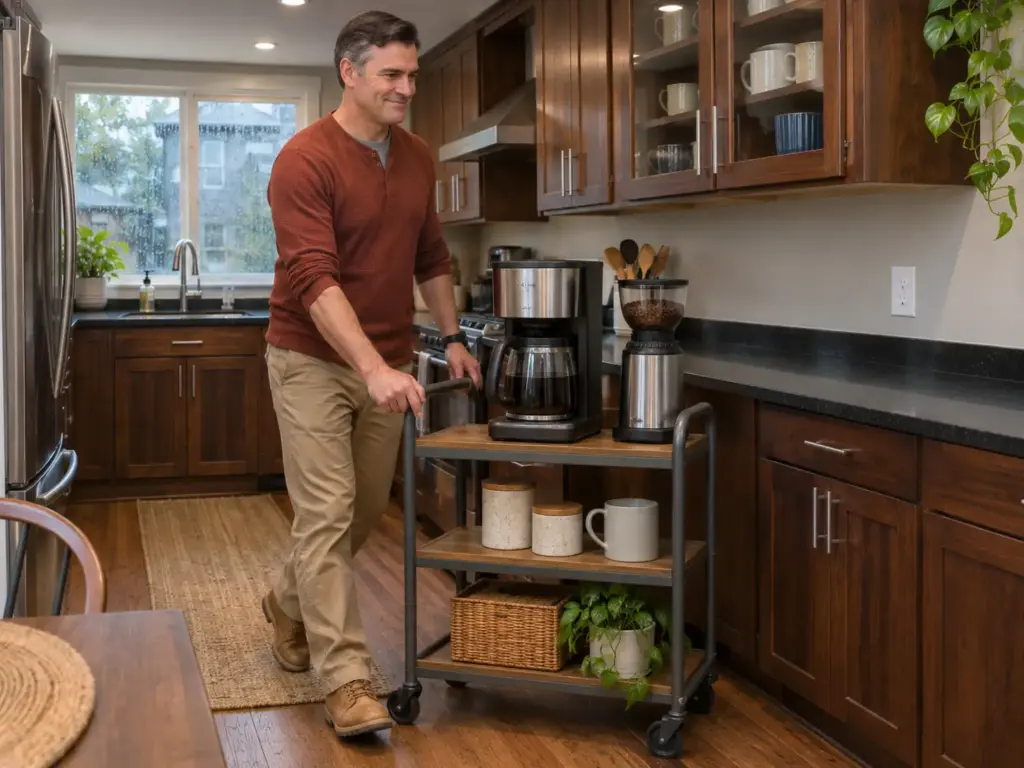
A rolling cart can carry the whole counter (machine, grinder, scale) out from under the cabinets and back against the wall, which turns a coffee corner into something a small kitchen can afford. Water travels the farthest on every setup, and a drip reservoir fills from the top, so a shelf directly above the machine is a shelf the pitcher cannot clear. Grounds and filters leave on the compost side so the wet pieces never cross the clean ones.
The Espresso Counter, and the Minutes It Asks For
Espresso is a hobby as much as a setup, and the honest question is how many minutes a morning you will spend at it; the bars of pressure on the box answer nothing. This is the counter that asks the most, and it asks it of the grinder before the machine.
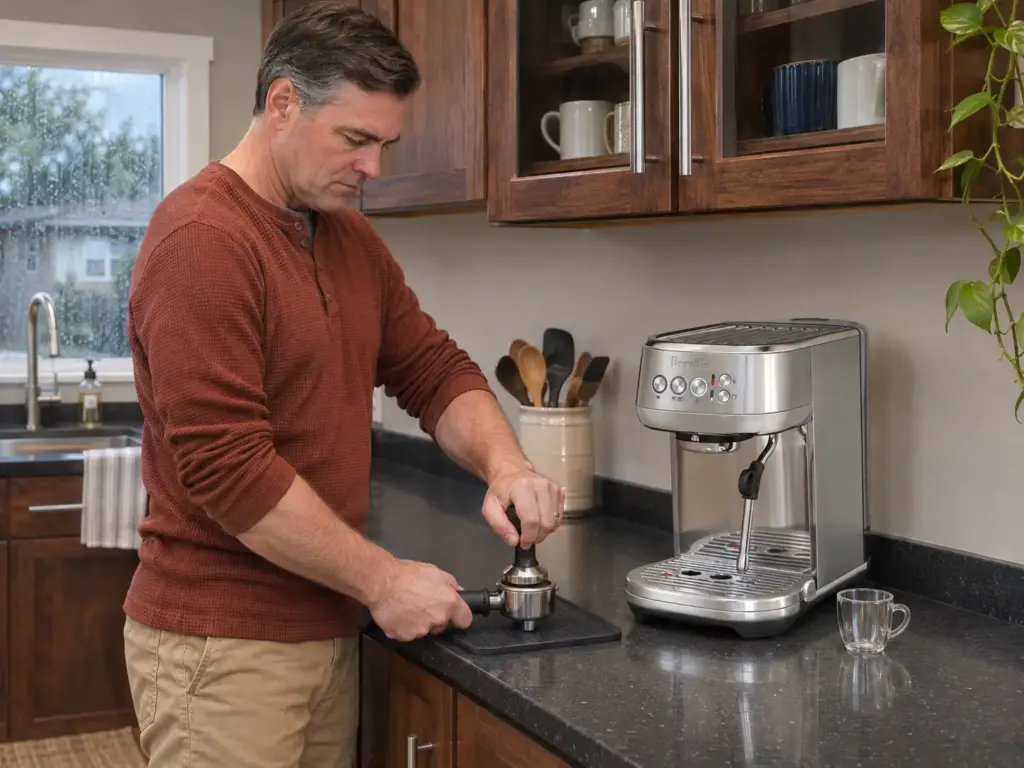
Half the counter is the grinder
The first money goes to the grinder, since a common beginner mistake is spending the whole budget on the machine and pairing it with a bad grinder.
Step size matters here, and a grinder with 40 stated settings tells you more than a 15-bar claim on a box. A 19 g basket also sets the arithmetic: a 12 oz bag (340 g) gives about eighteen full doses. The step size an espresso grinder needs works out how fine the steps have to be. The counter sits outside the SCA’s drip standard by scope, so the numbers that matter are the grinder step, the dose and the temperature the machine holds.
A machine that holds its own temperature, or one you learn
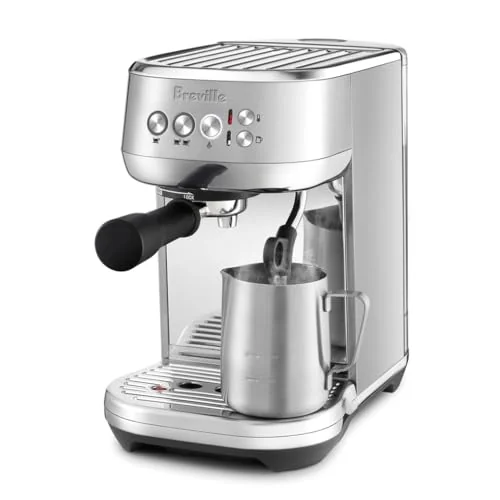
The Breville Bambino Plus heats to brew temperature in about 3 seconds with its ThermoJet, controls it by PID and takes a 54 mm portafilter with a 19 g basket. That temperature control is the difference between a machine used on a Tuesday and one that got given up on. It gives up durability and some patience: the steam function fails after a few weeks on some units, several break around month five and the volume buttons are inconsistent, so shots end up stopped by hand.
The Gaggia Classic E24 is the machine to grow into: 9 bar, a 58 mm commercial portafilter (the size the aftermarket is built for) and a three-way solenoid that leaves a dry puck instead of a slurry. With no PID it asks for temperature surfing, timing the shot against the heating light, and it pulls a different shot depending on how long it has been heating, so the habit is the same wait before every one. Durability is mixed, with failures around the year-and-a-half mark.
What the milk side adds
Milk is where the two machines separate. The Bambino’s automatic wand offers three milk temperatures and three foam levels, so the texture is set instead of learned, while the Gaggia’s commercial wand is manual and rewards practice. A super-automatic with an integrated milk system asks for more: its automatic program cleans only the coffee path, a blocked brew unit shows up around a year in, and the deep clean that reaches the rest costs a large share of the machine.
What Each Counter Is Doing by Month Two
Week one flatters all three counters. This is the check on each, what the parts do once the shine is gone and what to try before anything gets replaced.
Drip: the plate, the lid and the gasket
A stewed pot is flat and bitter at once, and it gets worse the longer the carafe sits.
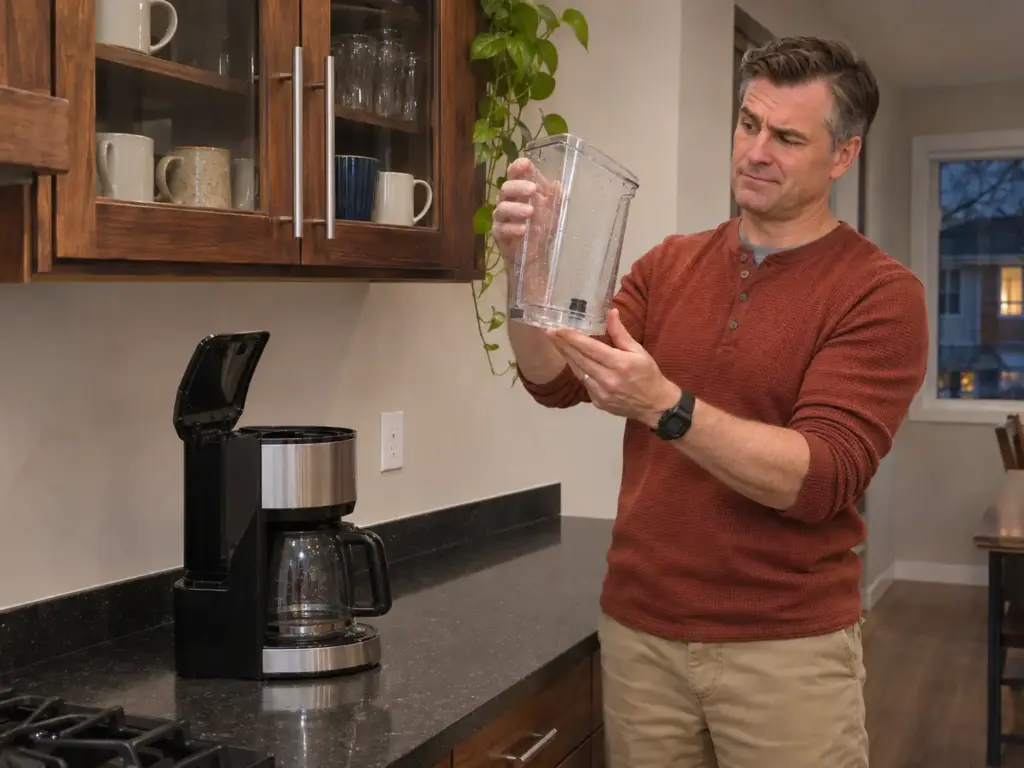
A drip counter shows its age in three places: the pot that stews on the plate, the carafe lid and gasket, and a white ring in the reservoir. The lid and gasket stain and sour a pot first, so rinse them separately from the carafe, then pull the pot the moment the brew ends and taste again: the cup should lose the stewed edge before anything has been bought. The white ring is scale, and scale cools the brew, so a ring that has started is the cue to descale. The manual’s descale interval assumes soft water, and hard water shortens it.
Pod: the light, the supply and the reliability
A pod counter’s second month is the descale light that has been on for weeks, then the machines that stop. When the same capsule starts tasting dull, scale in the reservoir is the first suspect. The free change is to descale on the machine’s schedule instead of on the morning the cup tastes of the machine, and to check that the capsule supply still matches the number of mugs poured. The units that stop for no clear reason tend to do it early, so the first descale and the first weeks are the stretch that decides how long the counter lasts.
Espresso and the grinder: the parts that show it first
On the Gaggia, the same wait before every shot doubles as a check: if shots start to vary with no change in dose or grind, the machine’s heat is what moved, because the beans stayed the same.
On espresso the gasket and the shower screen go first, along with the milk wand’s rinse and the group’s backflush, so the free change is a daily rinse and a regular backflush. A shot that suddenly runs fast or sprays is the shower screen or the gasket asking for attention before it asks for a new machine. The grinder, though, is where month two shows first on all three counters that use one, since burrs and motors fail long before a heater does. When the same part fails the same way on unit after unit, that is a design flaw, and it is the reason every pick above carries its flaw in writing.
Brush the burrs clean, then dial one step coarser and taste. If the cup comes back sweeter, the grinder had been drifting finer, and nothing else needs replacing.
Weigh One Dose Tomorrow, and Check the Reservoir in Eight Weeks
Drip is the counter most kitchens end up wanting, a pod machine fits one mug and no mess, and espresso pays back only when the minutes at the counter are welcome. Under all three, a burr grinder and a scale change more cups than a new machine does. In about eight weeks, look at the reservoir for a white ring, taste the last mug of a pot against the first, and look at the grounds for dust and chunks. A white ring, a stewed last mug and an uneven grind are the three signs that a counter is wearing in the wrong direction.
Tomorrow, pull the carafe off the plate when the brew stops, or weigh the dose in grams instead of scooping it. Then taste: the second mug should be as sweet as the first, and the flat, bitter edge at the bottom of the cup should be gone. The grinder is what to pick next, matched to the counter you chose, and the grinder section is where that starts.
Frequently Asked Questions
01What do I need for a home coffee machine setup besides the machine?
A burr grinder, a scale and water that will not scale up the machine are the three pieces behind every drip or espresso counter. Each setup then adds one more: a pitcher and filters for drip, a capsule drawer for pods, a tamp mat and knock box for espresso.
02How many mugs does a 10-cup coffee maker really make?
A 10-cup coffee maker fills about five 8 oz mugs, because a box cup is 4 to 5 ounces and a typical carafe holds 40. For 12 oz mugs, expect about three, so buy by ounces.
03Does a hot plate ruin coffee?
A hot plate that keeps adding heat will stew a pot, because the SCA holds brewed coffee at 176–185 °F (80–85 °C) and never above 185 °F. Pull the carafe when the brew stops, or move to a thermal carafe.
04What temperature should a home coffee machine brew at?
The SCA’s range is 194–205 °F (90–96 °C) at the grounds, held through the brew. A drip machine on its certified list holds it; pod and espresso machines sit outside the standard by scope, so no certified number exists for them.
05Is a built-in coffee machine worth it for a home setup?
For most kitchens, no: a built-in needs a cabinet cut and a service network, so it ties a remodel to a repair path. A counter machine that holds the same drip numbers does the job and moves with you.

How did your cup turn out?
No comments yet. Tell us what you changed — and whether the needle moved.