
We may earn a commission when you buy through links on this page. It never changes what we recommend. How we pick
On this page7 parts
- Start With a Medium Roast, and Know What Dark and Light Do
- Blend or Single Origin, and What the Tasting Notes Mean
- Read the Label for the Roast Date, Not the Best-By
- Match the Bag to the Brewer You Already Own
- Bag One to Bag Four, and the Day It Isn't the Beans
- The Bag to Buy Tomorrow, and the Date to Check on the Next One
- Frequently Asked Questions
Stand in front of a dozen bags choosing a first bag of coffee, with a drip machine waiting at home, and every one of them carries some mix of bold, 100% Arabica and premium, none of which is a spec for the roast. What is the best coffee for beginners? A medium-roast blend or a forgiving origin like Brazil or Colombia, bought whole bean, with a roast date inside the last few weeks. Medium is the roast that still tastes like coffee when the first grind lands one step off and the machine runs cooler than its label, and that is exactly what a first bag has to survive.
Below: the roast first, then blend against single origin and how to read the notes, the one date on the label that matters, the bag that suits the brewer already on your counter, and what happens between bag one and bag four.
Quick Answer
The best first coffee is a medium-roast blend, or a forgiving origin like Brazil or Colombia, bought whole bean with a roast date inside the last few weeks. A medium roast forgives a grind that is one step off and a drip machine that runs cool, and a first bag has to survive both.
Start With a Medium Roast, and Know What Dark and Light Do
The Quick Answer named the roast; this section says why, by what each roast does to a cup that is slightly off. The word printed on the bag is the roaster’s claim, and the color of the beans checks it faster than the label does. A darker bag still earns a place in a few kitchens, and the end of the section says which.
Why medium forgives a first grind
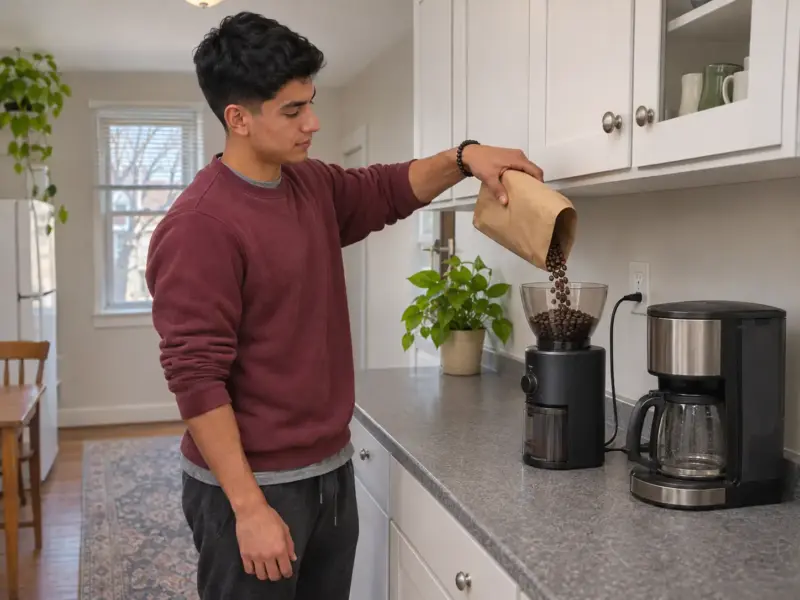
Sour is a direction, under-extraction: the water left the grounds before it finished. A first grind is rarely even, whether it comes from a blade grinder, a bag of pre-ground or an entry hand grinder, and an uneven grind makes boulders and dust at once, so the same cup comes out sour from the boulders and bitter from the dust (over-extraction). A burr grinder is the upgrade that evens the particles, and until then grind consistency is the thing a bag has to forgive.
A medium roast is developed enough that the sour edge is soft and not yet roasted into char, which leaves room to be wrong in both directions. That is the reason to start there: the grind will be off for a while, and medium is the roast that tolerates it.
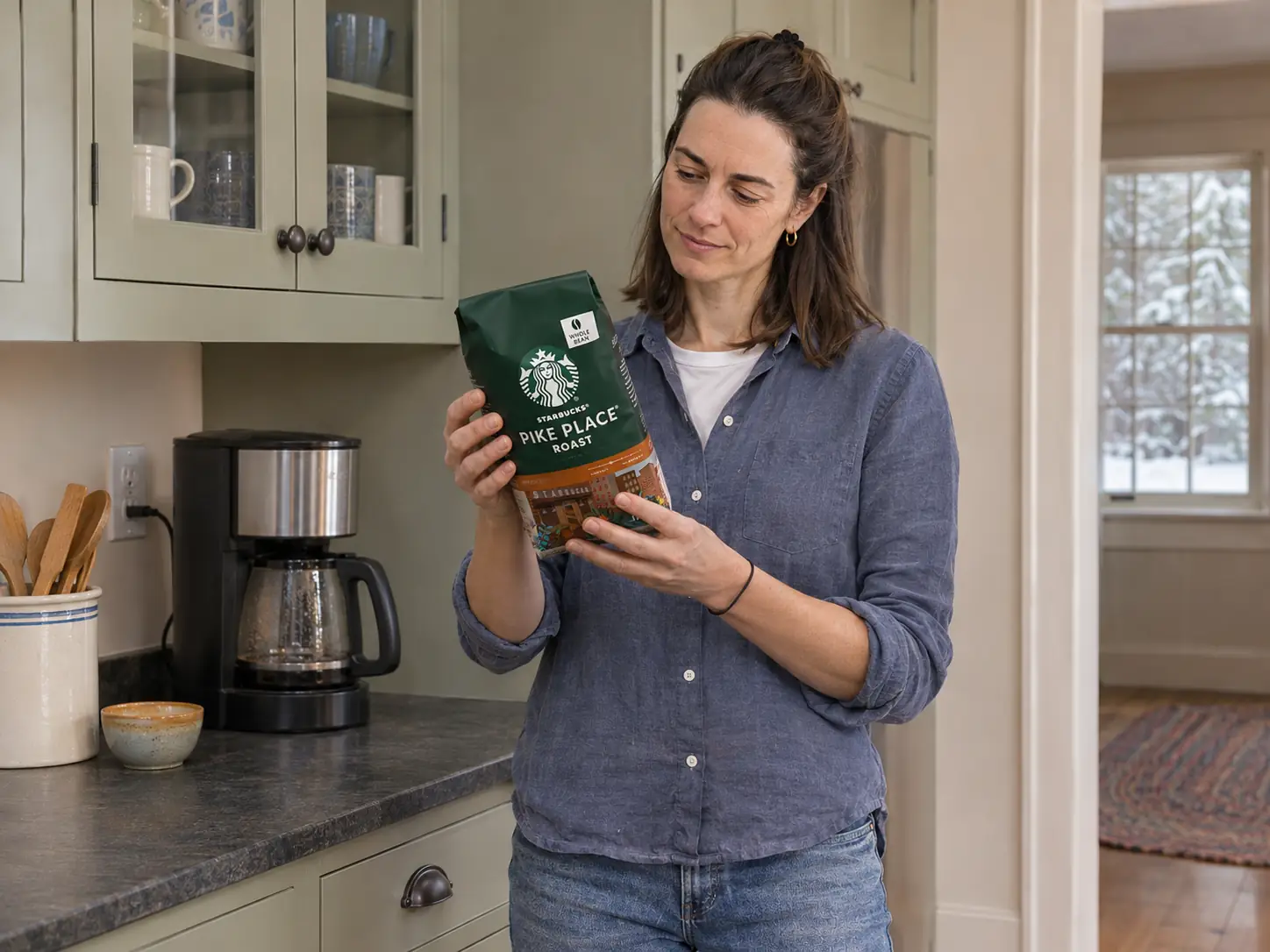
Starbucks Pike Place Roast is the version most kitchens already recognize: a medium, 100% Arabica blend of Latin American coffees, listed with notes of cocoa and praline and nothing aggressive on the acid side. In an 18 oz bag it lasts a one-mug-a-day drinker about 24 days, which sits inside the freshness window. Freshness is where it slips: a bag can arrive nearer its date than you would like. The roast-date check later in this guide is the answer to that.
What light and dark change in the cup
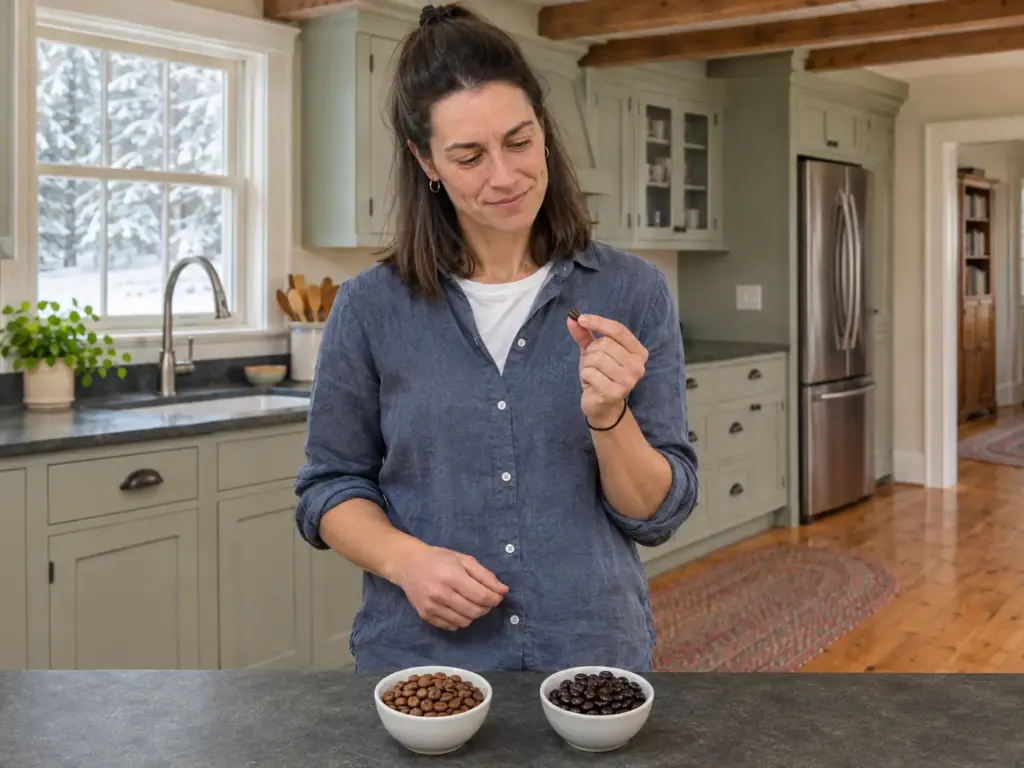
The National Coffee Association’s guide to roast levels makes a point no box will: roast names belong to the roaster, one roaster’s dark can differ from another’s, and most roasters use house names for their grades. So medium on a bag is a claim. The beans are the check, since medium beans look like a dry, matte brown and dark beans are often shiny with oil (if the bag has no window, that check waits until it is open).
A light roast is the one to skip as a first bag. The water pulls out the sharp acids first and leaves before it reaches the sweetness, and an uneven grind widens that, so the cup tastes sour and thin on an entry grinder. What light and dark roasts each do to a cup is the full comparison.
A dark roast hides the origin inside the roast: what the roaster’s heat does to the bean is why a dark bag tastes of roast first and of its country second. That is no reason to rule it out. A dark roast holds its taste through milk, and a moka pot is built around it, and which roast a moka pot or espresso machine wants goes through that side.
Peet’s Major Dickason’s is the dark version of a first bag: a 100% Arabica blend of Latin American and Pacific coffees in an 18 oz bag, blended to stay smooth rather than burnt. Its flaw sits in the bag and the roast: Peet’s Major Dickason’s Blend can arrive past its date or with little smell, so check the stamp on it, and the roast is dark enough that the origin disappears into it.
Dark does not mean stronger, either. According to the NCA, the strong flavor of a dark roast is not associated with caffeine, and light roasts carry slightly more. A dark bean is also less dense than a medium one, which matters the first time you scoop it.
Weigh the dose the day you move from a medium bag to a dark one. A heaping scoop of dark is a lighter scoop of coffee, and a few extra grams on the scale bring the pot back to the strength you were drinking.
The caffeine question stops being about the bag
By the FDA’s count, regular brewed coffee that is not specialty carries 113 to 247 mg of caffeine in 12 fl oz. The FDA’s caffeine figures describe a cup, and they shift with the method, so a moka pot, a drip machine and a French press give a different number from the same bag. The roast moves it only slightly. That is where this guide stops: what a bag, a roast or a brew carries belongs to the cup, while what caffeine does to you, how much suits you and whether coffee suits you at all are questions for your doctor, and no bag here changes that.
Blend or Single Origin, and What the Tasting Notes Mean
With the roast settled, the label hands over two more things to decode: blend or single origin, and a line of tasting notes. Neither is a quality grade. Each describes how the coffee will treat a grind that is not quite right.
Why a blend forgives more than a single origin
Single origin against blend for the brewer you own is a bigger question than a first bag needs, but the short logic is simple. A blend, a breakfast blend or a house blend on a shelf, is built to taste the same from one bag to the next, and the roaster has balanced its parts so that a coarse or uneven grind does not push the cup far in either direction. A single origin shows its farm, and it shows a grind error along with it.
Specialty roasters lead with single origins, and for a counter with a blade grinder that is the wrong first bag: every uneven particle lands in the cup as a bitter note beside a sour one, and a bright origin gives the sour note more to work with.
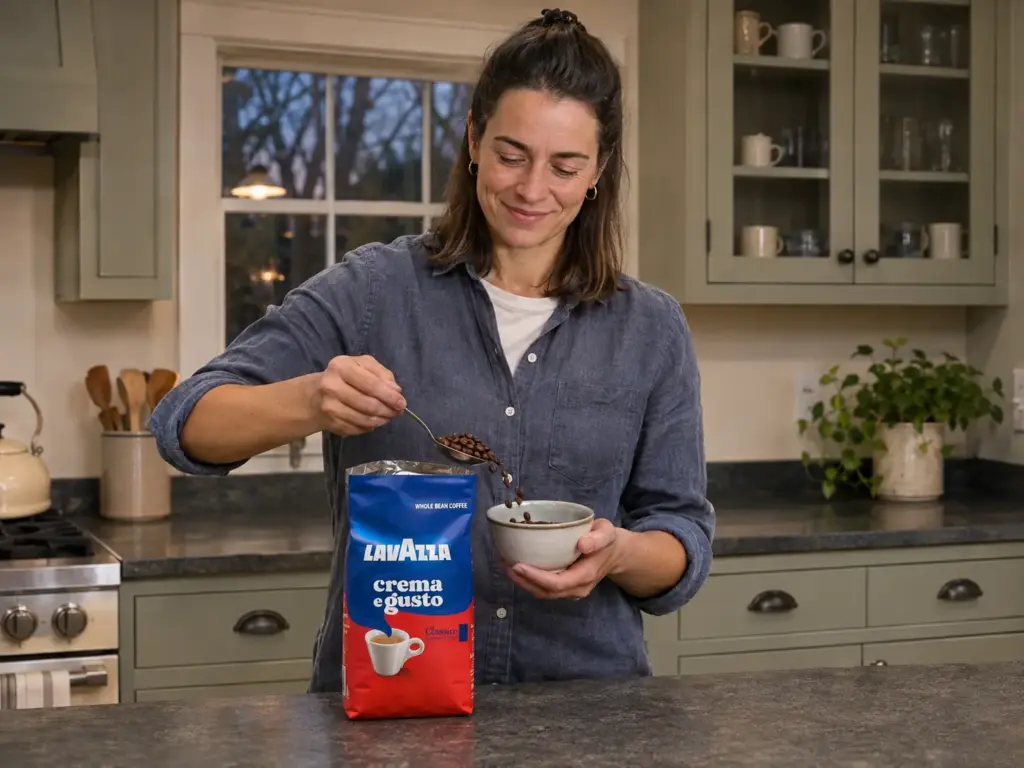
Lavazza Crema e Gusto shows what a blend is for. It is a medium roast of Arabica and Robusta, listed for moka pot, drip machine and French press, and the Robusta half supplies the weight and the crema that cover a rough grind. Where Arabica and Robusta disagree on the numbers is worth a look, because 100% Arabica on other bags names the species in the bag and says nothing about how good it is.
The size is the trade-off: 2.2 lb is about 47 mugs, roughly seven weeks at one mug a day, so the bag is past its best before it ends. It pays off in a house that drinks two mugs a day or more, and it is the cheapest cup of the five picks here.
Reading the notes: chocolate, caramel, nuts, fruit
Tasting notes are the roaster’s description of what the bean and the roast taste like, put in food words. They are not ingredients, and a bag that says caramel has no caramel in it. What single estate and single origin actually mean on a label works the same way: the words say where the coffee is from, and the taste still has to be checked in the cup.
The notes printed on the five bags here read like a menu: cocoa and praline on Pike Place, spices on the Lavazza, caramel, orange blossom and jasmine on the illy, sweet citrus, dark chocolate and raisin on Hair Bender. Pick by what you already eat and drink, which is also how a palate starts to develop. Chocolate notes and caramel suit people who take milk and sugar, and fruit suits people who drink tea. And the notes are a direction until the grind is right: with the grind too coarse, the citrus on the label arrives as plain sour, and the chocolate arrives as nothing at all.
Stumptown Coffee Roasters Hair Bender is the pick for a reader who wants to taste what a step up buys: a medium blend of Latin American, Indonesian and African coffees built to work in any brewer, with sweet citrus, dark chocolate and raisin notes that still read as coffee. It is the splurge of the five. A 12 oz bag is about 16 mugs, close to eight days at two a day, and a mug costs more than any of the other four.
Buy a second, different blend only after the first bag is gone. Two bags open at once give you two sets of notes you cannot tell apart, and neither grind gets dialed in.
Brazil and Colombia, the origins that behave
Brazil and Colombia are the familiar origins whose cups run toward chocolate, nuts and caramel, the notes of the bags most people already like. They are the single origins to try once the blend is dialed in, because they tolerate a grind a half step off better than a bright East African coffee such as an Ethiopian does. Single origins that suit a drip machine, for the second bag is where that second bag comes from.
Read the Label for the Roast Date, Not the Best-By
Roast level, blend and notes are all claims on the front of the bag. The one number that decides how the coffee tastes sits on the back or the bottom, and a lot of bags never print it. A flat cup from a bag marked fresh is usually that number talking.
Roast date or best-by: only one tells the age
Coffee goes stale from the day it is roasted, and a best-by date measures the shelf, not the beans: a bag can carry a date a year out and still have been roasted before the last holiday. The NCA’s advice on when to brew after roasting spells out the window: “Ideally, you should ground and brew your coffee beans about 2 to 7 days after roasting to enjoy the freshly roasted flavor at its peak.” Freshly roasted beans also rest for a couple of days first, off-gassing (degassing) as they settle, so a bag roasted yesterday is not at its best yet, and a bag roasted in March has little left to give.
The decline is front-loaded. The SCA’s own review of coffee staling research found that “the greatest rate of freshness loss occurred in the first month of coffee storage,” and it names oxygen as the primary enemy. A roast date inside the last few weeks therefore beats a twelve-month best-by, even before the bag is open.
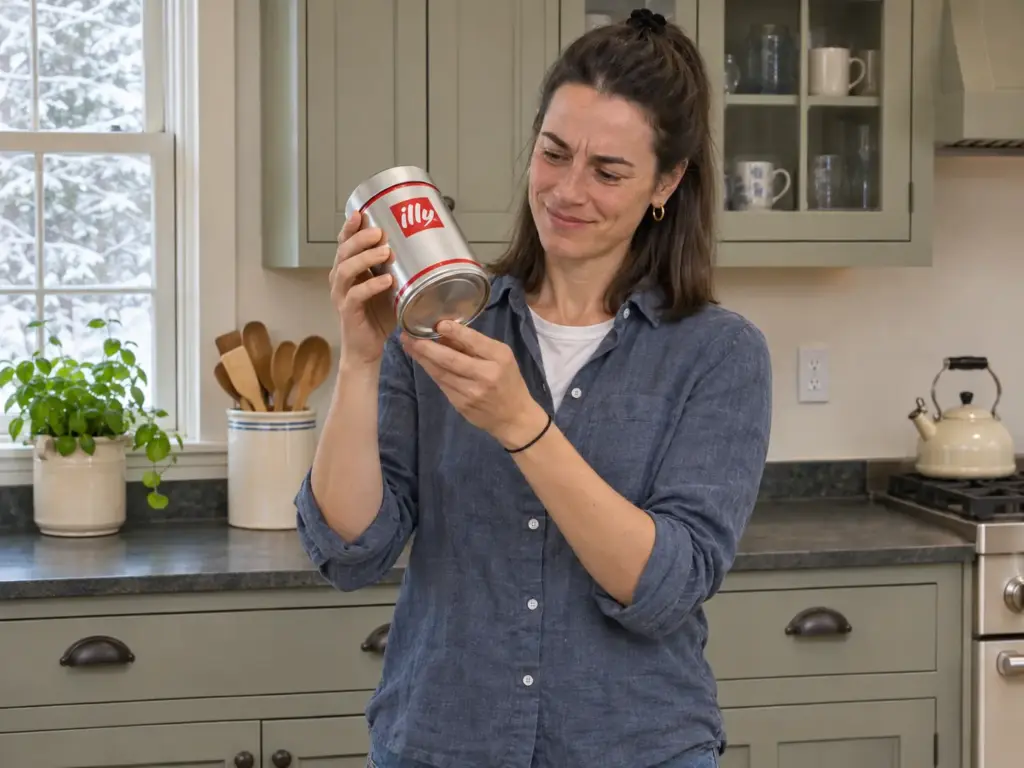
Illy Classico is the freshness argument made physical. The can is pressurized with inert gas, so it holds its aroma longer than an opened paper bag, and 8.8 oz is about 12 mugs, close to 12 days at one a day, a size one drinker finishes before the beans fade. For a roast-date shopper the can has one drawback: it prints a best-by date and no roast date, so the age of the beans stays a guess. And a can can sit in a warehouse past its date like any other bag, so check the best-by on arrival.
Turn the bag over and read the back and the bottom before the front. The roast date is a small stamp or a printed date next to a word like roasted, and if the only date on the bag is a best-by, that is your answer.
Whole bean or pre-ground for the first bag
Pre-ground coffee loses its aroma in days, because every particle is exposed to air at once, while whole bean keeps its structure until the grinder opens it. That is the case for whole bean, and it comes with a condition: a grinder, or a shop that will grind the bag once. For the reader with neither, a small bag of pre-ground is a better start than a large bag of whole bean that sits unground, and what to keep pre-ground coffee in covers how to keep it sealed.
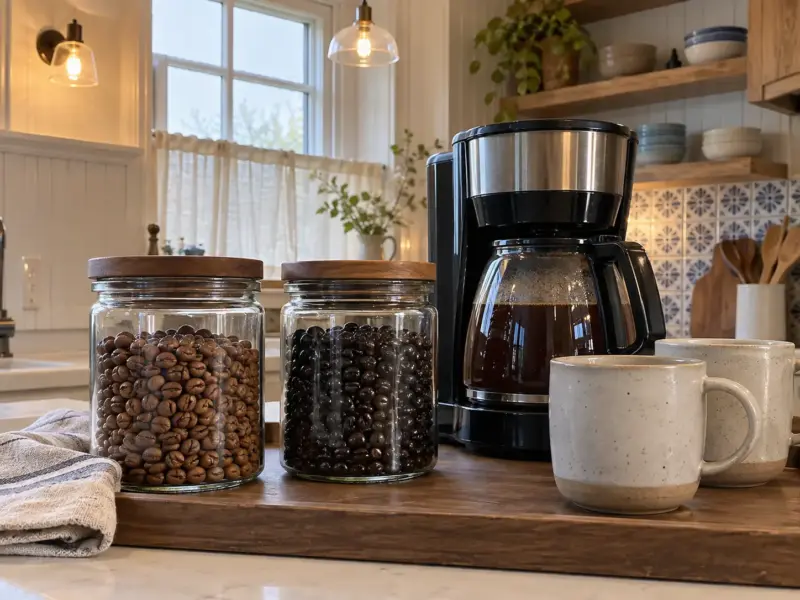
The one-way valve on a bag works only while the bag is sealed. Once it is opened, a whole-bean bag reaches about 21 % oxygen inside within a week, according to a 2022 study by Smrke and colleagues at the Zurich University of Applied Sciences, and an integrated screw cap kept freshness best of the closures tested, ahead of a clip, tape or a plain canister. Buy a bag you will finish in three to four weeks, and use how long an opened bag really lasts, counted from the roast date for the longer timeline.
A stale shelf bag does not always taste stale, and the reason is a gas: many supermarket bags are flushed with nitrogen before sealing, so the coffee inside keeps tasting acceptable months past its roast. The first brew gives a free test. A bag that is days off the roast blooms and bubbles when the hot water first touches it, and a shelf bag barely moves. How to tell stale beans, from the smell to the cup covers the rest of the signs.
Where to buy it: shelf, roaster’s counter or the roaster’s own site
A shelf bag is a legitimate way to start tasting, as long as the second bag is chosen by its roast date, and grocery store beans, ranked by the date on the bag sorts the shelf for that. A local roaster’s counter gives you a bag only a few days off the roast, and the person behind it will grind it once for the brewer you own. A roaster’s website or subscription ships close to the roast date as well, though you cannot smell the bag before it arrives, and roaster, online or shelf, and which one stays fresh compares the three.
Match the Bag to the Brewer You Already Own
All of this assumes the grind is right, and on the first morning it is the brewer on the counter that says what right means. A pod machine such as a Keurig is the exception: it takes pods, so the bag never reaches it. For the other three the match is simple once they are laid out.
Drip machine: medium grind, medium roast
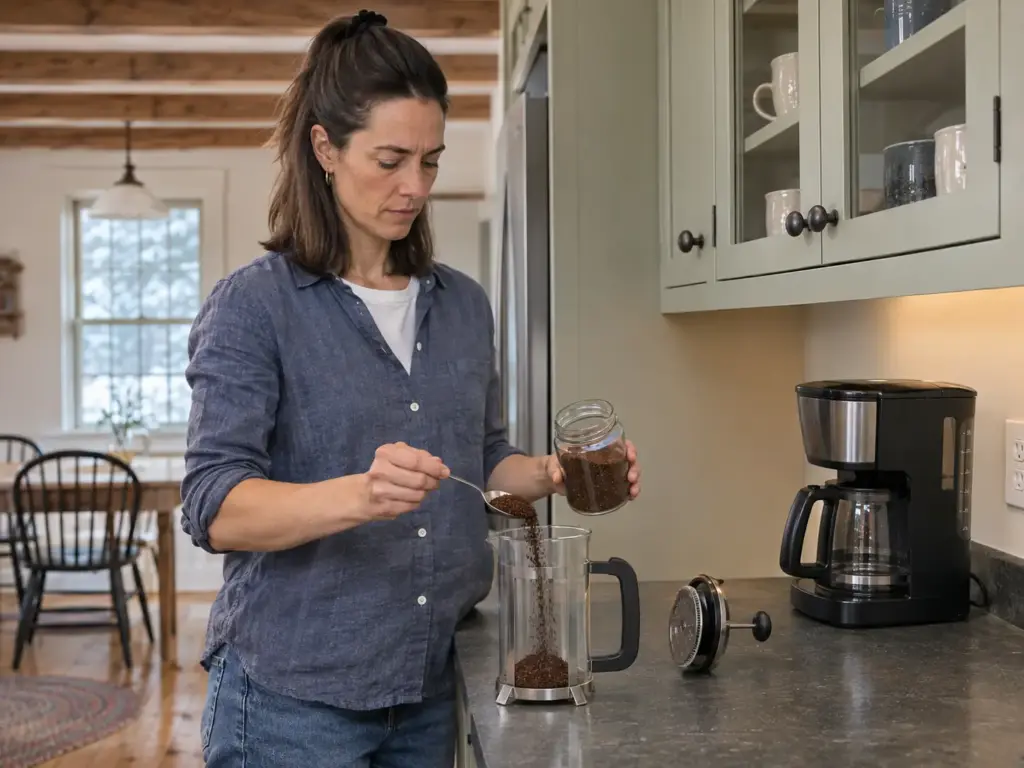
A drip machine wants a medium grind, a little coarser than table salt, and it is the brewer a medium roast suits best. Many home machines run cooler than the label promises, and a medium roast gives up its taste at a lower extraction than a light one does, so it is the bag that survives a cool machine. Pour-over guides lead with a light roast; in a drip machine that never gets hot enough, that same bag is the one that turns sour, so the medium roast is the better call here. Start at medium, move one step finer if the cup is sour, and come back half a step if it turns harsh.
A light roast also wants a finer grind than a medium to reach the same extraction, and an entry grinder’s finest settings are where it turns uneven. How grind size shifts with the roast, dose first covers that adjustment.
French press and moka pot: the two ends of the grind
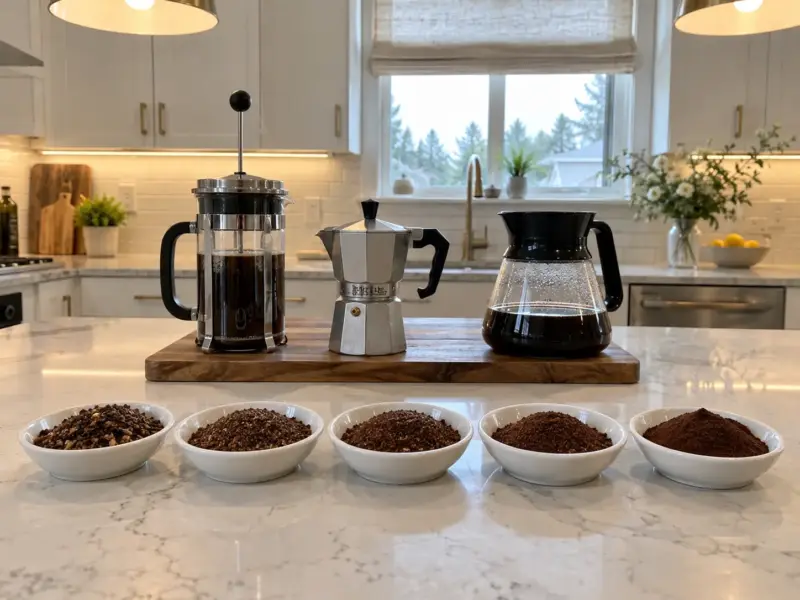
Grind runs from fine to coarse by brewer: a moka pot wants fine, a pour-over medium-fine, a drip machine medium and a French press coarse.
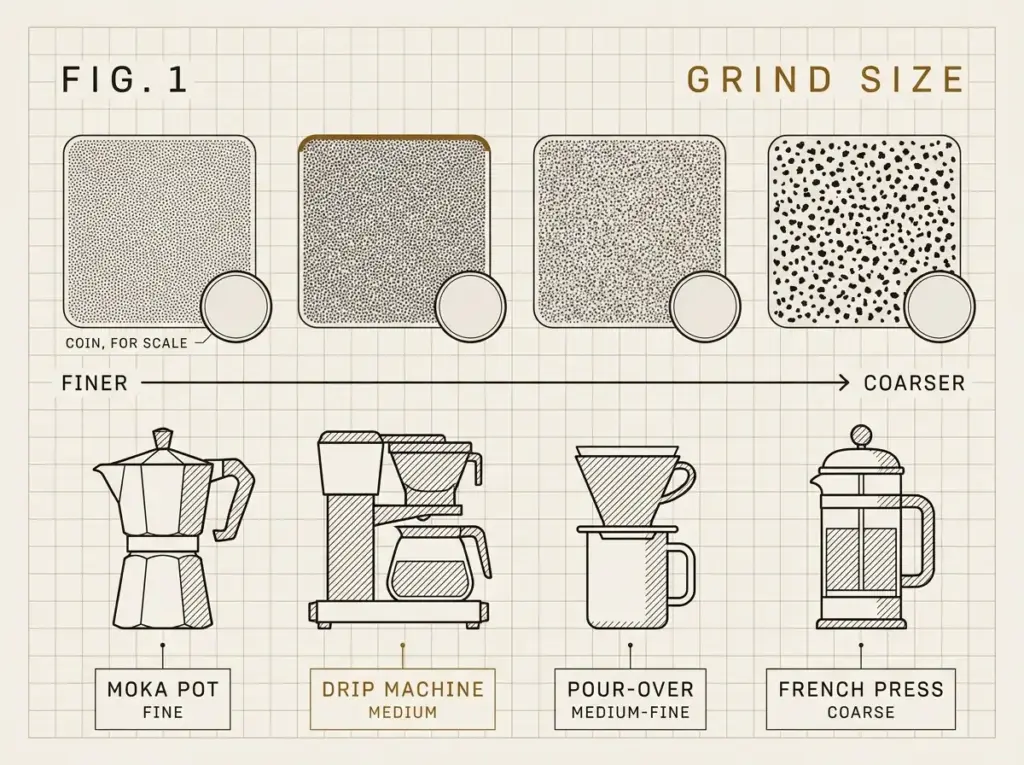
The French press is the brewer that forgives a coarse, uneven grind, because the grounds steep in the water for minutes instead of passing through once, which is why a roughly ground bag works there when it fails elsewhere. The moka pot is stricter: it wants a relatively fine grind, and the adjustment goes one notch at a time. And the first dose after any grinder adjustment still comes out at the old setting, because grounds stay inside the grinder, so taste the second dose before deciding the change worked.
Have the first bag ground at the shop for the brewer you own, and read the grind as you open the bag. Then you know what medium looks like on a counter, with a spoon, before you buy a grinder.
Whether a home grinder is worth buying depends on how fast a bag disappears, and whether grinding at home is worth it, and what the roast date has to say runs that math.
Pod machine: the bag matters least
A pod machine is fed by the pod, so the choice of bag is the one decision it takes away. That is the honest answer for that reader: the attention goes to the cup size and the water, and this guide’s bag waits for a second brewer. Which kind of coffee maker suits a home counter covers the machine side of the choice.
Bag One to Bag Four, and the Day It Isn’t the Beans
The first bag is the easy one. By the fourth, the coffee is rarely what is wrong, and the free checks, the date, the water, the hot plate and the scoop, come before another purchase.
How long a bag lasts, in mugs
The Specialty Coffee Association’s (SCA) brewing convention is a coffee-to-water ratio of 60 g of coffee per liter of water, which puts a 12 oz mug (about 350 g of water) at roughly 21 g of coffee, or about four level tablespoons. At that dose an 8.8 oz can (250 g) makes about 12 mugs, a 12 oz bag (340 g) about 16, an 18 oz bag (510 g) about 24 and a 2.2 lb bag (1,000 g) about 47. At one mug a day those bags last about 12, 16, 24 and 47 days, and at two mugs a day about 6, 8, 12 and 24. The last of them, nearly seven weeks, is past its first month long before it is finished.
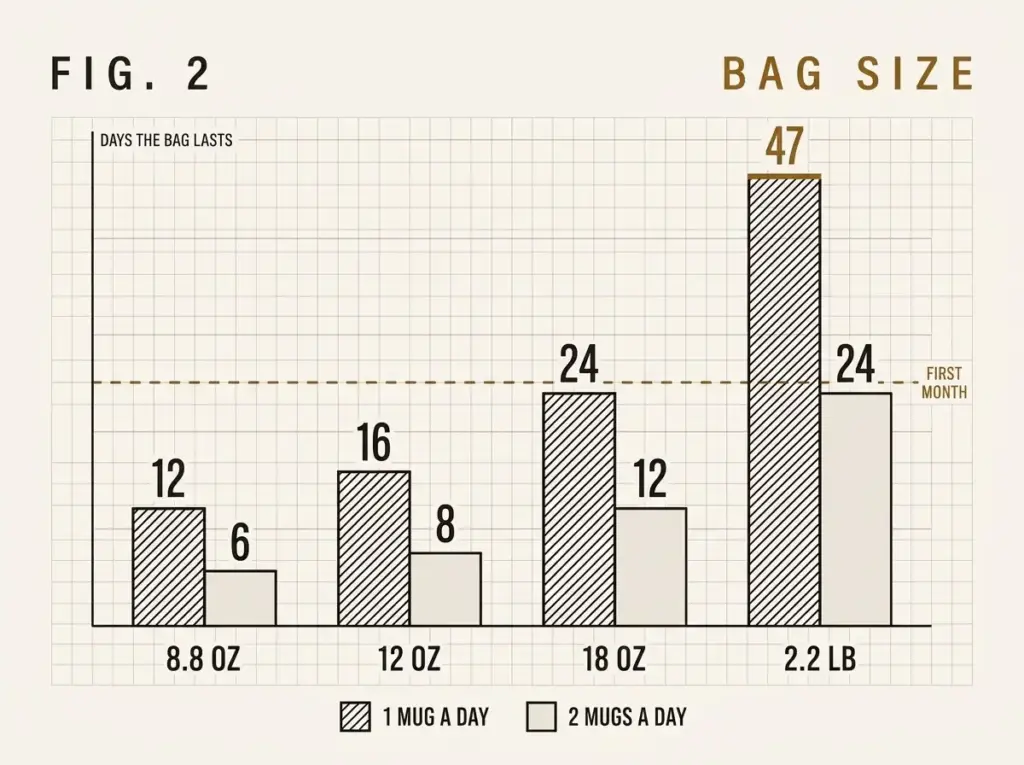
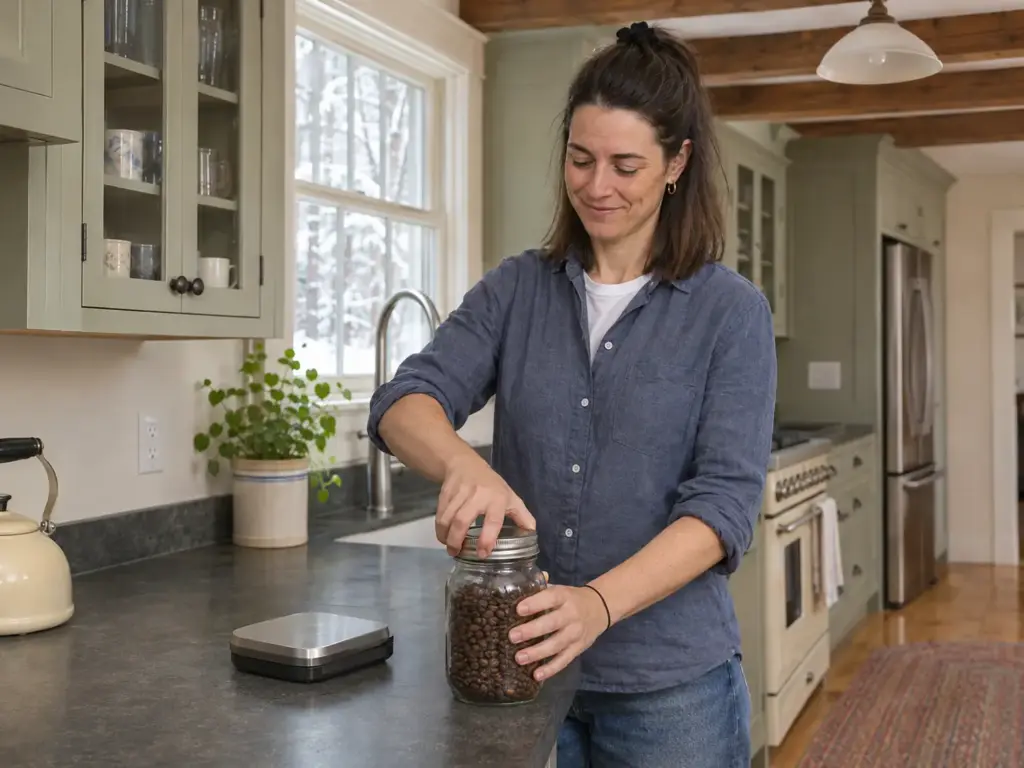
So the size to buy is the one you finish in three to four weeks, and the bag that is half gone by week three is the one that tastes worse than it did in week one. In the 2022 opened-bag study, an integrated screw cap kept freshness best among the closures tested and a clip or tape did worse, so a bag that closes with only a clip should be finished sooner. That is the whole story of the 2.2 lb bag.
Free checks before the next bag
Check the age first, because it costs nothing. If the last third of the bag tastes flatter than the first third, brewed the same way, the bag’s age is the cause and the brewer is not. The next cup from a fresher bag should taste sweeter and brighter, and if it does not, the problem sits elsewhere.
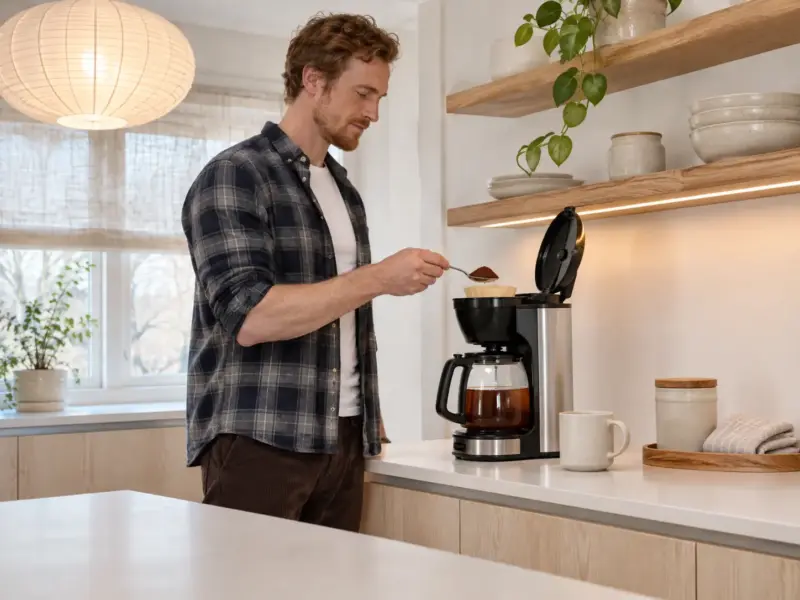
Then weigh the dose. Volume is a hidden variable (a scoop of dark roast weighs less than the same scoop of light), and a single pass on a kitchen scale at about 21 g per 12 oz mug stops the guessing. The cup should come out fuller, not harsher, and if it turns bitter you overshot by a few grams.
Next, the carafe. A carafe left on the hot plate cooks whatever is left in it, so the second cup of the pot tastes burnt even from a fresh bag. Pour the finished pot into a mug or an insulated carafe, and the last cup should taste like the first.
After that, the machine’s temperature. A drip machine whose water temperature stays under about 195 °F (91 °C) makes a sour cup from a good bag, and the SCA’s list of Certified Home Brewers is the only printed proof that a model holds 198 to 205 °F (92 to 96 °C) through the brew. How long to rest the water off the boil gives the same number for a kettle.
And last, the water. The SCA’s water research shows that alkalinity, not pH, decides how much of the coffee’s acidity you taste, and high-bicarbonate water mutes the cup. If a bright bag tastes flat and dull at home and fine at the shop, suspect the tap water (hard water especially) before the beans. All five checks cost nothing, and what the counter already covers before you buy more says what else the kitchen does before another purchase.
When the cup stays flat on fresh beans
Two purchases waste a month. A five-bag sample pack is five sets of notes and five grind settings, so no bag gets dialed in before the next arrives. And a flavored coffee can hide a stale base under the flavoring, which makes it the worst bag for judging the date.
If the cup is still flat after the five checks, the move is the grind: a half step finer, same dose, then taste again. A setup that still works in month two is a useful test of whether the counter holds up once the first bag is gone.
Write the roast date, or the day you opened the bag, on a small piece of tape on the lid. It is the only way to know the age of the bag in week three.
The Bag to Buy Tomorrow, and the Date to Check on the Next One
What coffee to buy first has a plain answer: a medium roast, whole bean, with a roast date inside the last few weeks: a blend, or Brazil or Colombia, in a size you finish in three to four weeks. Read the back of the bag before the front, since the roast date is the one number that cannot be a marketing word. Match the grind to the brewer on the counter, and if the cup is off, run the free checks before another bag.
When bag one is nearly empty, taste its last cups against the first ones, brewed the same way. A flatter last third is the age of the bag talking, and if the cup still seems off with a fresh one, the grind the brewer wants may have shifted by a half step in either direction.
Tomorrow, turn the bag over and find the date. Buy the next bag by that date rather than by the front, then taste whether the cup moved: sweeter and clearer means the age was the problem. The bag comes after the bench, and the order to buy coffee gear in holds everything that comes after it.
Frequently Asked Questions
01What is the 80/20 rule for coffee?
The 80/20 rule is a rule of thumb you will see quoted around coffee, not a figure the SCA or the National Coffee Association publishes. The numbers those groups do publish are the ones to use: about 60 g of coffee per liter of water, and a roast date inside the first weeks.
02What is a good coffee maker for beginners?
A drip machine that holds its brew temperature is the plain starting point, and SCA Certified Home Brewers are tested to hold 198 to 205 °F (92 to 96 °C) through the brew. The guide to choosing a coffee maker for home use goes through the rest.
03What are the 5 most popular coffee flavors?
No official ranking exists, and the notes a beginner meets most are chocolate, caramel, nuts, fruit and spice. The bags in this guide print them as cocoa and praline, spices, caramel and orange blossom, and sweet citrus with dark chocolate.
04Is decaf coffee caffeine-free?
No, decaf still carries a little: the FDA says decaf coffee typically has 2 to 15 milligrams in an 8-fluid-ounce cup. A decaf bag follows the same rules as any first bag: medium roast, whole bean, a roast date.
05Is a supermarket bag a bad place to start?
No, a shelf bag is a fair way to start tasting, as long as the next bag is chosen by its roast date. A nitrogen flush explains why a stale shelf bag can still taste acceptable, and a local roaster’s counter gives a bag a few days off the roast.

How did your cup turn out?
No comments yet. Tell us what you changed — and whether the needle moved.