




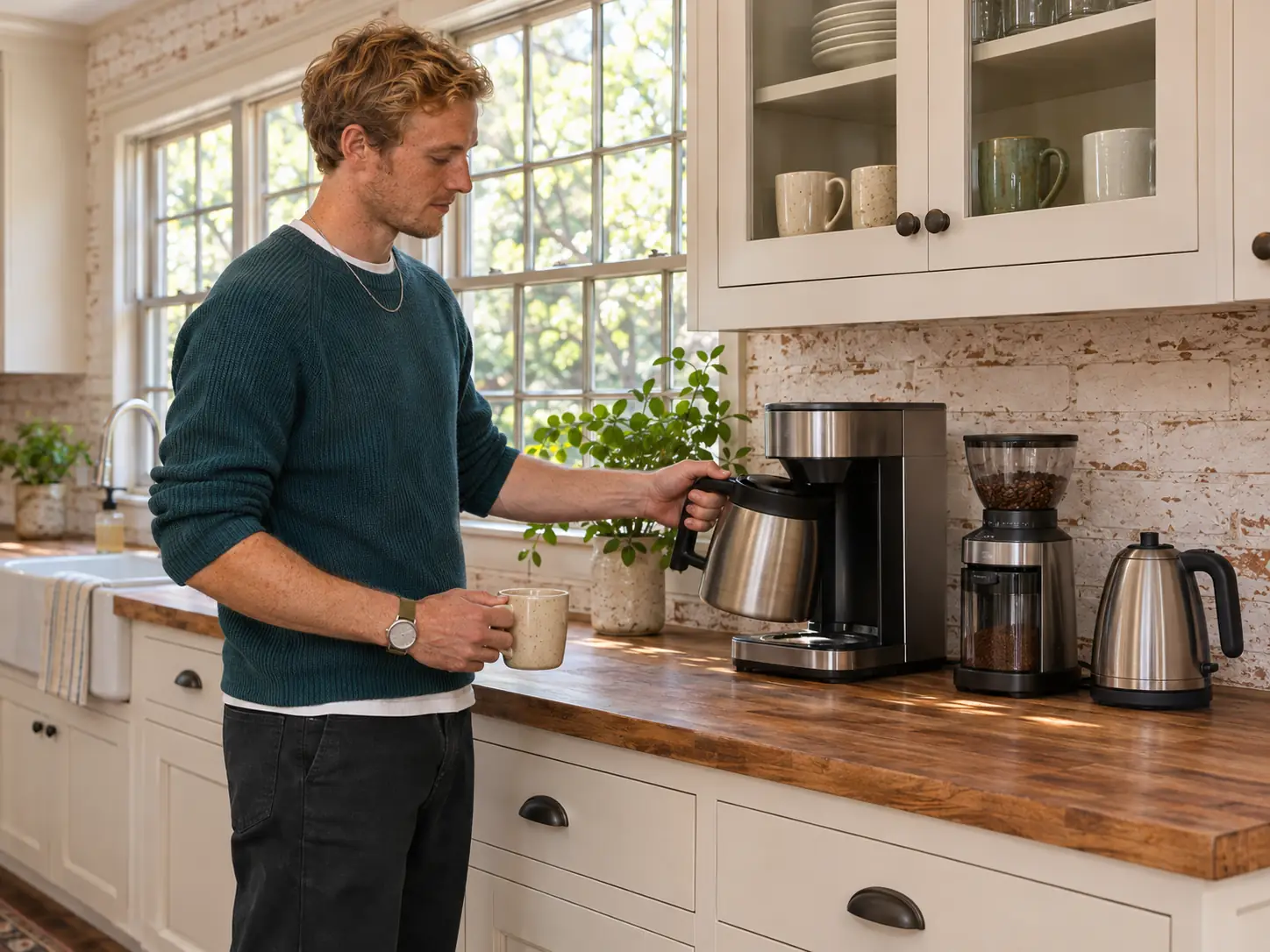
We may earn a commission when you buy through links on this page. It never changes what we recommend. How we pick
On this page9 parts
- What a Coffee Gear Brand's Name Actually Covers
- The Grinder Comes First, and So Does Its Brand
- Espresso at the Entry End: Breville and Gaggia
- The Drip Brewer: Certification Belongs to the Model
- Small Gear: Hario's Cone and Fellow's Kettle
- The Part You Can Still Buy in Year Three
- Where the Cheap One Does the Same Job
- One Grind Step Tomorrow, One Part to Watch All Season
- Frequently Asked Questions
Every setup photo shows one badge end to end: the grinder, the kettle, the brewer and the scale, bought in one order from one maker, and the coffee it pours tastes like the coffee from a plastic cone on a stovetop kettle when the grind and the pour are right.
That is the trouble with asking for the best coffee gear brands as if a name were a grade. A brand is a claim about one part of the counter, and the claim holds only for the exact model under it. What a name can truly promise is a certification listed model by model, a burr set whose size the maker prints, a warranty, and a part still on sale in the third year; a badge on the box promises none of those.
Since the order to buy things in is already settled, this page stays on names: one test sorts them, the grinder, espresso, drip and small gear each get a section, and the last two cover the parts that outlive a warranty and the places where the cheap one does the same job.
Three places take a beginner’s money (the grinder, the drip coffee maker and the small gear), with espresso as a later, separate purchase, and one test sorts the names in each: the part that wears out first has to be still on sale in year three. The table gives the name to start with in each row and the exact model, because SCA certification (from the Specialty Coffee Association) and the warranty both attach to one model at a time.
| Category | Brand and model | What the name rests on | What breaks or disappoints first |
|---|---|---|---|
| Grinder | Baratza Encore | A published 40 mm conical steel burr set, 40 steps and spare parts sold by the maker | The plastic burr-holder ring |
| Drip brewer | Technivorm Moccamaster KBGV Select | A model named on the SCA’s certified list, parts for every model and repair for life | Plastic parts of mixed quality, and no timer |
| Budget drip brewer | Bonavita BV1901TS | SCA certified, a stated 194 to 205 °F (90 to 96 °C) band, and the bloom as a switch | The carafe lid and its seal |
| Entry espresso | Breville Bambino Plus | A 54 mm basket, a heater ready in 3 seconds and PID | The steam side, and a forced cleaning cycle |
| Repairable espresso | Gaggia Classic E24 | A brass boiler sold as a spare and a 58 mm basket | No PID: the shot starts near 201 °F (94 °C) and falls to about 192 °F (89 °C) |
| Pour-over cone | Hario V60 size 02 | One large hole, so the pour speed is yours | The hole runs fast for a slow pour |
| Temperature kettle | Fellow Stagg EKG Pro | A set point to the degree and a 60-minute hold | Unreliable readings, and some units stop within weeks |
What a Coffee Gear Brand’s Name Actually Covers
The table names a maker in every row. Coffee equipment brands, from grinder brands to coffee maker brands and espresso machine brands, are each only as good as the single model under the name. The same maker can be the reference in one category and a compromise in the next, so the sections below run the same two tests on every name before saying anything kind about it.
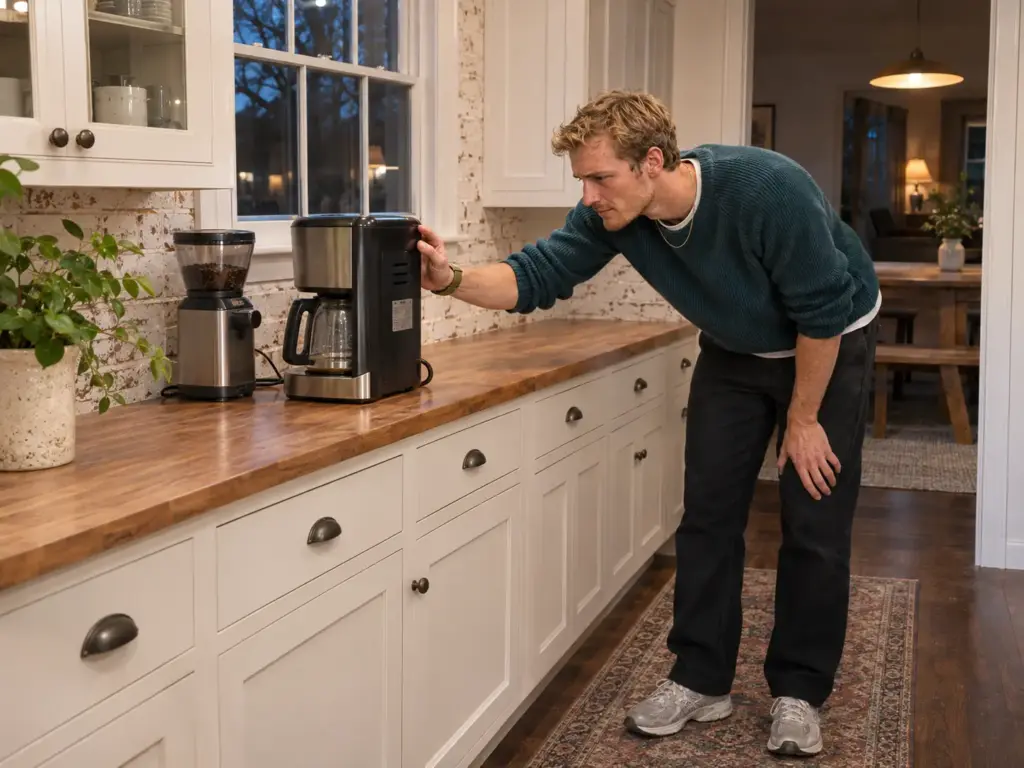
A badge on the box covers one model, not the brand
Certification is the cleanest example, because an outside group does the testing and publishes the result model by model. According to the SCA’s certified home brewer list, “SCA Certified Home Brewers are coffee makers that meet SCA’s rigorous standards for brewing quality, consistency, and performance.” The Technivorm Moccamaster KBGV Select is on that list by name; the plain KBG sitting beside it on a shelf is a different machine, and a certification covers the exact model tested and nothing next to it. Bonavita’s BV1901TS is listed the same way.
The word certified on a box tells you one machine passed, and only the model number tells you which.
Reputation splits the same way inside one maker. The burr-holder ring that breaks is a Baratza part, sold by Baratza, on a grinder whose burr set is the reason to buy it.
The single-cup Moccamaster funnels and stalls unless the bed is stirred, while the batch model runs itself. Hario owns the pour-over cone, and its scale and its hand grinder are the weak spots of the catalog. A name earns trust one category at a time, and a buyer who treats it as a grade for the whole counter is paying for a halo.
The model number sits on a plate at the back of the machine or under the base. The front of the box carries a family name and a word like certified; only the plate says which machine you are holding, and that number is the one to check against the SCA list.
The two tests every name has to pass
Test one asks where the reputation is built: the burr set, the basket size, the boiler material, the spare part. A name that can point at one of those has said something checkable.
Test two is the one how a machine holds up two months in runs on whole machines: which part wears first, and whether it can still be bought in the third year. A brand that passes both is a repair. One that passes neither is a replacement, however good the box looks.
The standard the certified brewers are built to hit comes from the SCA’s Golden Cup protocol. Its brew ratio is 55 g of coffee per liter of water, plus or minus 10 percent, with water near 200 °F (93 °C), plus or minus 5 °F, at the point of contact, and a brew time of four to six minutes for drip.
In kitchen units that is close to 10 g of grounds, about two level tablespoons, for a 6 oz cup. A certification means the machine can hit the water and the time. Your scoop and your grind still decide whether the cup lands inside the range.
What costs nothing comes before any brand
A cup that has tasted off for weeks needs a direction before it needs a brand. Sour means the water left before it finished, so make the grind size one step finer and brew the same dose the same way. If the next cup comes out rounder and the sharp edge is gone, the grind was the problem; if it turned dry and bitter, you overshot, and half a step back is the answer. A weighed dose beats a scoop, a plain rinse of the paper filter takes the papery taste out of the cup, and tap water that has not scaled up the kettle costs nothing to check (a water filter pitcher is the cheap fix when it has).
Past a good hand grinder, a basic gooseneck and a 0.1 gram scale, filter coffee stops improving. The money above that line buys speed and repeatability, and it leaves the cup where it was, which is worth knowing while three well-known names sit open in three tabs.
The Grinder Comes First, and So Does Its Brand
Before any purchase, the free move is one step on the grinder already on the counter, and the grinder leads for a reason that explains the rest of this page: every other piece of gear rides on grind consistency, how even the grounds are. When money does move, it goes here, and the name on nearly every grinder shelf is Baratza. What that name rests on is narrower, and more checkable, than its reputation.
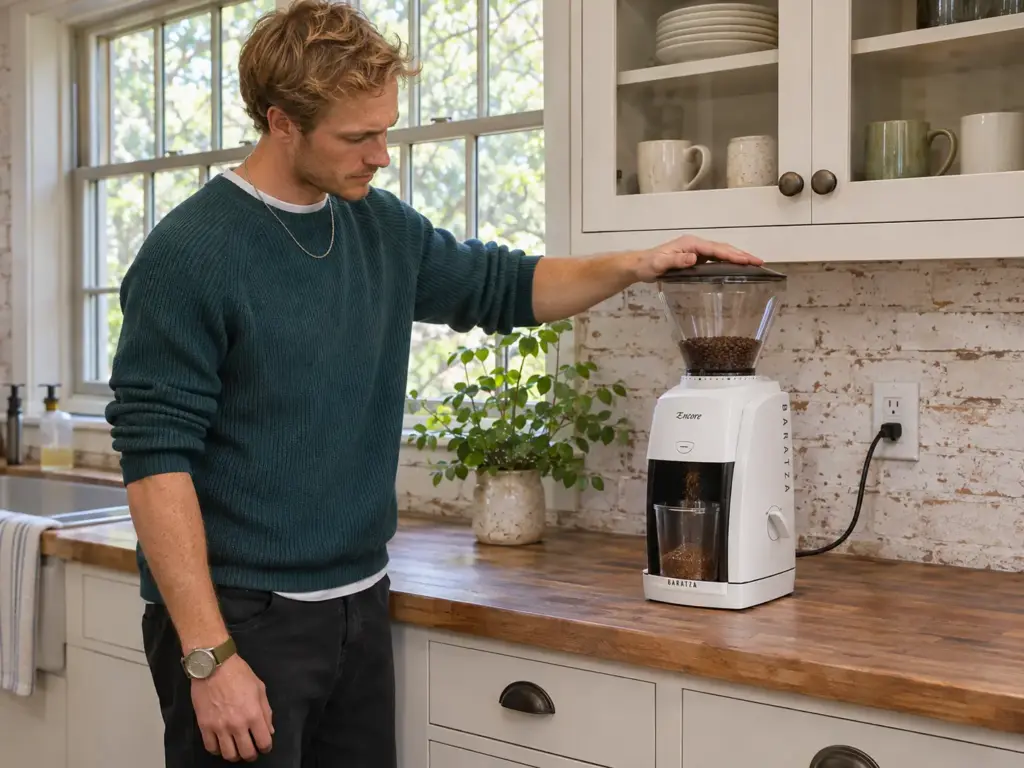
Why a burr beats a blade, in one cup
A blade grinder chops, and it throws boulders and dust into the same cup. The dust over-extracts and tastes bitter while the boulders under-extract and taste sour, so one cup carries both complaints at once, and that sour-and-bitter signature points at the blade. Grind finer is the usual first move for a sour cup, and on a blade it fails: finer means longer chopping, which makes more dust and a harsher cup, and nothing on the lid moves the boulders. For that kitchen the better call is a burr grinder, a conical burr or a flat burr model.
On a burr grinder the free fix works as advertised. Go one step finer for a sour cup, brew the same dose the same way and taste: the next cup should come out rounder, with the sharp edge gone. The longer exercise is working out which grinder wears out first, and for brands it starts with a single name.
After moving the dial, taste nothing from the first dose. The burrs keep grounds inside the grinder, so the first dose after a change still comes out at the old setting; run a few grams through and discard them before the cup that counts.
Where Baratza’s name comes from
The Baratza Encore earns its place with numbers the maker prints. Baratza says the burrs are 40 mm conical steel, made by Etzinger in Liechtenstein, on 40 stepped settings, with a 300 g hopper (about 10.5 oz of beans), a published grind range of 250 to 1200 microns and a 1-year US warranty. A grinder that prints its burr size and its step is checkable; one that prints neither is asking for trust. That boundary, where the badge stops and the burr starts, is also what separates a cheap grinder from an expensive one.
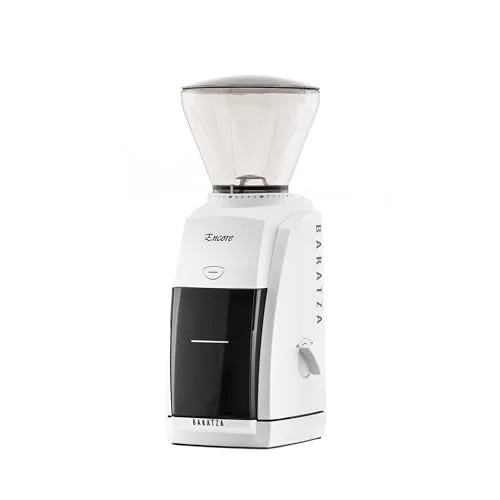
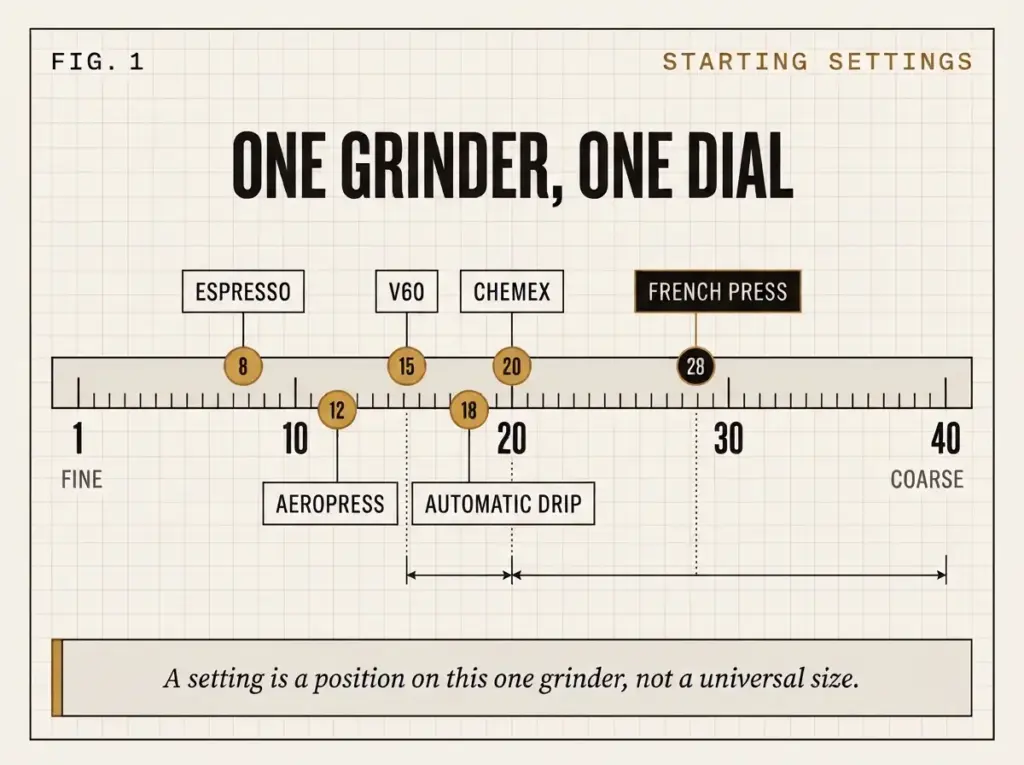
That is the whole case for the name: the numbers let you set the grinder by brew method instead of by guess. Baratza’s own chart suggests espresso at 8, AeroPress at 12, V60 at 15, automatic drip at 18, Chemex at 20 and French press at 28, and the dial stops at 40. The drip-style methods sit within five clicks of each other, and French press stands well apart.
Treat those as starting points. On a stepped dial the number marks a position on that one grinder and means nothing on another, so a setting borrowed from a different grinder gives you a place to begin and no more.
The plastic ring that goes first
The flaw sits in a part, not in the burrs. The piece that goes first on the Encore is the plastic burr-holder ring, and the failures arrive early: some units give out around month two and others are finished by about month six, while cleaning, a regular and fiddly disassembly, puts a strain on the same plastic every time.
Once the ring breaks, the upper burr sits off-axis, and the same dial setting grinds coarse and fine at once. The setting does not change; the cup does. The first sign is a flat cup, since no noise warns you, and a grinder in that state usually gets blamed on the beans.
Baratza sells the ring, and the ring is cheap. But a grinder that asks for a ring, then another ring, then replacement burrs across a few years drifts toward the cost of a better grinder, and the grind quality drops a little each time a ring goes. The free test is the same as ever: if the same setting suddenly tastes flat, brush out the burrs and look at the ring before looking at the beans.
Nothing cheaper states its burr size, so the budget route is a hand grinder that will not wobble, which trades a slower morning for a lower spend and no outlet.
Espresso at the Entry End: Breville and Gaggia
After the grinder, espresso is where a brand name carries the most weight and the most risk, because the two semi-automatic espresso machines most people meet first solve the same problem with opposite ideas. Breville’s idea is a commercial-size basket behind a heater that is ready in seconds; Gaggia’s is a boiler made of a metal that holds heat and comes off as a spare part. This section stays at entry level, where one counter and one outlet are the real limits.
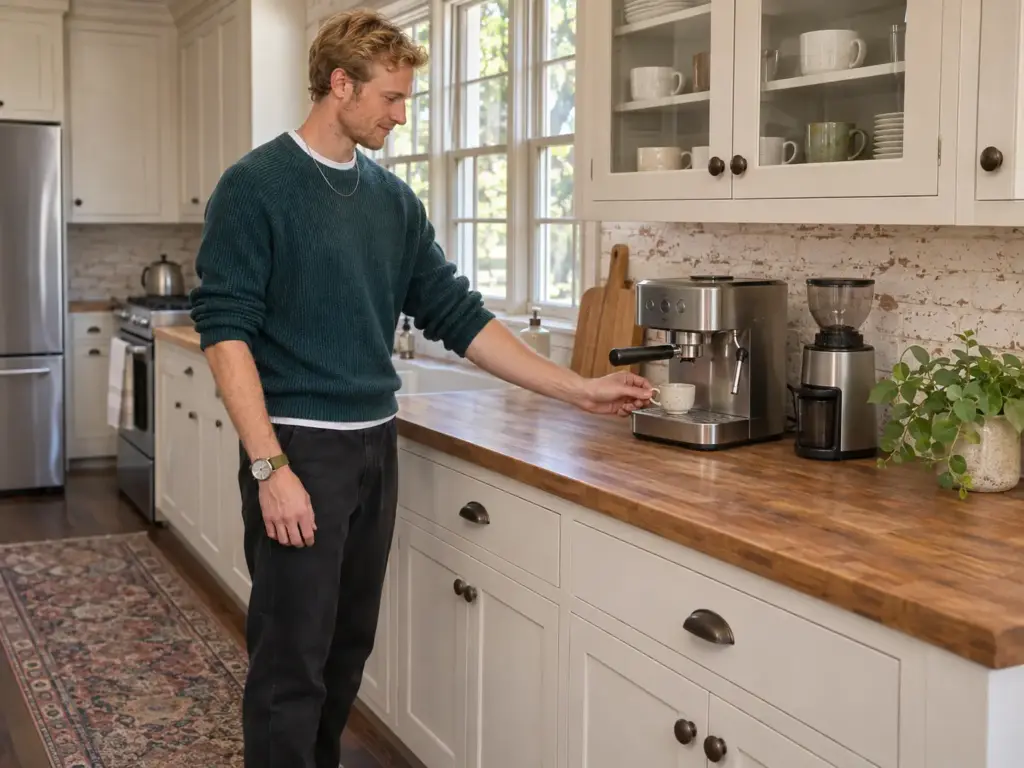
Free first: the moka pot and a frother already do a lot
In a kitchen with one outlet and no counter space, a moka pot on the stove and a small battery milk frother in a mug make a latte that most people cannot fault, once the pot has had a little practice. The machine can wait, and the money waiting for it can go to the grinder from the last section. A machine needs that grinder anyway: shots only come out right when the grounds are even and fine enough, so an espresso machine bought before a grinder usually takes the blame for what the grinder did.
Breville’s argument is the basket and the heater
The Breville Bambino Plus makes its case in three numbers: a 54 mm stainless steel portafilter, an 18 to 19 g dose and a ThermoJet heater that Breville says is ready in 3 seconds. The pump is rated at 15 bar but the shot itself runs at 9, the heater is PID-controlled, and the tank holds 1.9 L, about 64 oz. At this level the 54 mm basket is the argument, because it takes a real dose and the accessories that go with one, a tamper and a precision basket among them.
The flaw is on the steam side, the steam wand and what feeds it, which is what gives out first on this compact Breville. Steam fades within weeks on some units, others are dead by about month five, and a forced cleaning cycle interrupts the routine either way. For a household that drinks mostly straight shots, that matters less; for a latte drinker it is the part to think about first.
Gaggia’s argument is the boiler you can replace
The Gaggia Classic E24 argues from the other side. Gaggia North America’s spec page lists a lead-free brass boiler with 3.5 oz of operating capacity, a 58 mm stainless steel portafilter, a 9 bar over-pressure valve on a 15 bar pump, a 72 oz water reservoir (about 2.1 L), and it is made in Italy. Brass stores heat, and 58 mm is the commercial basket size, so cheap accessories and a standard dose both fit. The boiler is sold as a spare assembly and repairs go through authorized service centers, which makes this the machine that gets repaired while the others get replaced.
Brand against model matters here more than anywhere: that brass boiler belongs to the E24. The older Classic Pro and Evo Pro carried aluminum, so the family name proves nothing and the model name proves it.
The flaw is the water temperature.
A published measurement of the Classic Evo Pro, taken with a Scace device, puts the grouphead near 201 °F (94 °C) at the start of a shot and about 192 °F (89 °C) by the 25th second, because cold water from the reservoir keeps entering a small boiler while the shot runs.
The E24 has no PID either, so the answer is timing: you learn to pull the shot against the boiler light, a habit called temperature surfing, and without that habit the cup gets blamed on the beans. That cost is paid in technique, and the next price tier removes it.
Durability splits: some units run for years, others break down at about a year and a half, with a steep learning curve alongside.
Above these two machines sits the heat exchange boiler and dual boiler tier, a different budget with its own questions, and this section makes no claim about it. The convenience machines (super-automatic, bean-to-cup and pod machine models) are a different category again, and the De’Longhi families and what breaks first on each are covered there.
The Drip Brewer: Certification Belongs to the Model
Drip is the one category where a brand name can be checked against an outside list, and the check tells you more than the name does. The free fixes come first here too, a scale and a clean basket before a new machine, and then two certified models at different budgets show where the extra money in this category goes.
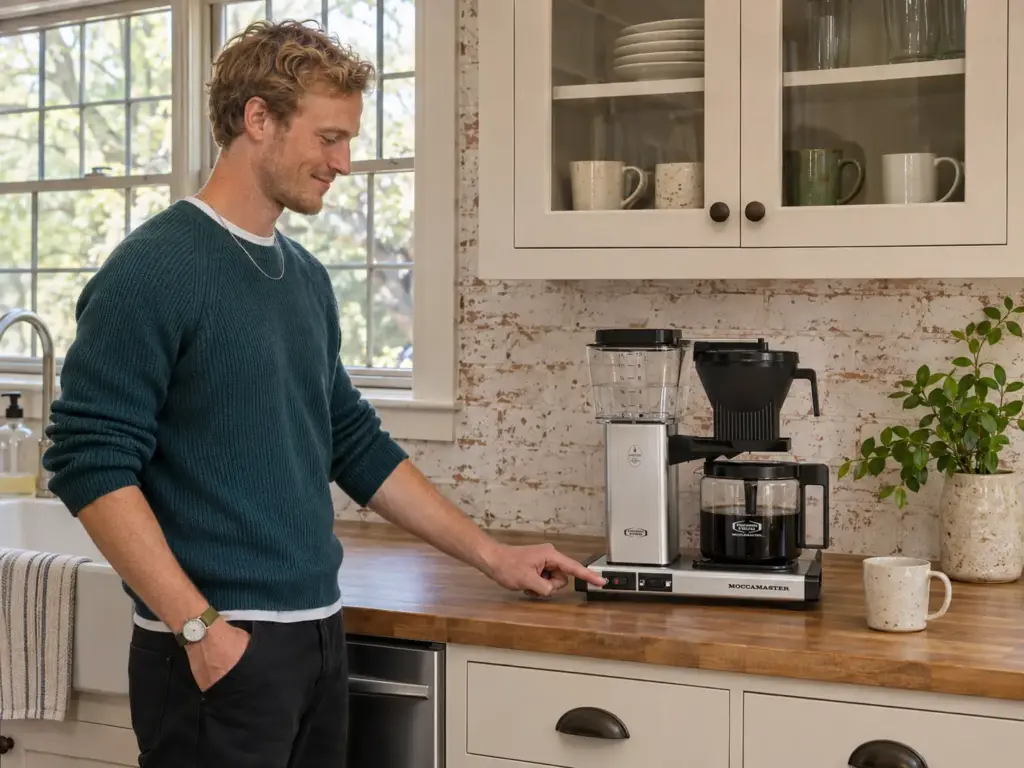
Free first: weigh the coffee, descale the machine
A scale beats a scoop because the spoon range is wide.
The National Coffee Association’s drip guide gives 1 to 2 tablespoons of ground coffee per 6 oz of water and about five minutes of contact.
A level tablespoon holds about 5 g, so that range runs from roughly 28 g to 56 g per liter, from half the SCA’s dose up to its full dose, and the cup moves from thin to strong across it. Weigh the dose once (about 10 g for each 6 oz is the SCA’s line), write it down, and the machine stops being the suspect. The same guide puts its water advice in one line, “Use cold water, filtered if possible, and avoid distilled or softened water”, and the limescale that builds up from hard tap water is the reason descaling comes next. Water hardness varies by town, which is why the interval below is a ceiling, not a target.
Descale before replacing. Moccamaster’s own care sheet asks for descaling every 100 cycles or at least every three months, because scale slows the flow, changes the brew temperature and can permanently damage the heating element (the harder the tap water, the sooner it builds). The first sign is a slower pot and a lukewarm carafe, long before the machine stops.
What the Moccamaster KBGV Select is certified for
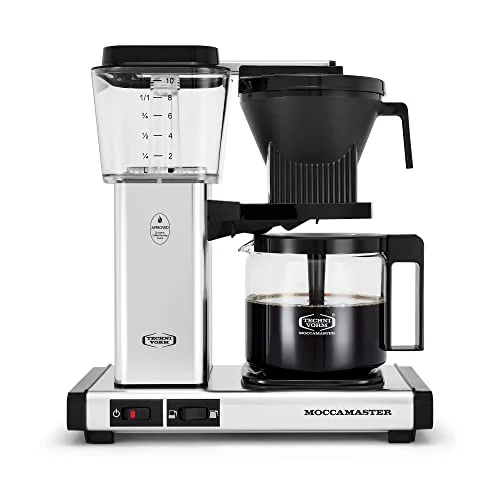
The SCA’s directory lists the Technivorm Moccamaster KBGV Select by name. Technivorm describes a 1.25 L (40 oz) glass carafe, a half-or-full selector, a 1475 W heater and a brew temperature held between 196 and 205 °F (91 to 96 °C). The hot plate runs at 175 to 185 °F (79 to 85 °C) and switches off after 100 minutes, and the warranty is 5 years.
The brand argument is not on the box. Technivorm says replacement parts are available for all models and that it will repair any Moccamaster for the life of the brewer, and that is the claim that survives the third-year test: the part and the repair exist. It is the same test which drip brand holds up on parts and years applies to drip brands alone.
The half-carafe selector is what separates it from a big pot. It makes a half pot behave like a half pot instead of a weak full one, though it has to match the dose, and set against the wrong amount of coffee the cup misses the range. The flaw is in build quality and in function: parts of the brewer are a plastic of mixed quality, some units do not work from the first day, and there is no programmable timer of any kind. The single-cup model from the same maker makes the brand-against-model point again, since it asks for a stir where the batch model runs itself.
A full verdict on whether the Moccamaster is worth it from four cups up sits on a separate page.
On the half setting, weigh half the coffee too. The selector changes how much water the basket sees, and a full-pot dose left in the basket sends the cup out of range in a way a spoon will never show you.
The budget certified brewer, and where it gives way
The certified brewer at the lower budget is the Bonavita BV1901TS: a 1500 W heater, a stated 194 to 205 °F (90 to 96 °C) band, 8 cups in about 6 minutes and a 1.3 L (44 oz) double-wall thermal carafe. Preinfusion is optional, so the bloom is a switch instead of a ritual done by hand. The thermal carafe also takes the pot off a hot plate, which is a small favor to the last cup.
Where it gives way is the lid. The carafe lid and its seal are what break, and some machines stop brewing inside the first year, with reliability and heat retention both mixed.
The Moccamaster is the name everyone reaches for, but when temperature is the only question, the certified Bonavita holds a band within two degrees of it at the cool end. The Moccamaster’s extra money buys the part, the repair and the selector. It does not buy a different temperature.
The SCA directory also lists the Fellow Aiden Precision, certified in 2024, and what the Fellow Aiden is like past the kettle takes it up on a separate page.
Small Gear: Hario’s Cone and Fellow’s Kettle
The cheapest gear on the counter is where a brand matters least and, in one place, most. The cone that owns pour-over costs a fraction of any brewer here, and the kettle that turned boiling water into a measured instrument is the one name in this list whose job a plain pot can do. Both get framed below by what the cheap version already covers.

Free first: a stovetop kettle and a paper filter
A stovetop gooseneck carries a pour-over for a long time before an electric kettle earns its counter space. The change that improves the cup is the grinder, so the kettle belongs near the end of the buying order. If a pour-over tastes sour and thin, go one step finer and pour the same way; if it tastes dry and bitter, go one step coarser. Taste between the two, and leave the kettle where it is.
Hario’s cone, and the hole that decides it
The Hario V60 size 02 is a plastic cone with one large drainage hole and spiral ribs, sized for one to four cups. One big hole means the pour speed is yours to control, and that is the whole method: the same cone can taste thin or full depending on how fast the water goes in.
The flaw is the hole itself. It drains fast, and a slow, patient pour is hard to hold because the water leaves as quickly as it arrives; a slightly finer grind slows the bed and is the free fix. The same maker’s scale and hand grinder are its weak products, so the cone is the reference and the catalog is not.
A knock-off cone pours the same cup as the branded one when the pour and the grind are right. The technique is the variable, and the badge has no vote. Kalita Wave and Chemex do the same job under other names, and the Hario stays the reference because it costs less.
What Fellow’s kettle buys, and what a plain gooseneck already does
The Fellow Stagg EKG Pro holds 0.9 L (about 30 oz), draws 1200 W and sets the water temperature to the degree anywhere from 135 to 212 °F (57 to 100 °C), with a 60-minute hold and a built-in brew stopwatch, according to Fellow’s own guide. To-the-degree control is what makes the second cup repeat the first.
The flaw is the part it sells. Temperature readings are the unreliable point on some units, and others stop working within three weeks, at a price that asks a lot of a kettle.
What the precision buys is the pour, and a plain gooseneck already reaches the same water window; a cheaper temperature control kettle with a gooseneck covers the ground for a fraction of the cost. A gooseneck spout slows the stream at the cone, which is the actual job, and the display never touches the grounds.
The spout is worth more than the display. Reading about gooseneck kettles and what fails on them in year three is worth ten minutes before paying for one.
A cheap digital scale does what an expensive one does, and no name is the reference here; which scale suits which brewer comes down to the brewer you own.
The Part You Can Still Buy in Year Three
The table at the top named the first thing that breaks on each name. What follows is whether that part can be bought, and a warranty number answers it badly: a year, three years or five says how long the maker will cover a fault and nothing about whether the part exists afterward.
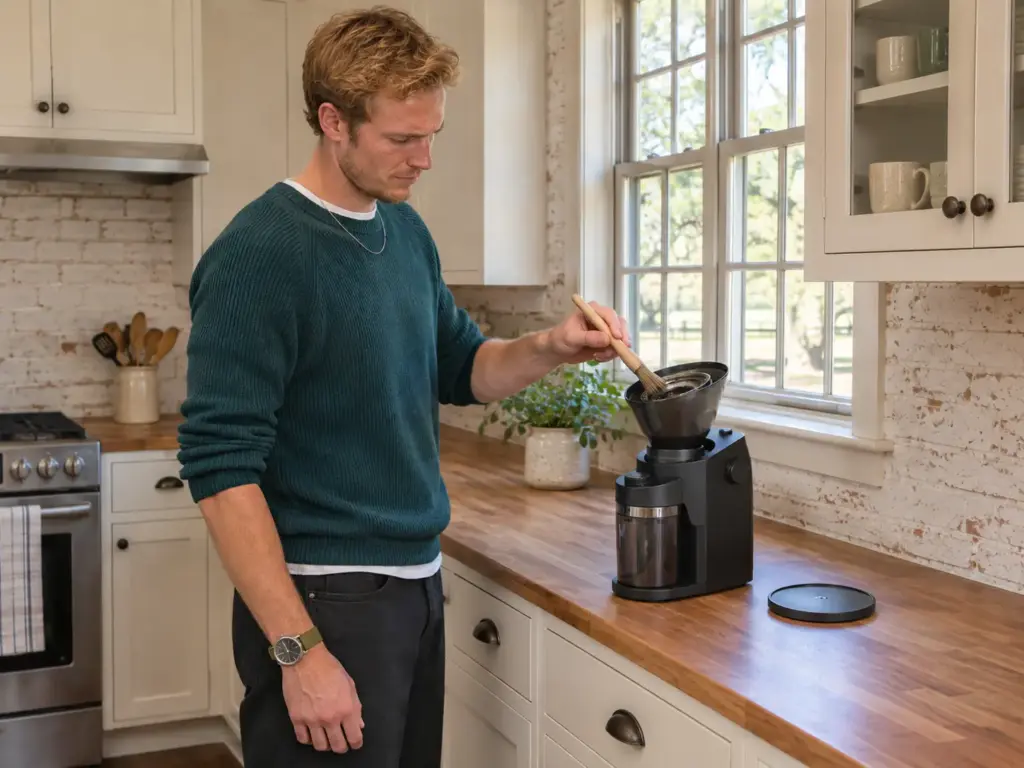
A warranty is a promise about year one
The Moccamaster carries 5 years, and Technivorm says every model’s parts are available and that it repairs any brewer for life. The Baratza Encore carries 1 year, and Baratza sells every part, including the ring that breaks.
The Gaggia E24’s brass boiler is a spare assembly, and its repairs go through authorized service centers. Three makers, three stances, and the shortest warranty belongs to the one that sells the part that fails. For grinders the full test is how long a grinder lasts, and which parts to buy.
For any name whose maker prints no parts promise, the check is yours: look up the lid seal, the steam side or the carafe in the maker’s parts list before the machine goes in the cart. A part that cannot be found makes the warranty the whole story.
Which parts exist, brand by brand
The same fault leads to a repair on one name and a replacement on another. A broken ring at Baratza is a part and ten minutes. A cracked lid seal on a brewer, or a steam side that has stopped on an espresso machine, is a repair only if the maker sells that part, and the answer lives on the maker’s page, never on the box. Where a service network exists within reach, it is a reason to pick a name; where none does, the part has to ship to you.
A plastic cone has no moving part to wear, so it needs no spare and the brand question disappears. The Fellow kettle, the Bonavita lid and the Breville steam side are the three to check before paying.
What the care sheet adds to the answer
Care sheets change the odds. Descale on the interval the maker gives (Moccamaster asks for every 100 cycles or at least every three months), and brush the grinder (cleaning burrs clears the fines packed around them): scale in a brewer and fines packed around a burr are what finish off most of this gear, often before the warranty is up.
A failure that repeats unit after unit is a design flaw. A ring that breaks, a lid that cracks and a steam side that gives out each repeat because that wear part is the weak point of that design, and by month two it is already the one to watch. Repairability is the real spec: a repair that costs a small part and ten minutes is a different purchase from a machine that goes in the bin, even when both lasted the same number of years.
Stick a strip of masking tape under the base of the brewer and write the model number and the date of the last descale on it. The number is what a parts list asks for, and the date is the thing that slips.
Where the Cheap One Does the Same Job
After seven named products and what each one gets wrong, this is the section that says where the money above the cheap version buys nothing in the cup, and where the badge is the entire difference. It ends where every brand question ends, with a model inside a brand.

The cheap versions that pour the same cup
Four cheap things do the work of expensive ones. A knock-off cone pours what the branded cone pours, a moka pot with a battery frother makes the latte, a plain gooseneck reaches the water window and a basic 0.1 g scale weighs the dose. In each, the variable is the pour and the grind, and the badge does not enter. Putting them together as a budget setup, a beginner setup that works, is the job of the cheapest setup that changes the cup.
Where the extra money changes nothing in the cup
For pour-over, the cup stops improving past a good hand grinder, a basic gooseneck and a 0.1 g scale. What the extra money buys above that is workflow and repeatability: a faster morning, and the same pour on the tenth try as on the first.
Where extra money does buy something, it buys a stated part: a burr that grinds evenly, a part that can be replaced, a model that is certified, a boiler made of brass. Each of those has a name on this page and a flaw next to it. A feeling of quality is not on the list.
No name here is on a blacklist. The two tests, where the reputation is built and whether the part can be bought in year three, do the sorting, and they work on a maker this page never mentions.
The next decision is the model, not the brand
Order changes the cup more than the brand does: a burr grinder bought in place of a beginner one changes it, a kettle upgrade rarely does. So the question after a brand is a model: which grinder for the method, then the brewer, then the scale and the kettle. For a household that has not chosen a type of brewer yet, which type of brewer fits the household comes before any badge.
One Grind Step Tomorrow, One Part to Watch All Season
The grinder is the first brand decision, because every other name on the counter depends on how even the grounds are. Certification belongs to the model, so read the plate. The part that breaks first is the real spec of any name, and the cheap version does the same job more often than the badge admits.
Watch each piece of gear on a schedule that suits it. Every few weeks, taste the same coffee at the same setting; a cup that has gone flat points at the ring or the burrs before it points at the beans. Descale the brewer on the maker’s interval, which for a Moccamaster is every three months at the most, and check the carafe lid seal whenever the pot stops holding heat.
Tomorrow’s first move costs nothing: move the grinder one step in the direction the cup points, or weigh the dose instead of scooping it, and taste the result before touching anything else. A sour cup should come out rounder after a finer step, and a bitter one should lose its dry finish after a coarser step. The rest of that first week, from the dose to the pour, is laid out in making a good pot on the machine already on the counter.
Whole bean coffee comes after the gear, and the label to read is the roast date: choosing a bag by its roast date is what to settle once the grinder is sorted.
Frequently Asked Questions
01Which coffee gear brands are worth buying first?
Start with the grinder, because the grind sets every cup: pick a burr grinder from a maker that prints its burr size and step count, such as the Baratza Encore. Then add a certified drip brewer if the household drinks drip, and leave small gear for last.
02Is Moccamaster SCA certified?
Yes, by model: the SCA’s list names the Technivorm Moccamaster KBGV Select, and Technivorm states a brew temperature of 196 to 205 °F (91 to 96 °C). Certification covers the exact model tested, so read the model number on the plate before trusting the word certified.
03How many grind settings does the Baratza Encore have?
The Baratza Encore has 40 stepped settings with 40 mm conical steel burrs, according to Baratza’s spec sheet. A setting copied from another grinder is only a starting point, because each number is a position on that one dial.
04Breville or Gaggia for a first espresso machine?
Choose the Breville Bambino Plus if speed and PID matter, and the Gaggia Classic E24 if a repairable brass boiler matters more. The Bambino has a 54 mm basket and a 3-second heater; the Gaggia has a 58 mm basket and a boiler sold as a spare, but no PID.
05Is a Fellow kettle worth it over a plain gooseneck?
Only if you want the water held at an exact temperature: the Stagg EKG Pro sets it to the degree and holds it for 60 minutes, which repeats the pour. A plain gooseneck reaches the same water window with a thermometer, so the kettle adds repeatability and leaves the taste where the gooseneck puts it.



How did your cup turn out?
No comments yet. Tell us what you changed — and whether the needle moved.