
We may earn a commission when you buy through links on this page. It never changes what we recommend. How we pick
On this page8 parts
- Rule Out the Grind, the Ratio and the Scale First
- Which Type Fits Your Mornings, From Drip to Espresso
- Heat Through the Whole Brew Is the One Spec That Separates Machines
- What a 12-Cup Pot Really Pours
- What Each Budget Level Buys, and What It Gives Up
- What Each Type Starts Doing by Month Two
- Tomorrow's Pot Comes First, the Cart Second
- Frequently Asked Questions
Your twelve-cup drip coffee maker has started to weep at the base, or the pot has gone thin and sour, and a shopping tab already holds a dozen machines that all claim to be the best. The honest answer to what is the best coffee maker for home use is smaller than that tab suggests: it depends on how many mugs you pour, which drink you want and how many minutes you will stand at the counter, and the brand comes last, whatever a home coffee maker’s box promises. A cup that tastes off is also, more often than a dead brewer would suggest, a grind or a ratio problem that a new machine would simply inherit. This guide walks the order that works: whether the machine is the problem at all, which type fits, what heat the water has to hold, what the box’s cup count really pours, what each level of spending gives up and what breaks first, with what to buy first and what can wait covering the order for the rest of the gear.
Quick Answer
The best machine matches how many mugs you pour and which drink you want. For most households that is a drip brewer holding 195–205 °F; for one mug in a hurry, a pod machine or an AeroPress; for someone who will stand there, a pour-over cone or French press. No machine fixes a blade grinder or a wrong ratio.
Rule Out the Grind, the Ratio and the Scale First
Three checks cost nothing and account for more flat, sour or bitter pots than a worn-out brewer does. They come in an order, because each one rules out a cause before the next begins. Only a pot that still tastes wrong after all three is a reason to shop.
Sour and Bitter Point in Opposite Directions
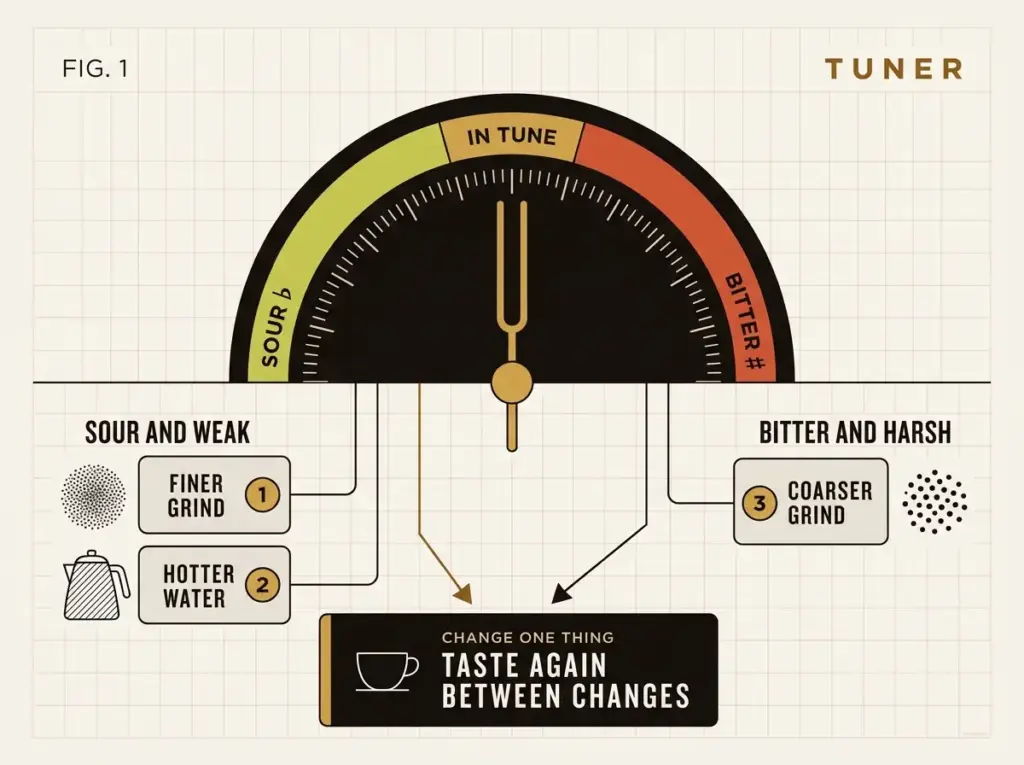
A thin or harsh pot is a direction before it is a verdict, and the two directions point opposite ways. Sour means the water left before it finished its work: the grounds were too coarse, the water too cool or the brew too short. Bitter means the water stayed on the grounds too long, usually because the grind was too fine.
A drip machine hands you one dial for all of this, the grind size, so the free fix runs in a fixed order. Move the grinder one step in the direction the taste points, brew the same dose, and taste before touching anything else.
A pot that comes out flatter but still sharp is pointing at the water temperature, which belongs to the machine and gets its own section below.
A pot that swings to bitter means the step went too far, and half a step back is the answer.
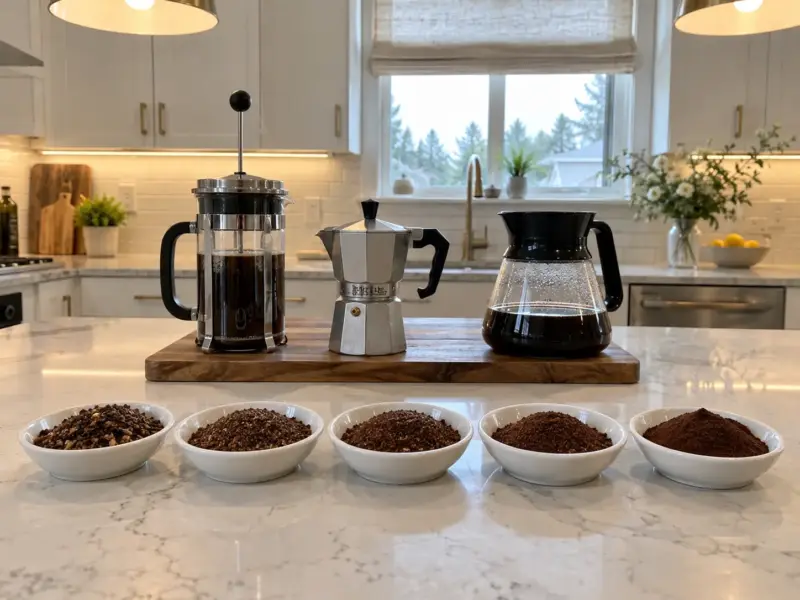
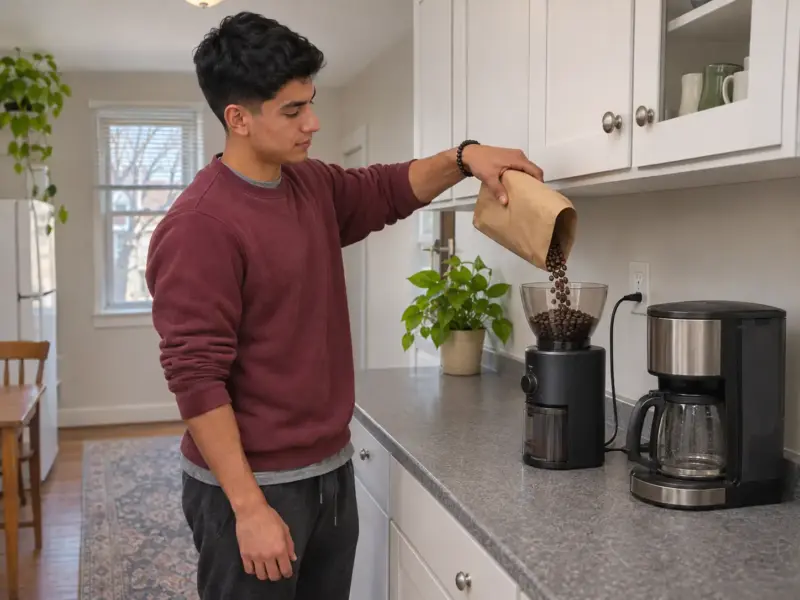
The grinder matters more than the brewer here. A blade grinder chops beans into dust and boulders in the same pass, so the dust over-extracts while the boulders under-extract, and the same pot comes out bitter and sour together. A burr set crushes to a far more even size and changes more pots than a new brewer will.
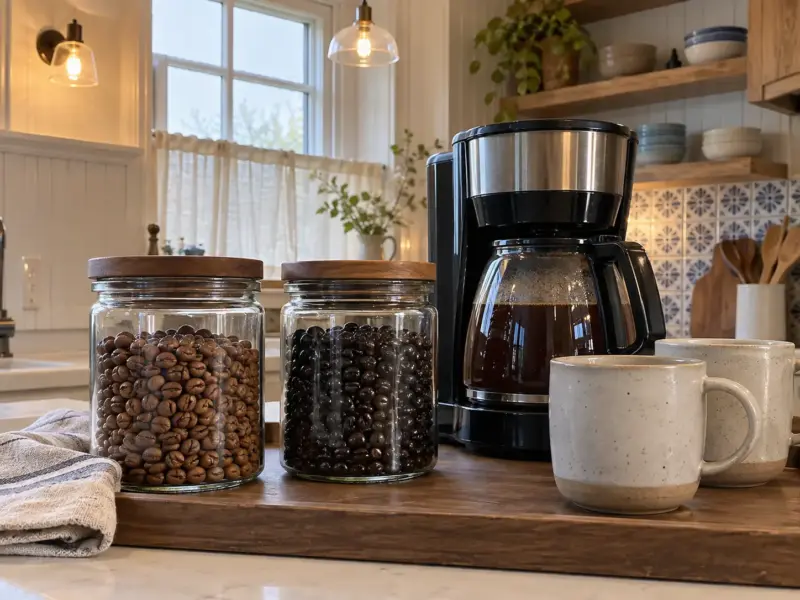
Whole bean ground just before the brew also holds its flavor better than pre-ground, which has far more surface open to the air from the moment the bag is filled, so a bag with a roast date on it and a grinder beat a machine upgrade. The full comparison sits in why a blade grinder gives bitter and sour in the same cup, so the point here is only the order: a grinder question comes before a machine question.
After a grind change, judge the second pot instead of the first. The grinder keeps some grounds from the old setting inside, and they ride into the first brew, so the pot that tells you whether the step helped is the one after it.
The Dose, Weighed Against the Standard
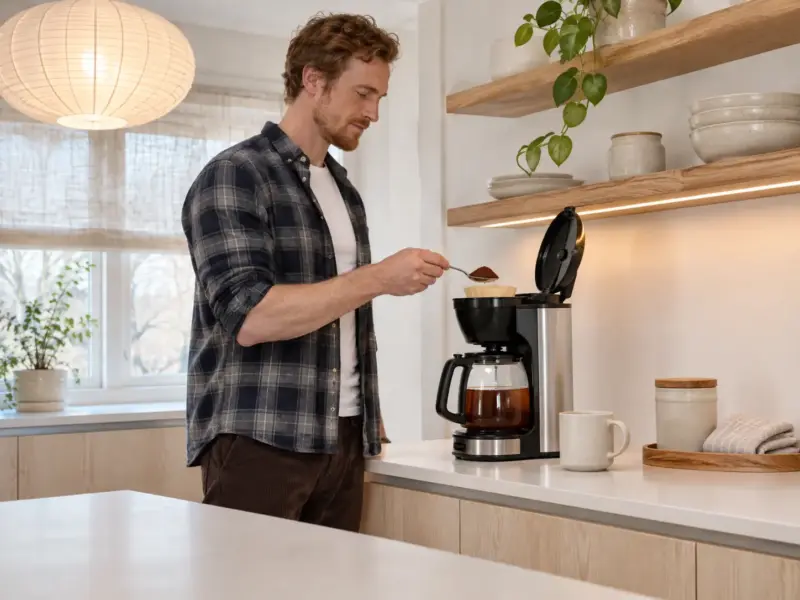
The dose has an owner. The Specialty Coffee Association’s home-brewer standard sets 55 g of coffee per 1 kg of water, a brew ratio of about 1:18, and specialty guides often start nearer 1:16, as laid out in the ratio worked out cup by cup. A full 12-cup carafe holds about 60 fluid ounces, roughly 1.7 kg of water, so it wants about 95–105 g of ground coffee. In scoops, that is about ten level two-tablespoon scoops.
Tablespoons per cup is the line printed on many bags: one level tablespoon per 5-ounce cup comes to roughly 60 g across a full pot, a coffee to water ratio near 1:28, and that is the thin, sharp pot.
Scoops drift with the roast and with how the coffee settles in them, so what a scoop gets wrong by weight is worth a read, and a kitchen scale ends the argument in a few seconds. The ratio scales with the water. A half pot of 30 fluid ounces wants about 50 g, and a pot brewed at the same dose every morning is the only kind you can adjust sensibly, because a changing dose hides what the grind did.
Scale Inside the Machine Looks Like a Dead Machine
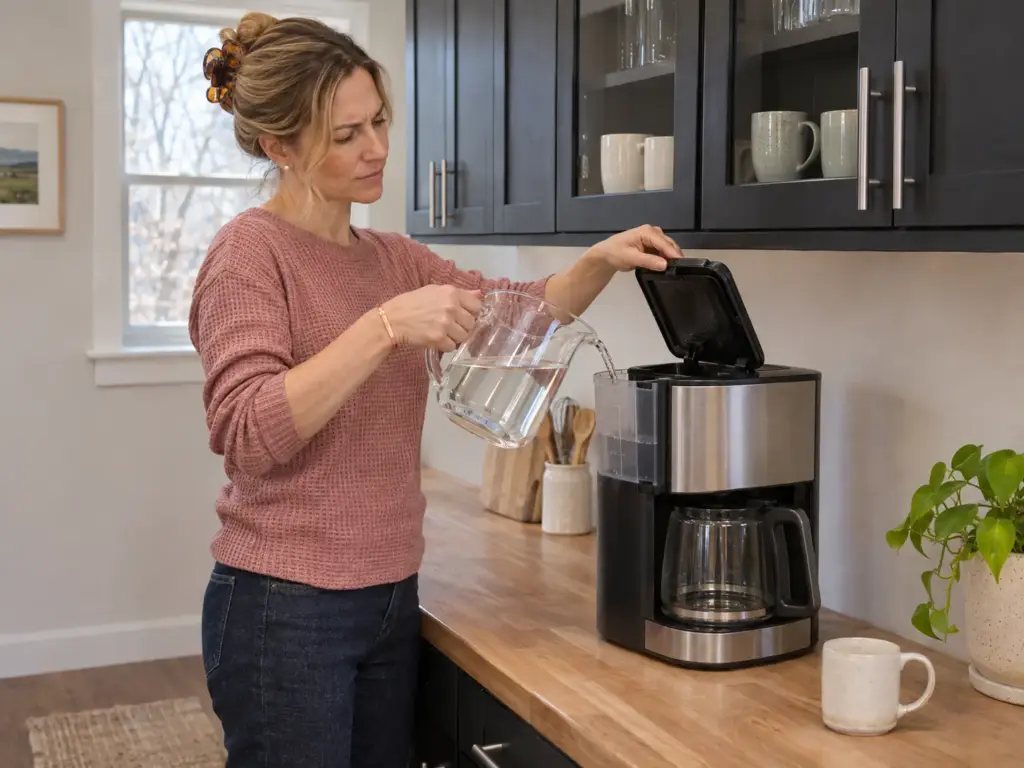
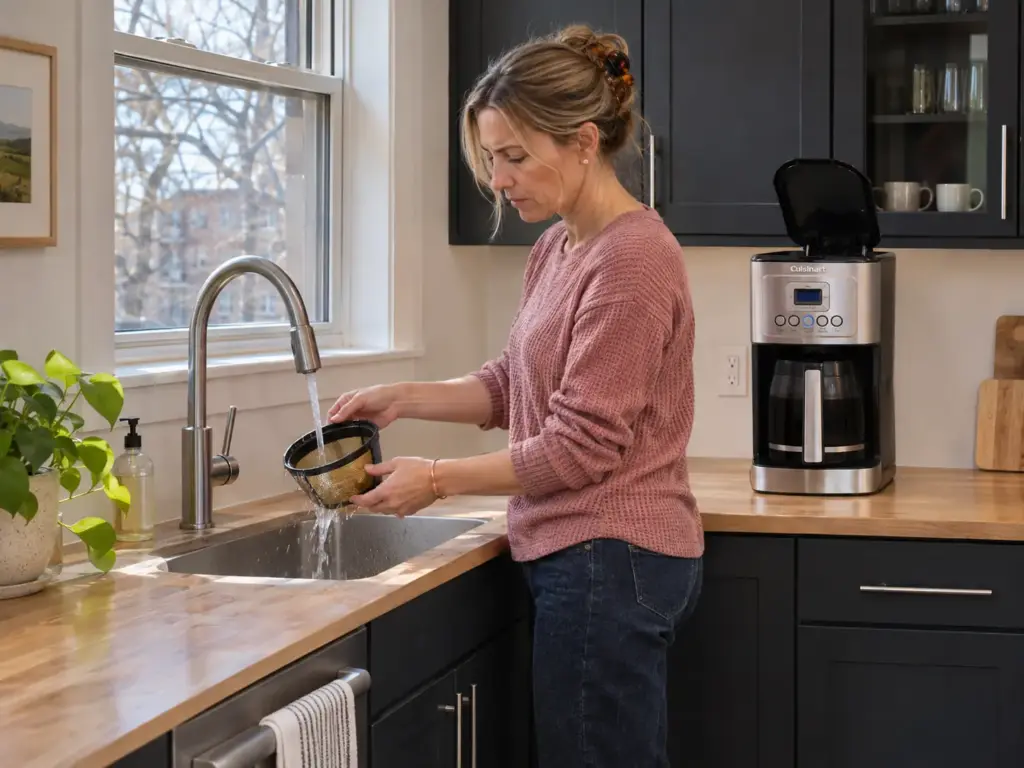
Mineral scale, or limescale, narrows the water path and cuts the heat that reaches the grounds, so a brewer coated in it trickles, runs cool and makes a thin pot, and looks like a dying machine. Four signs give it away: a longer brew time than when the machine was new, gurgling, white residue around the water reservoir and filter basket, and coffee that is not as hot. KitchenAid says to descale about once a month for daily brewing on hard water. The usual routine is a half-vinegar, half-water cycle followed by two cycles of plain water, with the manual holding the exact steps for your model, and it costs a bottle of vinegar and an afternoon.
The slow finish is the early warning. A pot that takes visibly longer to drip through than it did in the first week is the machine reporting scale long before the cup tastes wrong. Once the machine is clean, setting a new drip machine up by weight turns the dose above into a routine you do not have to think about.
Which Type Fits Your Mornings, From Drip to Espresso
With the free checks done, the real question is which style of brewer matches the mugs you pour and the minutes you have, and that answer moves with the household far more than with the brand. This section sorts the types by what they brew and what they ask of the person at the counter.
Two more types, a moka pot and cold brew, stay out of the table: one is a stovetop pot and the other takes hours of steeping, so neither answers a morning-pot question.
Three questions decide the rest, in this order: how many mugs, which drink and how much standing at the counter you will tolerate. Household size and counter space come into it too, since a machine that does not fit the kitchen never gets used.
The type follows from those answers, and the brand is a second decision that only matters inside a type. A household that empties a pot, one that pours a single mug before the bus and one that enjoys five minutes of pouring are three different mornings, and no single machine serves all three. The table lays the six types against those questions and against what each one gives up.
| Type | Best for | Mugs per brew | Time at the counter | What it gives up |
|---|---|---|---|---|
| Drip machine | A household that empties a pot | About 5 per 12-cup pot | A scoop and a button, then the machine waits | A wasted pot on one mug; heat varies by model |
| Pod machine | One mug in a hurry | 1 | Under a minute | The pod writes the recipe |
| Pour-over cone | A brighter cup, one mug at a time | 1 | About five minutes | A kettle and a steady pour |
| French press | A heavier cup with the oils kept | About 1 large mug at 17 oz | About four minutes | Small sizes; the glass beaker cracks |
| AeroPress | One mug, and travel | 1 to 2 cups per press | About two minutes | The rubber plunger seal wears |
| Espresso with built-in grinder | Espresso drinks and milk | 1 to 2 shots | The most hands-on: grind, tamp, pull, steam | The most steps; a grinder that moves in steps |
A Full Pot Every Morning Wants a Drip Machine
A drip machine is a batch brewer: it wets a bed of grounds with hot water from a showerhead and fills a carafe, which suits a household that empties the pot. Two specs choose the model, the heat the water holds through the brew and the carafe that keeps the pot, and both get their own section below. For a single mug it is the wrong tool, because a machine built to make twelve cups of coffee and used for one wastes the other eleven.
One Mug in a Hurry: Pod Machine or AeroPress
A pod machine, the pod coffee maker and single-serve coffee maker of the group, sets one cup in under a minute, and the pod writes the recipe. Nespresso says its Vertuo reads a barcode on each capsule’s rim to set water volume, temperature and spin speed, and choosing between the two big pod systems is a decision with its own page.
The Keurig K-Supreme SMART lets you pick a size and a strength, which is more control than most pod brewers give. Its BrewID setting only does its job with branded K-Cup pods, and a refillable pod brews fine but loses the custom settings, so the saving and the smart features pull in different directions. Across all pod machines the same rule holds: the pod picks a size where a drip machine takes a ratio, so a pod mug and a drip mug of the same strength cost differently, and who sets the dose on a pod machine and who sets it on a drip one is the real fork.
The AeroPress Original is the no-electric answer for one mug. It brews in about two minutes, pushing water through a paper micro-filter with air pressure, and the short contact and the paper soften what a cheap blade grinder does to the grounds. Its wear part is the plunger seal: after about a year the rubber shrinks and stops sealing, and the press starts to let coffee bypass. If a machine is still the wish, a machine that does not waste a pot on one mug is the page for it.
Five Minutes at the Counter: Pour-Over Cone or French Press
A pour-over cone is the cheapest way to find out whether a brighter cup is the one you like. The Melitta 1-Cup Porcelain Pour-Over Cone takes a #4 paper filter, and with a kettle you already own that is the whole setup. Its complaints are control and fit: coffee can run out the sides on a fast pour, the cone does not sit on every mug, and a few crack within weeks.
A French press goes the other direction, toward a heavier cup. The Bodum Chambord 17 oz keeps the oils with a metal filter, wants about four minutes of steeping, and has parts that can be replaced. At 17 oz it holds about one large mug, smaller than people picture, and the borosilicate beaker is the part that cracks.
Espresso With the Grinder Already in the Box
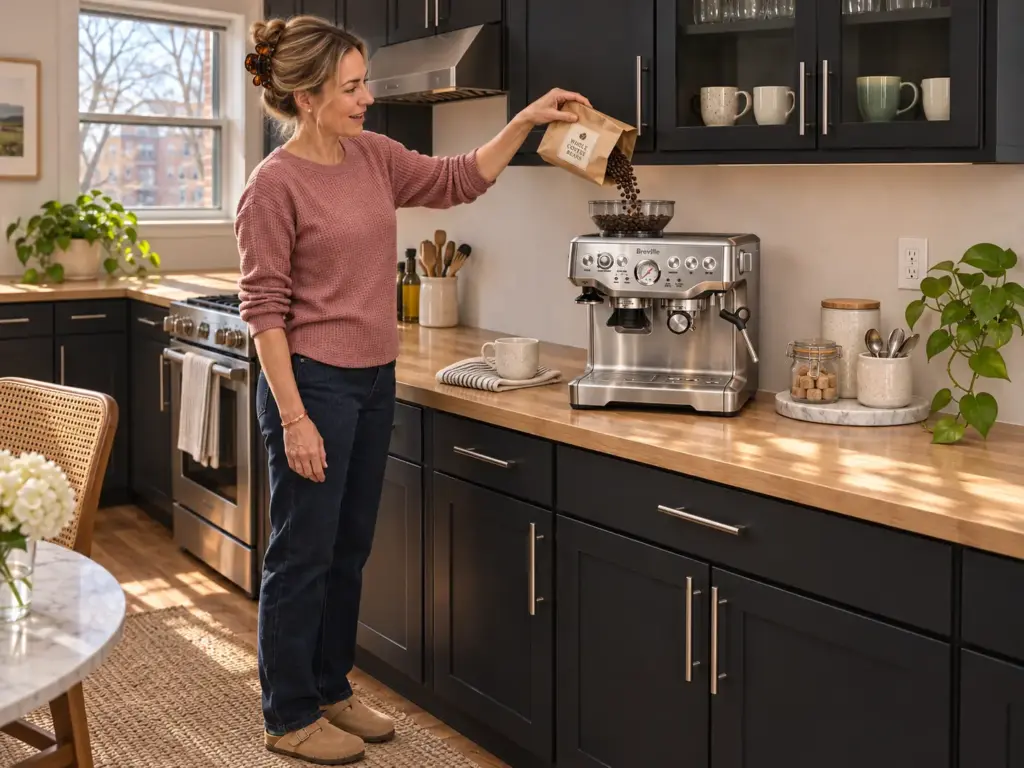
In espresso the grinder decides the shot, so a machine with a burr grinder in the box answers the question that matters: machine and grinder arrive as one purchase. Breville describes the Barista Express’s integrated precision conical burr grinder as grinding on demand into the portafilter, with PID temperature control and a manual steam wand for microfoam.
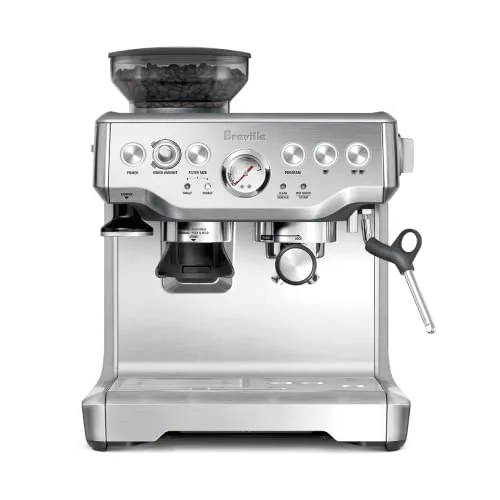
Anyone who wants a drip brewer and an espresso side under one roof will find machines that put a drip brewer and an espresso side in one box, and drip machines with a grinder built in cover the grind-and-brew version of the same idea.
Heat Through the Whole Brew Is the One Spec That Separates Machines
Two machines can hold the same number of mugs and look alike on a shelf, and one of them still makes a thin, sour pot because its water never gets hot enough. The temperature is the one number on the spec sheet worth checking, and it gets checked against a standard rather than a slogan.
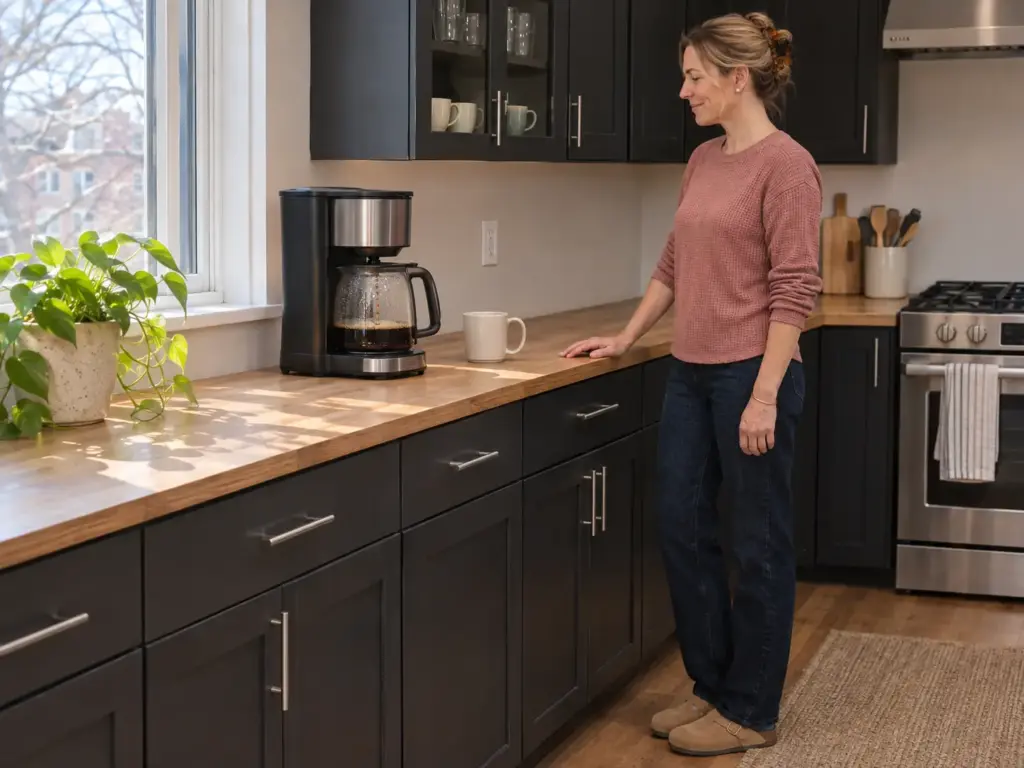
195 to 205 °F, and for the Whole Brew
The Specialty Coffee Association asks home brewers for water at 90–96 °C (195–205 °F), and for the whole brew, not just the first minute. A machine that tops out near 190 °F, or starts hot and cools through the cycle, under-extracts the pot: thin body, sour edge. Grind and ratio can only compensate part of the way, because the heat is a design trait of the brewer. Why a coffee maker can brew cooler than its label covers how that happens.
What “SCA Certified” Covers, and Whose Model It Belongs To
A word like professional on a carton describes nobody’s brew temperature. A certification is evidence.
According to the Specialty Coffee Association, “SCA Certified Home Brewers are coffee makers that meet SCA’s rigorous standards for brewing quality, consistency, and performance.” That claim is tested by a third party, since only equipment fully evaluated at the SCA’s testing center is considered, and the result belongs to a model, so a brewer has to be found by its model name on the SCA’s certified home brewer list before the word is trusted on a box. A brand appearing on the list covers only the models named there.
The Warming Plate Keeps Cooking the Pot
The same standard asks a heated holding surface, the hot plate under a glass carafe on its keep warm setting, to keep the brew at 80–85 °C (176–185 °F) for 30 minutes. A plate that runs hotter keeps cooking the pot: the first cup tastes fine and the third tastes stewed, and a pot that finished long before anyone reached it shows the effect at its worst. A thermal carafe has no plate at all, so it only holds what was brewed, and the trade is that you finish the pot instead of watching a plate.
Pour a finished pot into an insulated bottle you have rinsed with hot tap water, and do it within a few minutes of the brew ending. The plate stops adding heat to the pot, and the last cup stays close to the first.
When the heat itself is the question, drip machines picked by the water temperature they hold sorts models by the number that matters here.
What a 12-Cup Pot Really Pours
The box counts in the 5-ounce cup, and the table in the kitchen counts mugs. This section turns one into the other so the pot is sized by the people at the table, not by the number on the carton.
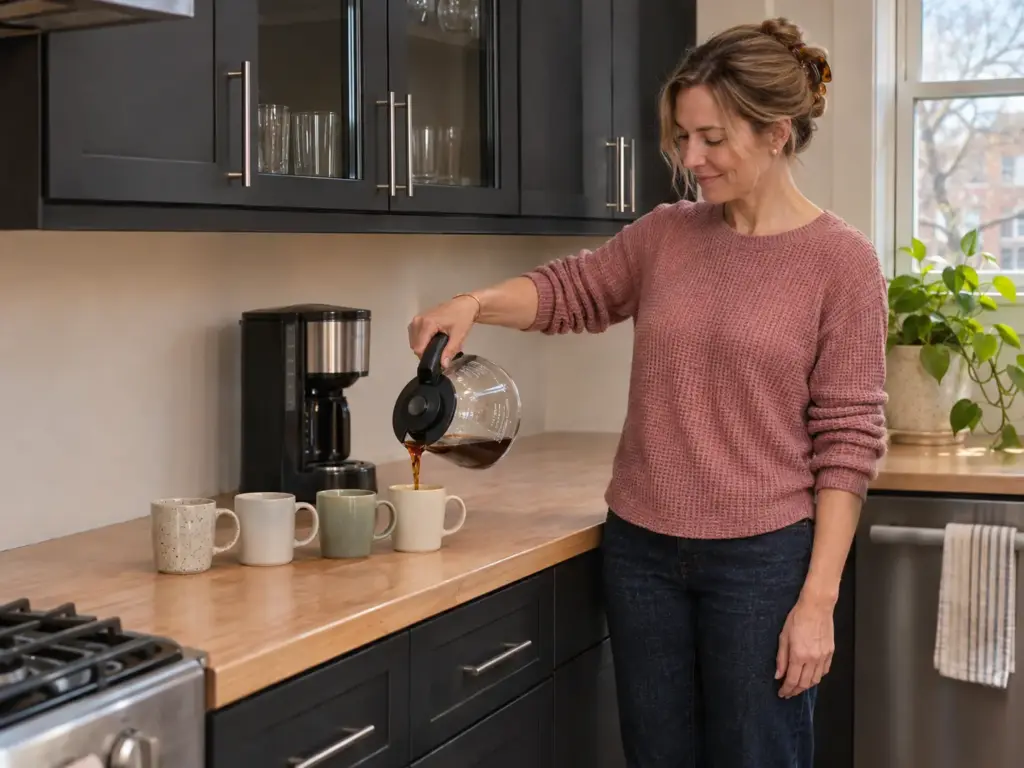
Five Ounces a Cup, About Five Mugs a Pot
A coffee maker’s cup is 5 fluid ounces, De’Longhi says, so a 12-cup carafe holds about 60 fl oz, roughly five 12-oz mugs, and a 14-cup holds about 70 fl oz, close to six mugs, or seven if yours run nearer ten ounces. The method is plain division: ounces of carafe divided by ounces of your mug. Four mugs of 12 oz is 48 fl oz, which a 10-cup machine covers at 50, and five mugs is the full 12-cup. The same division carries past 12 cups, and counting ounces instead of cups on the big machines works through the larger carafes.
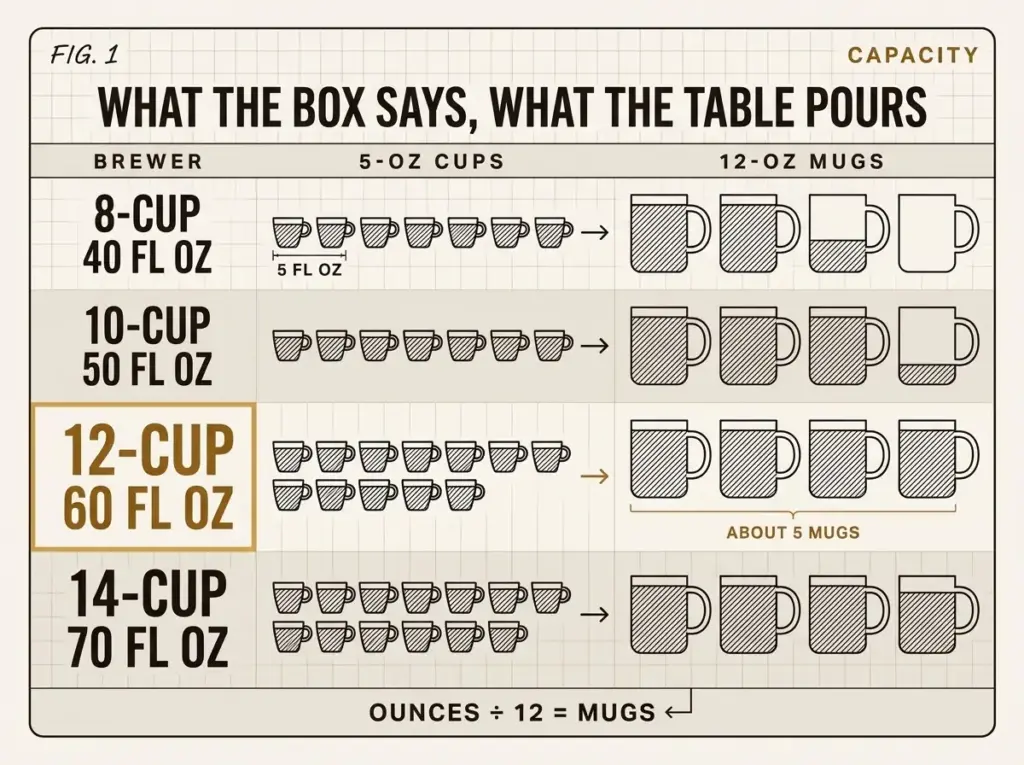
Round the machine up by one size at most. A carafe filled near its top line brews at the dose the machine was built around, while a pot made for twice the people at the table either goes to waste or sits on the plate.
Fill your everyday mug from a measuring cup once and note the number. Many daily mugs hold more than 12 fl oz, so a machine counted in five-ounce cups pours fewer of them than the box suggests.
Glass or Thermal: Who Keeps the Last Cup Warm
A glass carafe on a warming plate is the cheapest arrangement and the one that cooks the last cup, because the plate does the work the carafe should. A thermal carafe skips the plate and the stewing, at the cost of finishing the pot on a schedule. How long the pot sits before the carafe type matters settles it for a given routine.
A Pot Bigger Than the Household
A pot bigger than the household means either a wasted pot or a half-cup of stewed coffee. The same plate heat reaches less coffee in a half-full carafe, so it cooks a half pot faster than a full one, and household size is the honest limit on which carafe makes sense. The 1–4 cup setting on some brewers and the single-serve side of others exist for exactly this mismatch.
What Each Budget Level Buys, and What It Gives Up
The money in this decision rarely buys a better cup; it buys a longer-lived build, a better warming plate or a second schedule. Sometimes the best use of it is not a machine at all. This section walks the levels from the one that does the arithmetic right to the one the money should skip.
The Budget Drip That Does the Arithmetic Right
The BLACK+DECKER CM1160B-1 keeps the arithmetic honest: twelve five-ounce cups, a 24-hour timer and a standard paper filter you can buy anywhere, and it is the machine to pick when the money should go to a grinder. Durability is its weak point. Some units break within about three months and leak by about five, and the plastic lid is the first part to go. What a machine at this level leaves out is spelled out in the heat you give up at the lowest level.
The Mid-Range Pot Most Households Land On
For a household that empties a full pot each morning, the mid-range step up is a bigger carafe and a plate you can adjust. The Cuisinart DCC-3200 pours 14 cups, about six 12-oz mugs, ships with a gold-tone filter, and its warming plate runs low, medium or high.
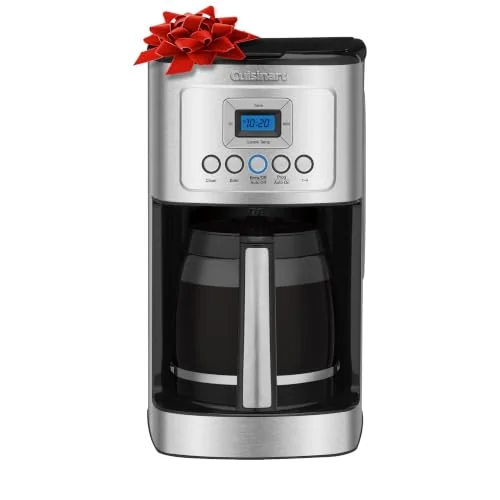
The next step up, sorted by how hot the carafe stays widens the field, and how Cuisinart’s drip machines hold up by cups brewed goes deeper on this one.
One Machine for Two Schedules
The Hamilton Beach 2-Way 47500J pairs a real 12-cup carafe side with a single-serve side that brews up to 14 oz, so a pot for the weekend and a mug on a weekday share one footprint without paying for pods. The single-serve side takes loose ground coffee only, no K-Cup pods, so the convenience is a scoop and a rinse instead of a capsule.
When the Money Belongs to a Grinder
Put the money into a burr grinder before a pricier brewer. The grind changes more pots than the machine does, and a modest drip machine fed evenly ground coffee at a weighed dose beats an expensive one fed dust and chunks. Every level above has a flaw written next to it, and that flaw is the real price of the machine.
What Each Type Starts Doing by Month Two
A review is written in week one, and week one is when every machine behaves. This section is about what each type starts doing once the box is long gone, written next to the type it belongs to.
Drip Machines: Lids, Leaks and Scale
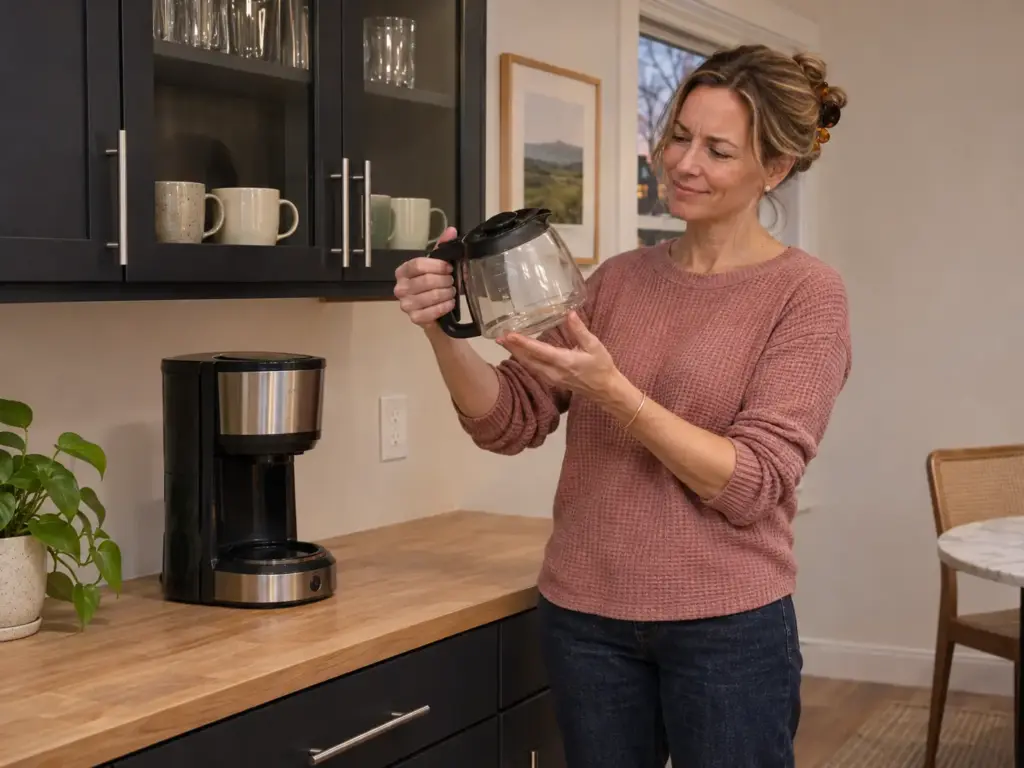
A 12-to-14-cup drip machine rarely dies cleanly. It leaks from the base first, then stops brewing, and the cheapest one on the shelf gets there fastest, with the plastic lid going before anything else. Even a premium brewer can loosen at the carafe and feel clunky in its lids and brew basket by the end of the first year, which is the pattern behind the premium brewer, taken apart. A model’s life is a lottery: one unit passes ten years in a household while another of the same model leaks at three, so a failure that keeps repeating on one model is a design flaw worth reading up on before the purchase, and which brand’s drip machines last, by the parts that fail exists for that.
Slide a dry paper towel under the base of the machine after a brew. Dampness there is the first sign of the seal or reservoir leak that ends many drip machines, and it shows up weeks before the puddle does.
Pod Machines and Combos: The Plate That Goes First
A pod brewer wants descaling every three to six months, Keurig’s own guidance, and a machine that skips it brews slower and cooler. A combo machine that pairs a carafe with a pod side tends to fail at the carafe-side plate, which can quit within two months and quit again on the replacement. Combos and drip machines from one maker can age differently, and the Ninja line, drip and pod, flaw first takes that apart model by model.
Press and Pour-Over: The Parts That Crack or Shrink
The press and the cone fail in simpler ways. The AeroPress seal shrinks after about a year and the press starts to bypass; the Bodum beaker is the part of a French press that cracks; and a porcelain cone can crack within weeks. All of them cost a fraction of an electric machine to replace, which is why a spare is a sensible thing to own.
Tomorrow’s Pot Comes First, the Cart Second
Size the machine by the mugs you pour and the drink you want, and rule out the grind, the dose and the scale before blaming the brewer, because those three cost nothing and fix more pots than a replacement does. Ask the brewer for water that stays at 195–205 °F through the whole brew, remember that the cup count on the box counts five-ounce cups, and expect every level of spending to buy something and give something up.
Time one brew now, from the first drip to the last, and keep the number. When the same pot takes visibly longer after a stretch of daily brewing, or the paper towel under the base comes out damp, the machine is asking for a descale or a seal check, and that is the moment to read about the model’s weak parts.
For tomorrow, weigh the dose for the pot already on the counter at the standard of 55 g per kilogram of water, or run the descale if the pot has been slow, brew it, and taste. If the cup comes out clearly better, the cart can stay closed. If it is still sharp or flat, you now have a reason to shop, and a burr grinder deserves the money before a second machine, with the reviews of specific brands there to narrow the model.
Frequently Asked Questions
01Is De’Longhi or Breville better?
Neither brand wins outright, so judge the model. Look for a built-in burr grinder, how it controls water temperature and how the grinder steps. The Breville Barista Express has its burr grinder inside and 16 stepped settings, so check the same three things on any De’Longhi you are weighing.
02Is bean to cup better than pods?
It depends on who should set the recipe. A bean-to-cup machine grinds fresh for each drink, so grind and dose are yours. A pod machine writes the recipe for you, as a Nespresso Vertuo does by reading each capsule’s barcode, and it is faster with less control.
03Is there a brand better than Keurig?
For one mug, an AeroPress costs far less per cup and needs no pods; for a pot, a drip machine that holds 195–205 °F makes a better batch. Keurig’s trade is speed, and its custom settings need branded K-Cup pods.
04What is the best coffee maker for home use if only one person drinks coffee?
A single-serve coffee maker, an AeroPress or a pour-over cone that brews one cup at a time, because a 12-cup pot spends most of its coffee on a single mug. Choose by time at the counter: under a minute for a pod machine, about two for the AeroPress, about five for the cone.
05Is a 12-cup coffee maker really 12 cups?
Not in mugs. A machine cup is 5 fl oz, so a 12-cup carafe holds about 60 fl oz, roughly five 12-oz mugs, and a 14-cup holds about 70 fl oz, close to six.

How did your cup turn out?
No comments yet. Tell us what you changed — and whether the needle moved.