




We may earn a commission when you buy through links on this page. It never changes what we recommend. How we pick
On this page10 parts
- What a Coffee Maker and Espresso Machine in One Really Is
- Which Side the Combo Gives Up
- The Drip Side: Water and Grind Before Blame
- The Espresso Side and the Grinder Question
- Capacity, Footprint and the Cup That Is Not a Cup
- Pod and Stovetop: Two in One Without a Pump
- Month Two: Two Heaters, Two Descales, One Tray
- When It Is Not the Machine, and When Two Machines Beat One
- Choose by the Half You Drink, and Check the Scale Line Later
- Frequently Asked Questions
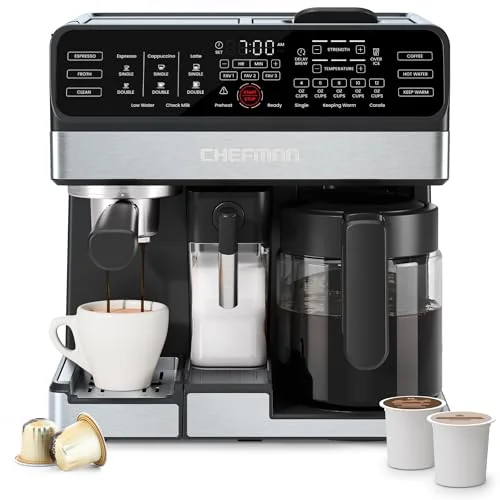
You pour the pot and it comes out thin, or you pull a shot and it tastes like weak coffee, and the one machine on the counter gives no clue which half to blame. A coffee maker and espresso machine in one, sold as a combination coffee and espresso maker or an all-in-one coffee maker, is two circuits sharing a shell: a drip heater with a basket on one side, a pump and a portafilter on the other, each going wrong for different reasons and each fixed in a different way. Below, the combos are sorted by the half each one serves best, with the cup showing you which side is off, the free change for that side first, and what two heaters cost once the first month is over. Start from the drink you make every morning, because that drink decides which compromise you can live with.
Quick Answer
Yes, one machine can brew a drip pot and pull an espresso-style drink, but the cup is usually good on one half and only acceptable on the other. Pick the drink you make every morning: that half decides the machine, and a grind or water change fixes most thin cups before any purchase.
What a Coffee Maker and Espresso Machine in One Really Is
The phrase “in one”, like the label coffee and espresso machine combo, covers three different kinds of machine, and the kind decides which half of your cup is trusting a shortcut. Sort out which one is on your counter before you compare brands or features. The three, from the most hardware to the least, are below.
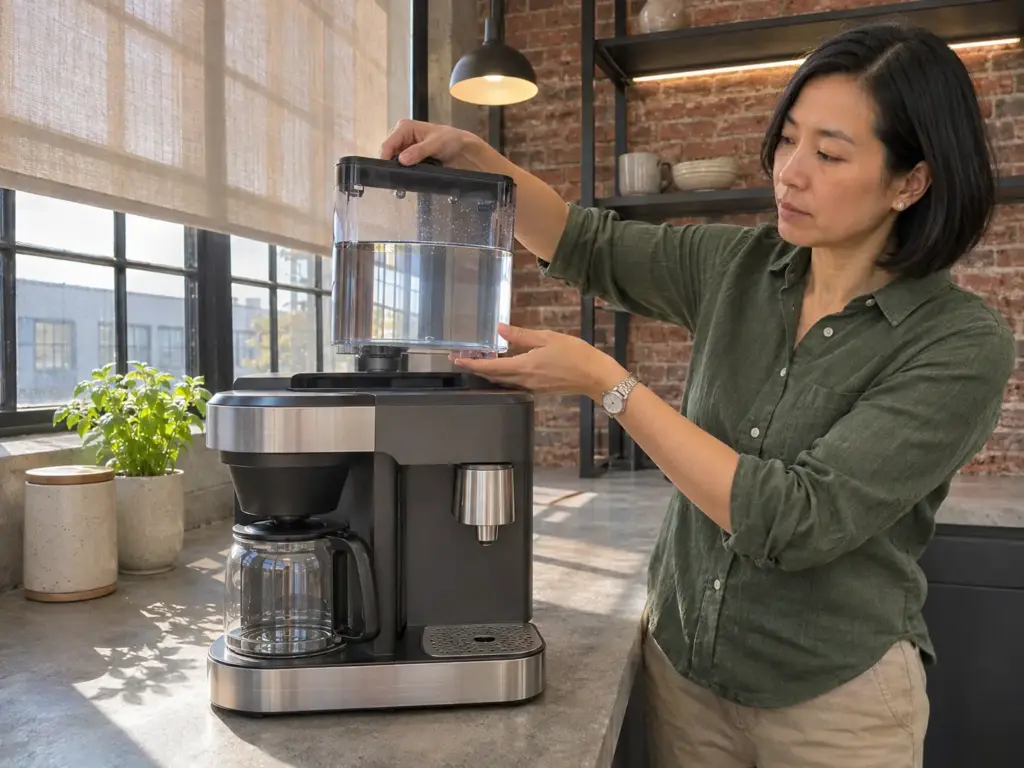
Two circuits in one machine (a drip heater and a pump side, two water paths)
Consumer Reports describes a dual coffee maker as a full drip maker on one side and a single-serve machine or espresso maker on the other, and that is the right picture of the pump combos. The De’Longhi All-in-One and the Chefman each run a drip heater and a pump from one tank and two outlets, so you are buying two machines that share a shell. Follow the tank with your finger to both outlets before you read a spec sheet: two heaters and two water paths mean two things to descale and two places for a cup to go wrong.
Standards have not caught up with that shell. According to the Specialty Coffee Association’s certified home brewer list, “SCA Certified Home Brewers are coffee makers that meet SCA’s rigorous standards for brewing quality, consistency, and performance.” The page describes drip and single-serve machines and says nothing of a drip-plus-espresso shell, so the drip side of a combo cannot lean on that certification and has to prove its temperature on your counter.
The super-automatic with a grinder inside
A super-automatic grinds the beans, doses them and brews the shot at the touch of a button, so the grinder and the brew unit live in one housing. A semi-automatic espresso machine, by contrast, leaves the grinding and the dosing to you.
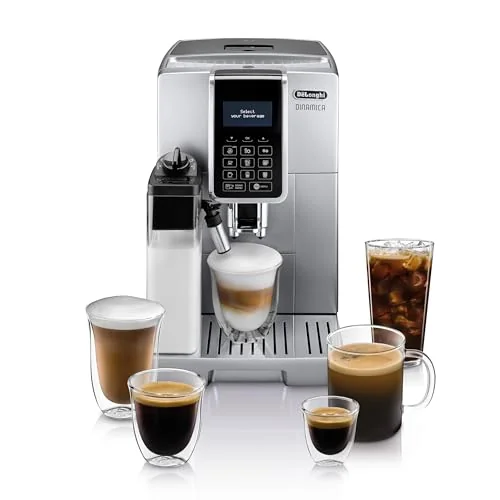
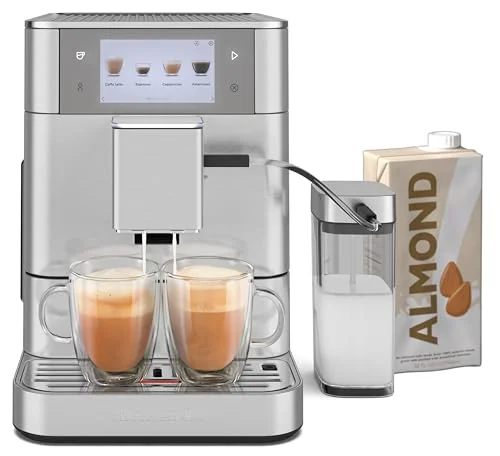
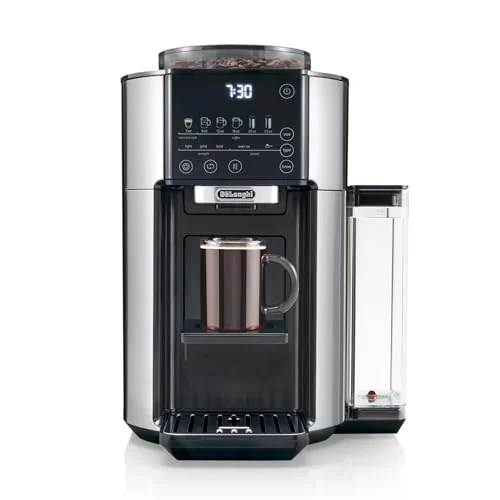
The De’Longhi Dinamica and the KitchenAid KF8 are the two in this lineup. They pour a long coffee as well, but there is no carafe and no basket: the drip-style cup arrives one mug at a time from the same unit that makes the shot, and it is a different drink from a pot of drip. That trade suits a household that drinks milk drinks and shots all day and pours a single plain cup.
The pod and stovetop versions with no pump
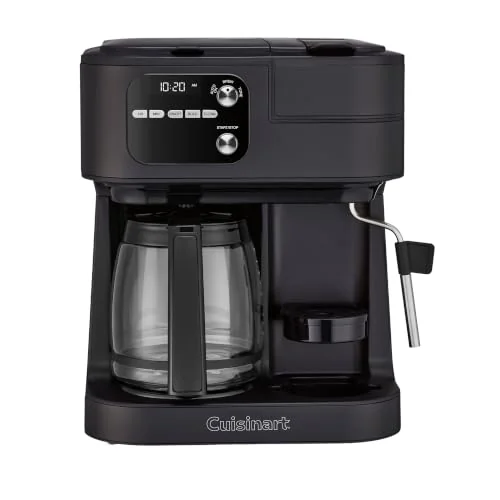
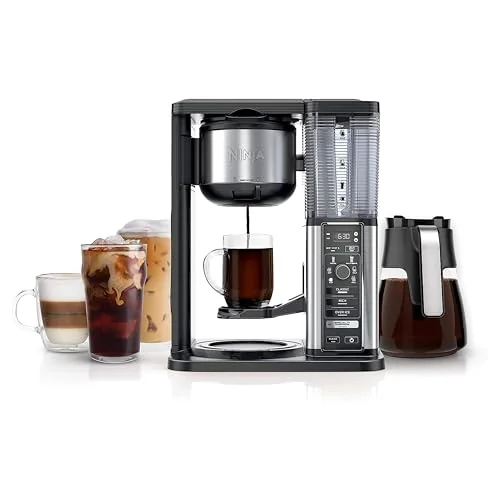
The lightest versions skip the portafilter. The Cuisinart Coffee Center sets a carafe beside a brewer for K-Cup and capsule pods, the Lavazza Classy Plus is capsule only, and a moka pot is a pot on the stove. The Ninja is a drip maker with a fold-away frother: it brews a coffee concentrate for lattes and cappuccinos, and what comes out is not true espresso. A moka pot gets closer because the pressure it builds is lower than a commercial machine’s, which makes the cup espresso-like.
Whether a pod or a pot should be your second drink comes down to the dose, and the page on drip versus single-serve covers who sets the dose when the same beans come out thinner from a pod.
Which Side the Combo Gives Up
A rating covers the machine as a whole, but a thin cup comes out of one half of it. Naming that half is what turns the repair into a single change instead of a guess. Taste the drip and the shot from the same bag, one after the other, and the cup that disappoints you is the side that is giving something up.
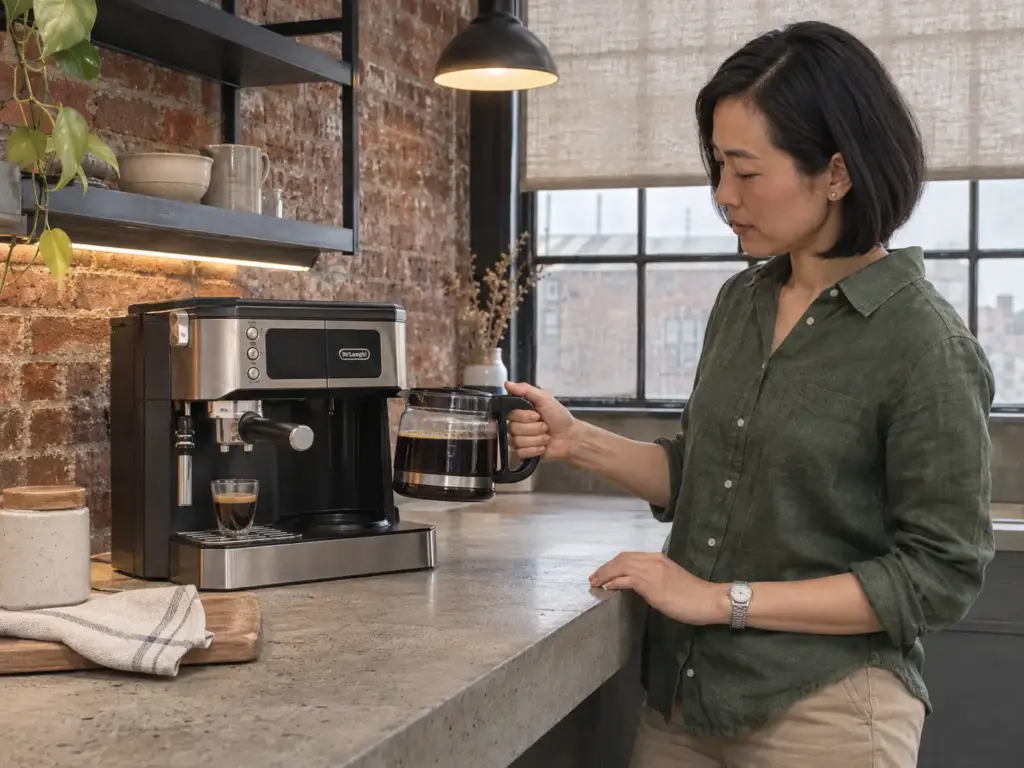
A good drip next to an average shot, or the other way round
Both patterns turn up in this lineup. The De’Longhi All-in-One is built around the carafe: its dual heating system brews a pot in about five minutes, and the pot is the better of its two drinks, with the espresso a step behind. The Dinamica goes the other direction, with a grinder and a brew unit that pull a good shot and a long coffee that lands at mediocre. As a rule of thumb, a pump combo is a drip maker with a shot added and a super-automatic is an espresso machine with a long coffee added, so the weak half is whichever one the machine was not built around.
That rule describes where the engineering went, and your kitchen can overrule it. A drip side that tests well still pours a flat pot when the grind is wrong or the carafe sits on the plate, which is why the cup in your hand outranks the label on the box.
Reading the cup before blaming the machine
Name the direction first. A sour or thin pot means the water left the grounds too soon: the grind was too coarse, the water never got hot enough, or the brew was cut short. A bitter or flat pot means the water stayed too long, or the finished coffee sat on heat. On the espresso side, a quick, watery shot that tastes sharp points to grounds too coarse for the basket or a skipped priming run, while a slow, choking, bitter shot points the other way.
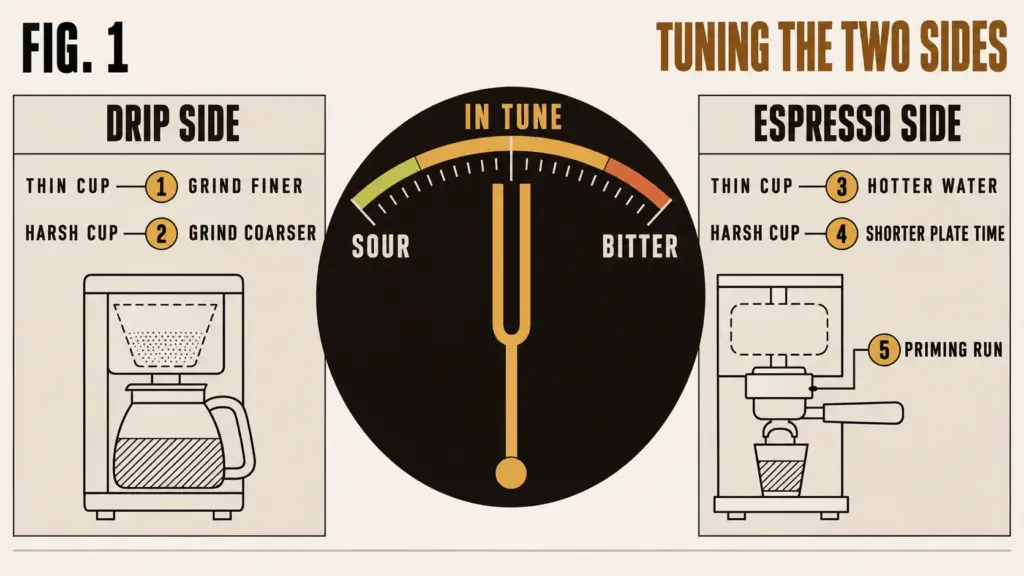
Then change the likeliest free thing on that side, taste, and only then move to the next. On the drip side the order is to confirm the brew actually ran (a programmed brew fails to start on some units the next morning, and it looks like a taste problem until you see an empty carafe), then go a step finer if the pot is sour, then cut the time on the plate. On the espresso side it is the hot-water priming run, then a finer grind if the shot is fast and sharp, and the cup temperature last. Each step tells you something because only one thing moved.
The side the reader pays for decides the pick
A full drip tray overflows and reads as a leak, and a lukewarm shot reads as a bad bean, so rule out those two before you decide a machine has failed a side.
After that, the choice is plain. If two cups of drip start your day and the shot is a weekend treat, buy the machine built around the carafe and accept a modest shot. If the shot is the point, buy the machine built around the shot and treat the drip as a spare. The dishonest purchase is paying for a half you rarely drink.
The Drip Side: Water and Grind Before Blame
The drip half has a short list to check first, and most of it costs nothing: the program, the dose, the grind and how long the pot sits on the plate. The water temperature is the machine’s job, and it is the one item a kitchen change cannot repair. The order below runs from the free fix to the one that needs a different machine.
Does the water stay hot long enough
Start with the timer. A night-before program that never fires leaves an empty carafe, and no grind change helps an empty carafe. Once the pot is brewing, the number to meet is the one in how Consumer Reports tests the brewing temperature of a drip maker: it measures “how long the water stays within the 195° to 205° F sweet spot for brewing” or roughly 90 to 96°C, and the same drip tests apply to the drip half of a dual maker.
Time inside that window is the one thing the heater controls and the counter cannot show you. The check you can run is the cup: if the pot is still sour after the grind has moved a step finer and the dose is right, the water is the suspect, and no setting on a grinder repairs a heater that runs cool. At that point the answer is a different drip maker, and drip makers picked by how hot the water runs sorts them.
The grind that suits a basket filter
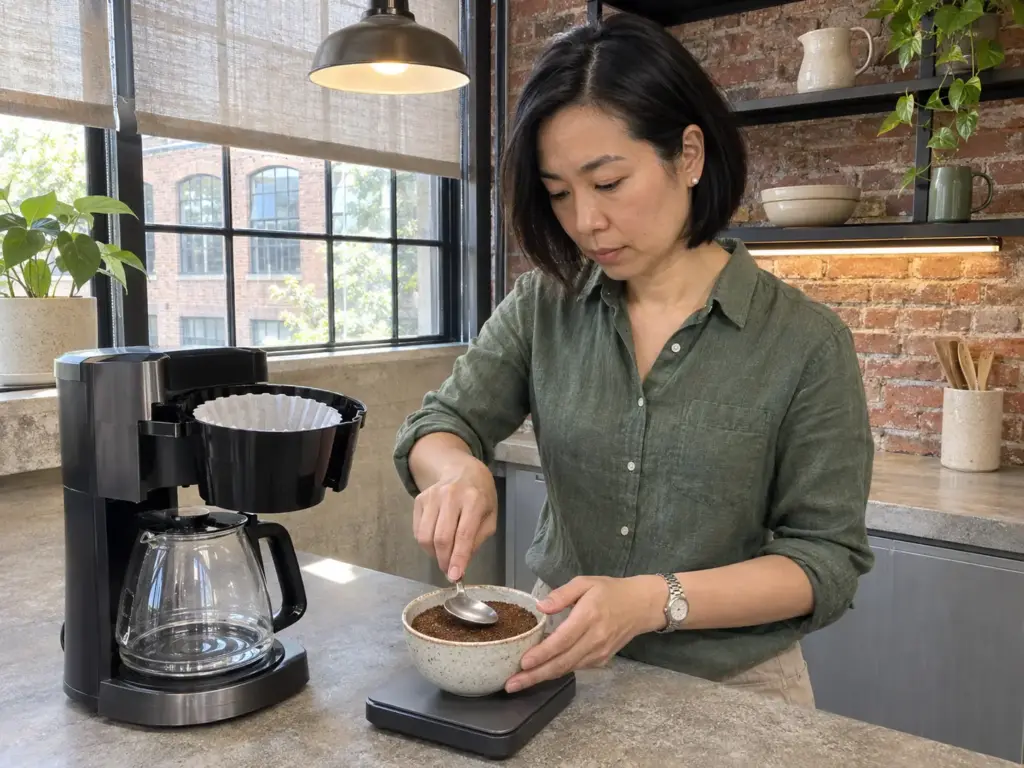
A basket filter wants a medium grind, coarse enough to pass the water in a few minutes and fine enough to hold it back long enough to extract. Too coarse and the water races through, and the pot tastes sour and thin. Too fine and the basket slows, the brew time stretches and the pot turns bitter.
Go one step finer if the pot is sour, brew the same dose and taste; if it turns bitter, come back half a step. Which way to move the grind when a drip pot tastes sour is settled on its page, grinder by grinder.
A blade grinder breaks that rule. A blade leaves some beans in chunks and turns others to dust, so running it longer adds bitter without removing the sour; there the better call is pre-ground drip coffee or a burr grinder, not another burst of the blade. The dose is the other half. Scoops are the weakest step in the routine, because a heaped scoop and a level one are different doses, so measuring the pot in grams instead of scoops takes the dose out of the list of things that move.
Weigh one level scoop of your usual beans once and write the grams on the canister lid. After that the scoop does the daily work, and the scale has proven it a single time.
The carafe on the warming plate
The keep-warm setting on the De’Longhi All-in-One defaults to two hours and can be set as long as 11 hours 59 minutes. Coffee left on a plate for that long keeps cooking: it turns flat and burnt, then bitter, whatever the grind was. Pour the same pot into a mug the minute it finishes and it tastes like a different coffee, and that comparison is the quickest way to learn whether a sour or bitter pot is a brewing fault or a plate fault. Shorten the keep-warm window if the machine allows it, or move the pot to a preheated thermal carafe or mug within minutes of the last drip.
The Espresso Side and the Grinder Question
The shot is the more fragile half of the machine, and most of what goes wrong with it comes down to what goes into the basket, not to the pump. Three things matter in this order: what the grounds are, what the first run of water does, and whether a grinder lives inside the machine. Start with the cheapest.
Pre-ground in the basket, and what that does to the shot
Pre-ground coffee sold for a drip basket is far coarser than a shot wants. Pushed through the tightly packed grounds of an espresso portafilter basket, the water meets too little resistance, so the shot runs fast, comes out thin and tastes sharp. The pump rating on the box (15 bar, 20 bar) is what the pump can push, not the pressure at the coffee, and it does not rescue a grind that is too coarse.
Going finer costs nothing, either with coffee ground for espresso or with a grinder feeding the basket, and the next shot shows the difference. If the shot then crawls and tastes bitter, you went too far, and half a step back is the answer.
How fine an espresso basket wants the coffee, in seconds not microns gives the timing to watch. A frother-equipped drip maker skips the question by brewing a concentrate, which is a different drink.
Priming and the cup that reaches the mug cold
The espresso side wants a hot-water run before the first shot. The cycle heats the lines and the portafilter and also warms whatever sits under the spout, and it is a step to repeat every morning, since a machine that sat overnight starts cold. A lukewarm shot gets blamed on the beans when the cup is the cause. On some super-automatics, the Dinamica among them, drinks come out warm instead of hot, so check the temperature in a preheated mug before changing anything else.
Catch the priming water in the mug you will drink from, tip it out, and pull the shot straight into it. A small, thin-walled cup takes far less heat out of two ounces of coffee than a heavy stoneware mug straight from the cabinet.
A grinder inside the machine, and the day it clogs
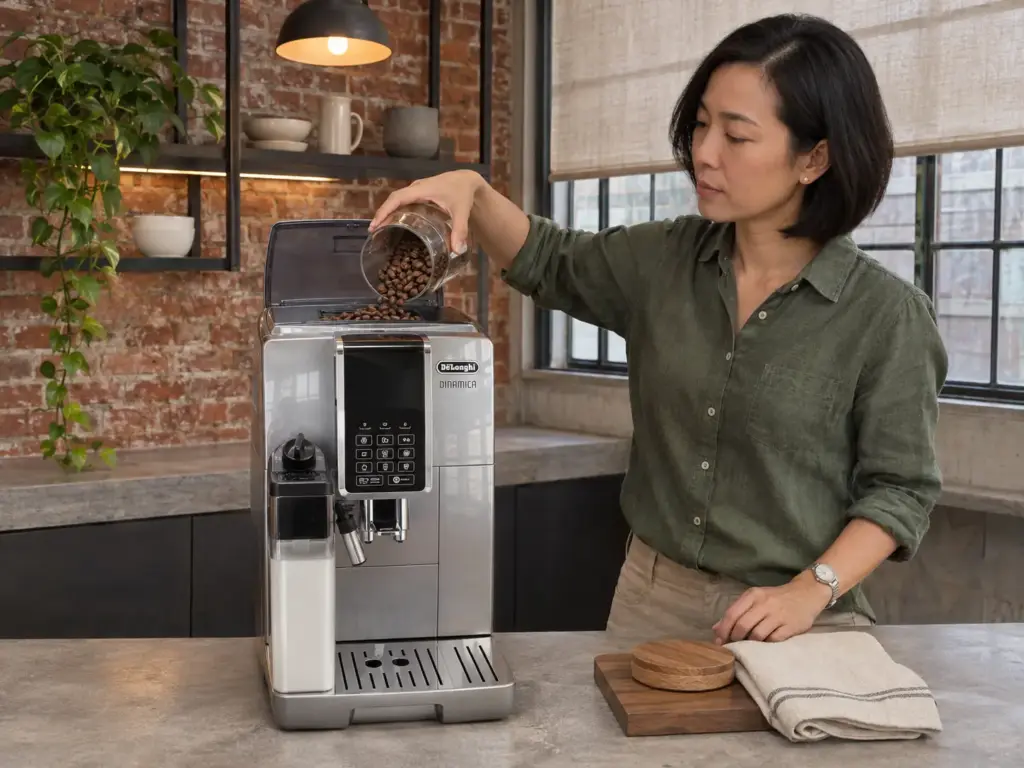
A super-automatic grinds every shot itself, which solves the pre-ground problem and swaps it for a part that can fail. A grinder inside an espresso machine can clog within weeks, and the felt washer around it can tear when it is reseated, which brings the clog back until the washer is replaced. When a shot suddenly runs slow or thin, lift the hopper lid and look: beans that sit still instead of dropping say the grinder is the thing to check before the pump. Built-in grinders, blade or burr are compared on the drip side, where the same question applies, and what wears out first on a home grinder is the case for buying the grinder separately and keeping the machine simple.
Capacity, Footprint and the Cup That Is Not a Cup
A combo takes more counter than the drip maker it replaces, and the word “cups” on its box measures something different on each half. Check three numbers before anything else: the footprint, the ounces each half actually pours, and the tank. All three are on the listing, and none of them needs a coffee to check.

Counter depth and the shelf above
A combo carries a carafe, a portafilter or capsule bay, a tray and a tank in one footprint. Hold a tape to the listing’s width, depth and height, then picture the lid or the bean hopper open: a machine tall enough to need its lid up leaves no room under the upper shelf, and a hopper you have to slide the machine out to fill gets filled less often than it should. The tray that slides out toward you needs its clearance too.
Ounces, not cups
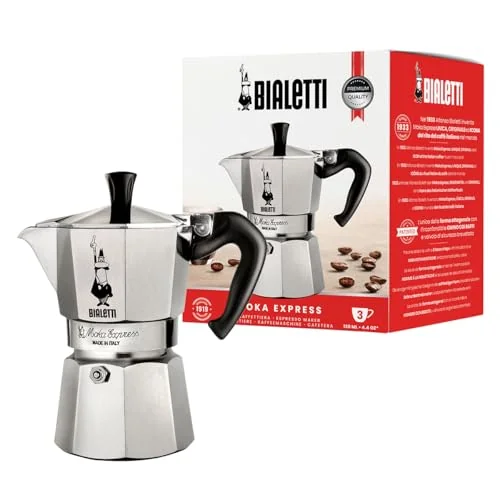
The unit on the box changes with the drink. A 3-cup Bialetti Moka Express pours 4.3 ounces (about 127 ml), because a moka cup is an espresso cup.
The Cuisinart’s single-serve sizes are 6, 8 and 10 ounces, and the AeroPress holds 8.5. A drip carafe is rated in cups by the maker’s definition, which usually runs smaller than the mug you pour into. Ask for ounces on every half before you compare, and pots rated above twelve cups, counted in ounces shows the sum for a big carafe.
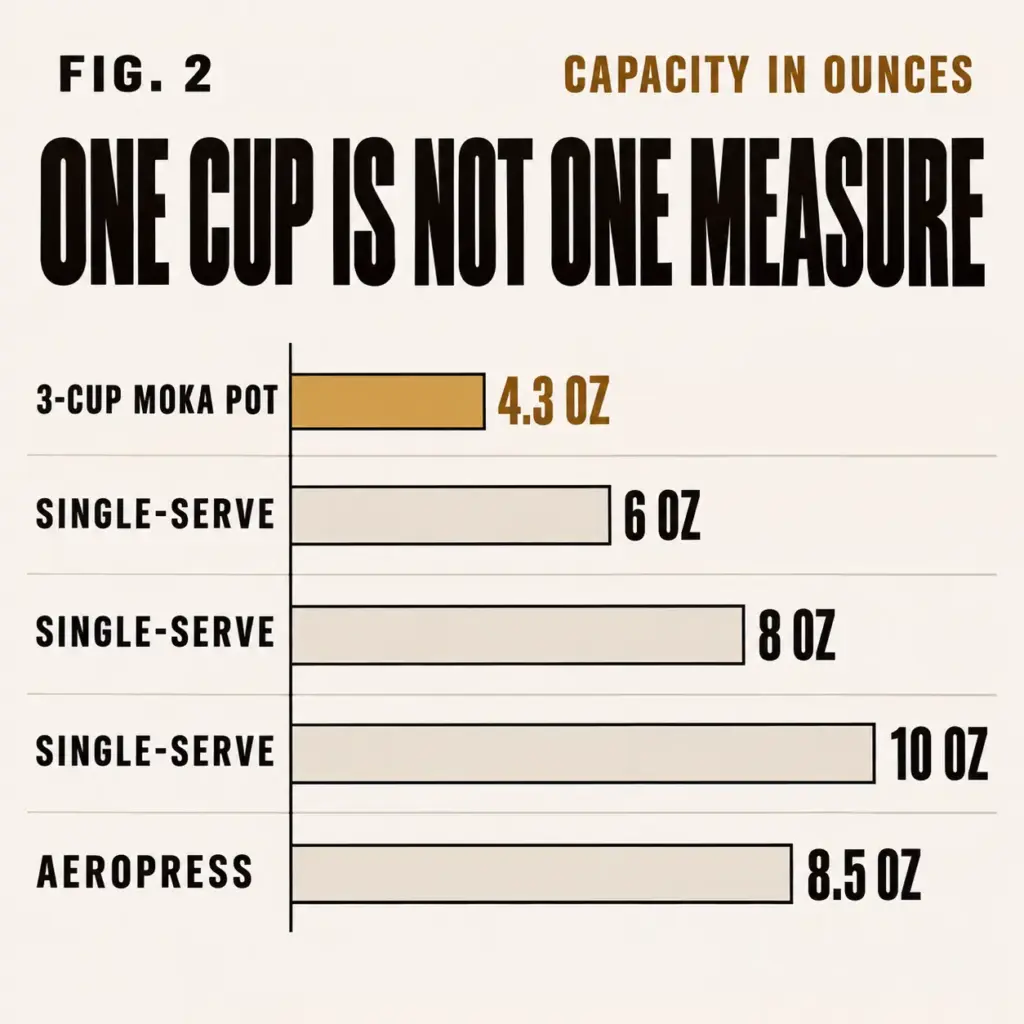
The sum is the same for every half: ounces you want, divided by ounces poured. Two 10-ounce mugs from a 3-cup moka pot means two pots, and a 12-cup carafe is a poor match for a single 8-ounce mug. The same sum catches the capsule sizes: a 6-ounce setting fills a small cup, and a 10-ounce setting is the one to choose when the mug is a travel mug.
Fill your everyday mug with water, tip it into a measuring cup once, and keep that number in your phone. Every listing you read after that gets compared against ounces you measured, not against a word on a box.
Tank size against how often you refill
The water reservoir, or tank, runs from 32 ounces on the De’Longhi All-in-One to 72 on the Cuisinart, 74.3 on the KitchenAid and about 100 on the Chefman. The arithmetic is the useful part: a 32-ounce tank is empty after roughly three 10-ounce cups, with nothing left for a shot, while a 72-ounce tank covers about seven.
A combo that draws both halves from one tank empties it faster than a drip maker alone, and every refill is a chance to fill it through a water filter, which spares the pump and the gaskets.
The Chefman’s 3-liter tank turns the same sum around: about ten 10-ounce mugs between refills, which suits a busy kitchen and also means the water in the tank sits longer on a slow week. A tank you can lift out and rinse is worth more than a few extra ounces, because the film that forms on the wall of a tank is the first thing month two shows.
Pod and Stovetop: Two in One Without a Pump
A pod machine or a stovetop pot skips the portafilter and the priming run, and for someone who drinks one latte-style drink and one drip cup a day that may be exactly enough. These are the lighter ways in. What you give up is control, since the dose is sealed in a capsule or fixed by the size of the pot.
Pod machines that brew drip and an espresso-style cup
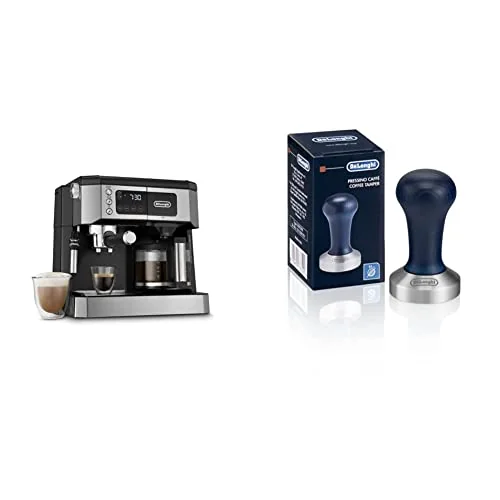
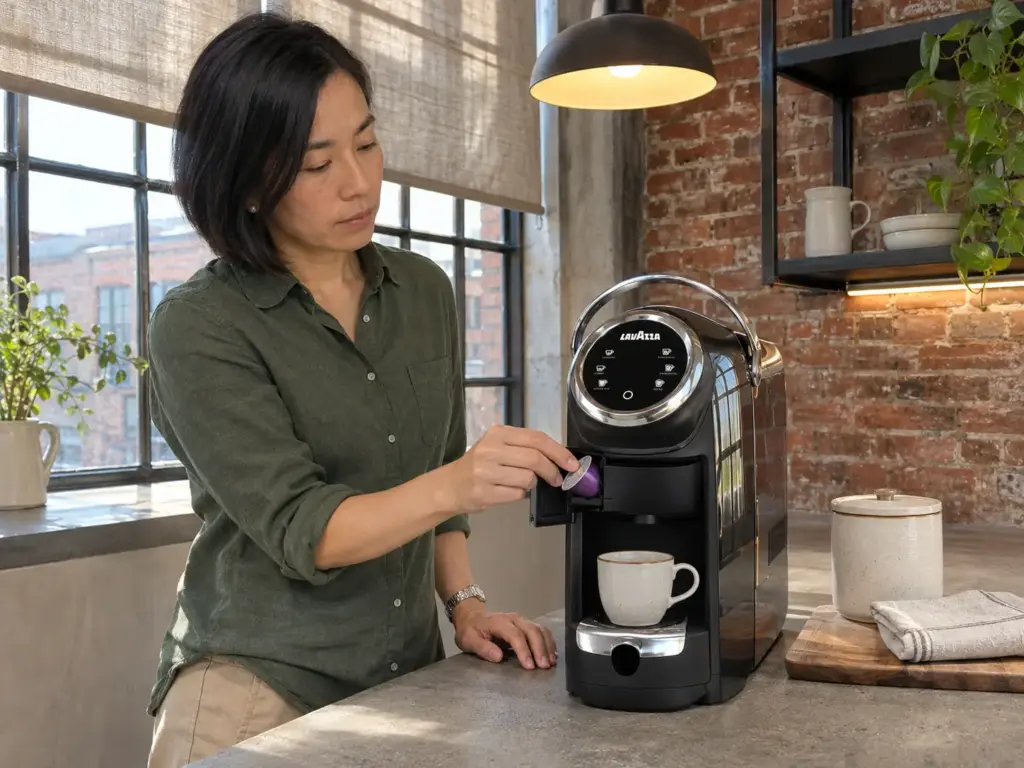
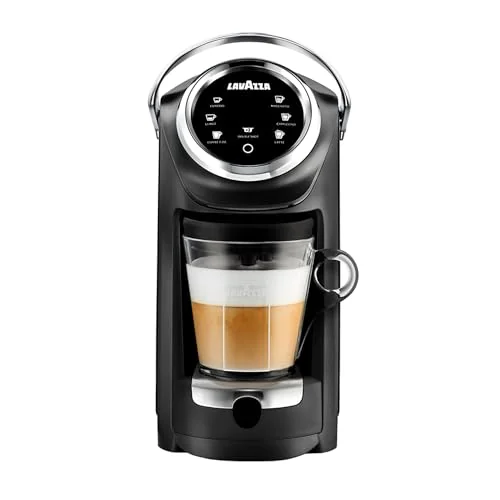
The Cuisinart Coffee Center sets a 12-cup carafe beside a brewer that takes K-Cup and Nespresso-style capsules, in 6, 8 and 10-ounce sizes. The Lavazza Classy Plus drops the carafe and makes espresso, lungo, an 8-ounce coffee, a double, latte, cappuccino and macchiato from Lavazza Expert and Blue capsules. In both, the dose is sealed in the capsule, so the levers left are the capsule you choose and the water going in.
The Keurig page covers what the Strong button on a Keurig actually does to a pod brew, and the Nespresso page covers how Vertuo capsules differ from Original, which settles the capsule side of the Cuisinart. The used capsule drops into a bin that has to be emptied, a chore that sounds minor until it is a daily one.
The moka pot as the honest stovetop route
A moka pot brews water and coffee on a burner under less pressure than a commercial espresso machine, so its cup is espresso-like and not espresso. That is the honest description, and for the price of the pot it is a good one. A 3-cup pot pours 4.3 ounces, so count on one small, concentrated drink.
Grind is the free lever: the grind setting a moka pot likes is the first thing to adjust, well ahead of a second pot.
The weak points are physical. The gasket and the handle can melt, the base can oxidize, and the handle is hot to touch. The pot can also be too small for the grates of some gas stoves, so measure the burner as well as the counter.
When the pot and the pod box is the better fit
When a household drinks two different drinks at different hours, a machine with a pot on one side and a pod brewer on the other can fit better than a pump combo: each half is a plain version of what it does, and neither has a priming run or a portafilter to learn. A machine with a pot side and a pod side in the same housing is settled on that page, so the comparison stays there. Here it is enough to know that the pump is the part you give up, and for a latte-style drink and a drip cup a day that can be a fair trade.
Month Two: Two Heaters, Two Descales, One Tray
Week one is where a machine looks its best, and a unit with two heaters and two water paths collects its bills later. The costs differ from a drip maker’s: two descales, a tray that fills faster than expected, and a short list of parts that tend to give out. What follows runs in the order you will meet them.
Scale in a machine with two heaters
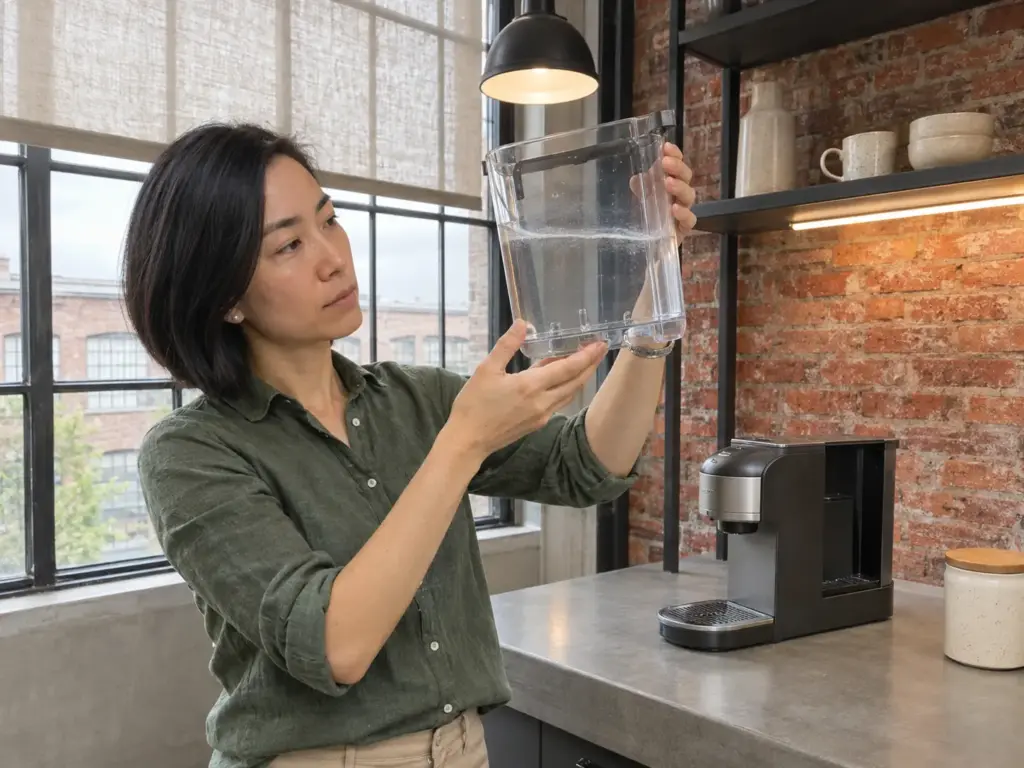
Every heater that boils tap water leaves scale, and a combo has two heaters and two water paths, so it has two routines to keep. The first sign is visible before it is audible: a film or a chalky ring on the tank wall, and a pot that takes longer than it used to. The maker’s manual is the authority on the cycle for each circuit, so follow it for both instead of treating the side you can see as the whole machine.
Check how many routines it lists: if it lists one, ask whether that cycle reaches the pump side as well as the drip heater. Hard water speeds the buildup, and filtered water spares the gaskets and the pump as well as the heater. A descale that is only ever run on the drip side lets the pump side collect scale quietly, until the shot starts to sputter.
The tray, the tank and the milk circuit
The removable tray fills faster than the drip basket drains, because a combo feeds it from both halves. A full tray overflows and gets mistaken for a leak in the machine; on the De’Longhi All-in-One, water spills out when the tray is full. The milk circuit is where things go off: milk left in a frother line goes sour, and the next milk drink tastes of it. Rinse it after every milk drink, and take it apart on the schedule in the manual.
Treat the tray like the filter basket: tip it out before the second drink of the morning. It is the cheapest fix on this page, and it removes the one failure that looks expensive.
What the repeated complaints say
The same failure turning up across units is a design flaw, and a handful of them repeat in this lineup:
- A programmed brew that does not start the next morning on some Chefman units.
- A TrueBrew drip maker whose units give out around the three-month mark.
- A Cuisinart that drips after use and fails inside five months on some units.
- A Lavazza that stops pulling espresso near the 15-month mark.
- A KitchenAid super-automatic whose reliability is the weak point, with some failing after the first use.
- A moka pot whose gasket and handle melt.
Read as a set, they cluster in the parts that heat, grind, pump or seal, and a combo doubles every one of them. A week of use shows none of them, and that is the whole case for counting months before choosing. It also moves the question from which machine tastes best on day one to which half you can afford to lose. A super-automatic whose grinder clogs takes the shots with it, and a pump combo whose espresso side stops can still brew the pot, so the drink you cannot do without should sit on the half with the fewest parts to fail.
When It Is Not the Machine, and When Two Machines Beat One
Most thin cups on a combo get fixed without another purchase, and the ones that do not are where a separate drip maker earns its counter space. Check four things in order, free first, and taste after each: the water, the beans, the plate and the grind. If the cup is still off after all four, the machine is the answer.
Tap water, stale beans and the plate
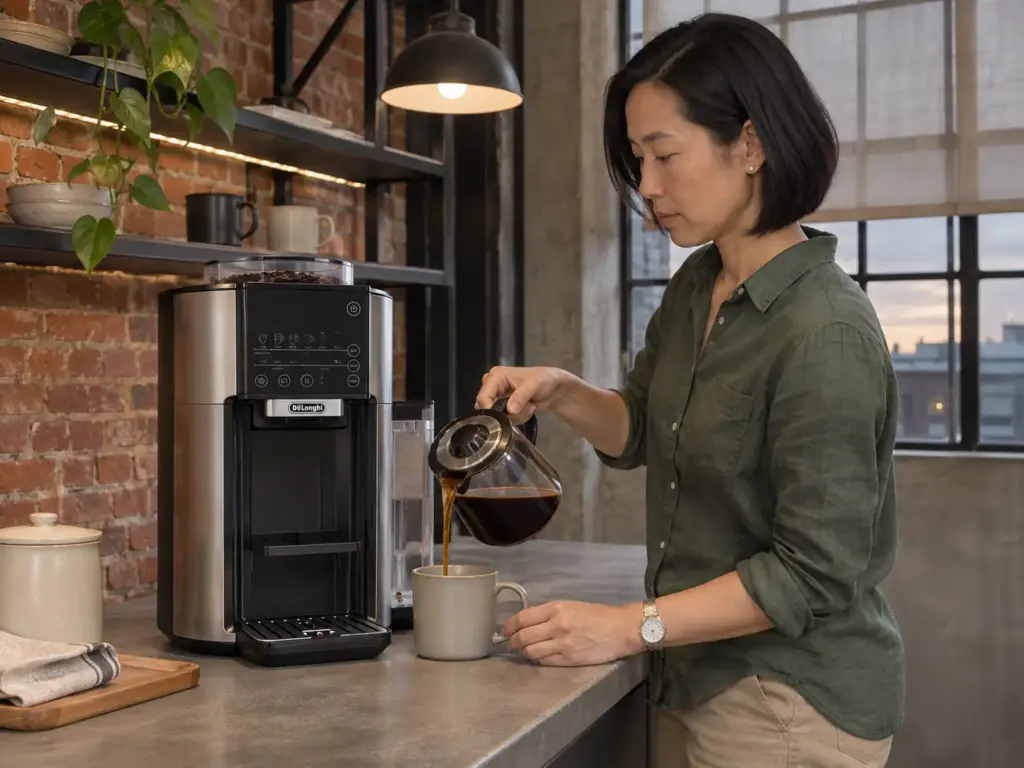
Start with the tank. Scale slows the machine and cools the brew, and running the tank through a water filter spares the pump and the gaskets as well. Next the beans: fresh ground beans from a recent roast beat a bag well past its roast date, which gives a flat, papery cup from any machine that no setting rescues.
Then the carafe. A glass carafe with a faint ring at the water line is showing the same minerals that build up inside the heater, and a pot that spent the whole morning on the plate has already told you what it tastes like. Only after those three do you touch the grind, with the direction already set out above.
The split: a drip maker plus a separate espresso side
Two machines remove the compromise, because each half is judged on its own merits. The cost is counter space and a second cord. The cheapest drip side is not a machine at all, and it takes no counter space beyond a cone and a mug.
A plastic pour-over cone and a box of paper filters make the cheapest drip cup you can put beside an espresso maker. The only parts that wear out are the filters.
If you want a machine for the drip half, two stand out in this lineup. The De’Longhi TrueBrew is a drip maker with a grinder inside, and durability is its weak point. The Ninja CM401 is the lowest-priced drip side with a frother, and its milk drinks are built on a coffee concentrate instead of a shot. A review of the Ninja that puts the flaw first covers that machine in detail.
Two machines also fail separately. When the espresso maker stops, the drip maker still brews the pot, which a combo cannot promise, and each descale is a shorter job on a machine with one heater. The obvious pick for a small counter is the combo, and the second choice becomes the right one the moment two people want their drinks at the same minute.
The next decision after this one
If the shot is the half you keep, the shopping changes from a combo to an espresso machine and a grinder to feed it, and the grinder end of that chain is the more expensive mistake to make. If the pot is the half you keep, the purchase is a drip maker that holds its temperature, and the grind and dose steps above still apply. Either way the combo has answered a useful question, because it showed you which half you drink.
Choose by the Half You Drink, and Check the Scale Line Later
The half you drink every morning decides the machine: a carafe-first combo for the pot, a super-automatic or a capsule brewer for shots and milk drinks, a moka pot beside a drip maker when the second drink is a small one. On the drip side, temperature and grams come first, then the grind a step at a time, then the plate. On the espresso side, the basket and the priming run come first, and a lukewarm cup gets checked before the beans get blamed. The cost arrives in month two, as two descales, a tray and the parts that heat, grind and seal.
Look at the tank wall at the first descale the manual calls for. A film or a chalky ring says the water and both heaters are due, and a pot that now takes longer to brew says the same thing. Watch the tray too: an overflow is a full tray more often than a fault.
For tomorrow’s cup, move the grind a single step on the side you keep. Go finer if the pot or the shot tasted sharp and thin, coarser if it turned bitter, and taste. If the cup comes out lukewarm, preheat the mug before touching the grinder. When that half tastes right, the other half is a choice you can make with your eyes open: keep it, or give it to a second machine.
Frequently Asked Questions
01Is there an espresso and coffee maker combo?
Yes, combination machines exist: a pump combo brews drip and espresso from one housing, a super-automatic grinds and pulls shots, and pod versions skip the pump. Each gives up something on one half, usually the shot on a pump combo and the pot on a super-automatic.
02Which espresso machines also make coffee?
Pump combos such as the De’Longhi All-in-One carry a drip carafe beside the espresso side, and super-automatics pour a long coffee from the same unit. That long cup comes one mug at a time and is a different drink from a pot of drip.
03Can I make espresso with a coffee maker?
A plain drip maker cannot build the pressure an espresso shot needs, so it brews drip coffee instead of a shot. A drip maker with a frother brews a concentrate for milk drinks, and a moka pot on the stove makes an espresso-like cup at lower pressure.
04What is the best single espresso maker?
There is no single best one, because the answer depends on which drink you make every morning. A super-automatic suits the shot-first drinker, a pump combo the pot-first drinker, and a capsule machine the person who wants a latte with no portafilter.
05How long does the drip side keep coffee warm?
On the De’Longhi All-in-One the keep-warm setting defaults to two hours and can run up to 11 hours 59 minutes. Coffee left on the plate keeps cooking and turns flat and bitter, so move it to a thermal mug soon after it finishes.

How did your cup turn out?
No comments yet. Tell us what you changed — and whether the needle moved.