
We may earn a commission when you buy through links on this page. It never changes what we recommend. How we pick
On this page7 parts
- Heat, Pressure and Short Production Runs Set the Floor
- Automation Adds a Grinder, a Brew Unit and a Milk Circuit
- What the Price Buys Back in an Ordinary Kitchen
- Where the Cup Tops Out, and What to Change Before Upgrading
- What Month Two Looks Like
- Taste After One Grind Step Before You Pay for Anything
- Frequently Asked Questions
You are reading the box of a bean-to-cup machine, the tag is several times what a drip maker costs, and nothing printed on it says which of those words you are paying for. So, why are coffee machines expensive?
The price covers a chain of jobs the machine does for you (heating, pressure, grinding, dosing, brewing, milk), and the cup improves only as far as the weakest link in that chain allows. Most of the time that link is the grinder inside. What follows goes through the hardware, the automation, the counter and the months, and the free changes worth trying before paying for more.
Quick Answer
The price pays for parts that hold heat and pressure steady, then for each step the machine takes off your hands: grinding, dosing, brewing and milk. The cup improves only as far as the built-in grinder allows. You are paying for fewer chores, and the cup is a separate question.
Heat, Pressure and Short Production Runs Set the Floor
Part of the price is plain hardware, and it is the part that does not bend. Water has to come out hot and get pushed through packed grounds, and doing that the same way every morning costs more than heating it once. What that money buys is temperature stability: the same water temperature on the first cup of the day and on the fourth.
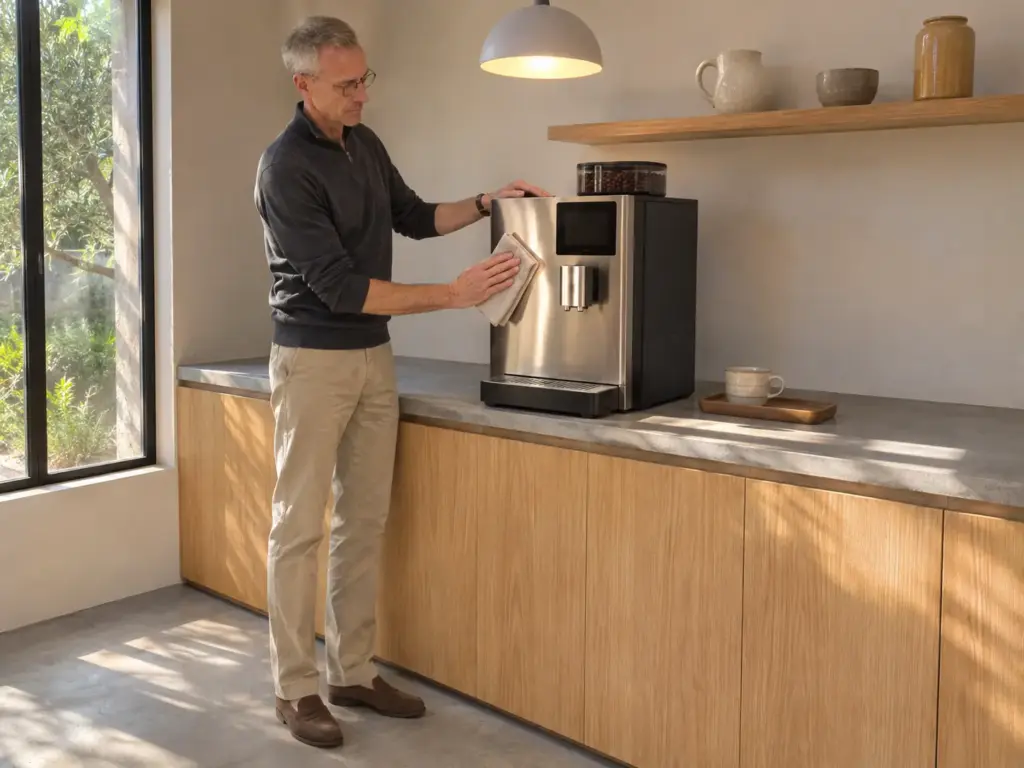
A boiler and a pump that hold their numbers
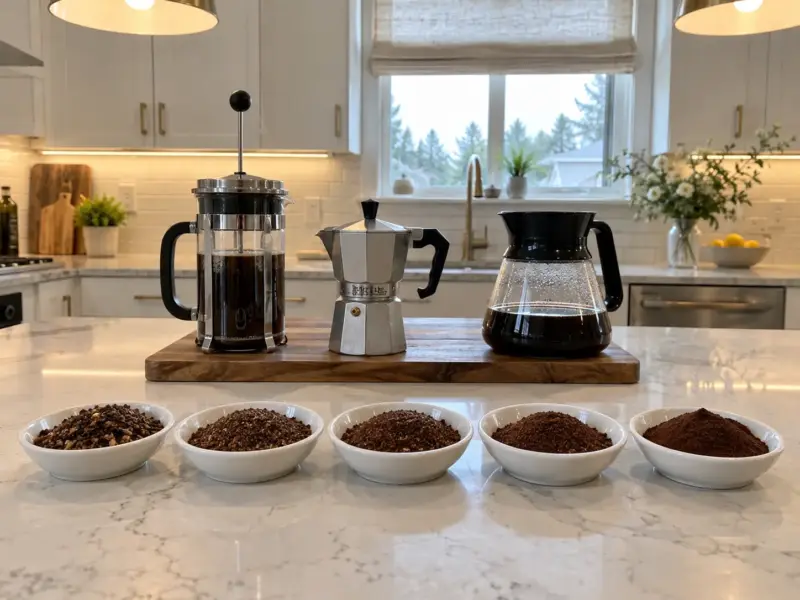
A machine that forces water through grounds needs a boiler or thermoblock and a pump that keep temperature and pressure steady from the first shot to the fourth, and steady costs more than hot. The cheap end of this same spread shows the minimum: a combined drip and espresso base with a 15-bar pump and a dual heating system that brews both at once, with no grinder and nothing automated.
The trade inside the two-heater design of a combined drip and espresso machine has a page of its own. Here only the bill matters: two heaters and a pump rated for pressure are three parts that have to work every time, and every other machine in this price conversation carries at least those.
Seals, valves and the parts that wear first
Valves, boiler connections and seals are where a machine that holds pressure starts to fail, and more connections mean more seals. A pressure seal on a cheap machine can give out within a few months, and the coffee sprays around the portafilter instead of dropping into the cup.
Heat is the other early casualty. If a machine that poured hot last winter now runs warm and the cup tastes flat, the beans are innocent until proven otherwise: look at the heating part and the water line first.
Few units, a brand and a warranty
A machine built in small runs never gets the economies of scale of a drip maker, which sells by the million. A brand, a service network and a warranty are also in the tag, because someone has to answer when the seal fails in month three.
Two machines of similar size can sit far apart in price. Write down what each one does between whole beans and finished cup (grind, dose, tamp, brew, froth) and the gap usually turns into a list of jobs, which is easier to judge than a brand name.
Automation Adds a Grinder, a Brew Unit and a Milk Circuit
Heat and pressure explain the floor, not the climb. What lifts a machine much higher is the number of steps it does for you, and each step is a part that costs money to build, wears with use and has to be cleaned.
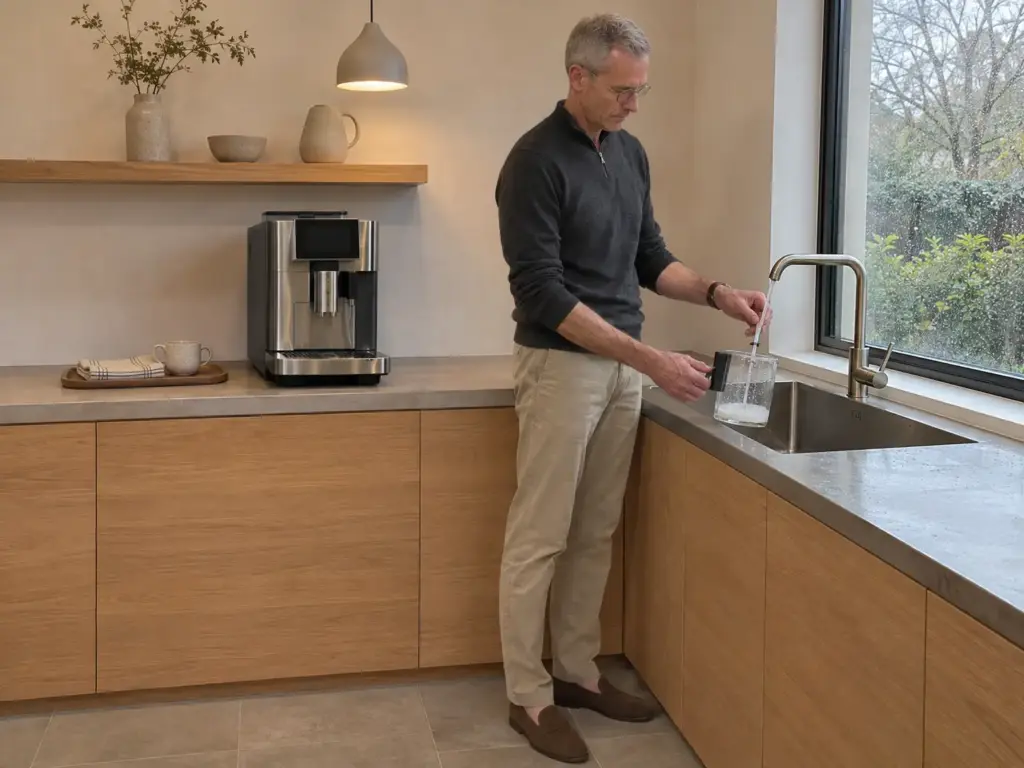
The built-in grinder and the brew unit
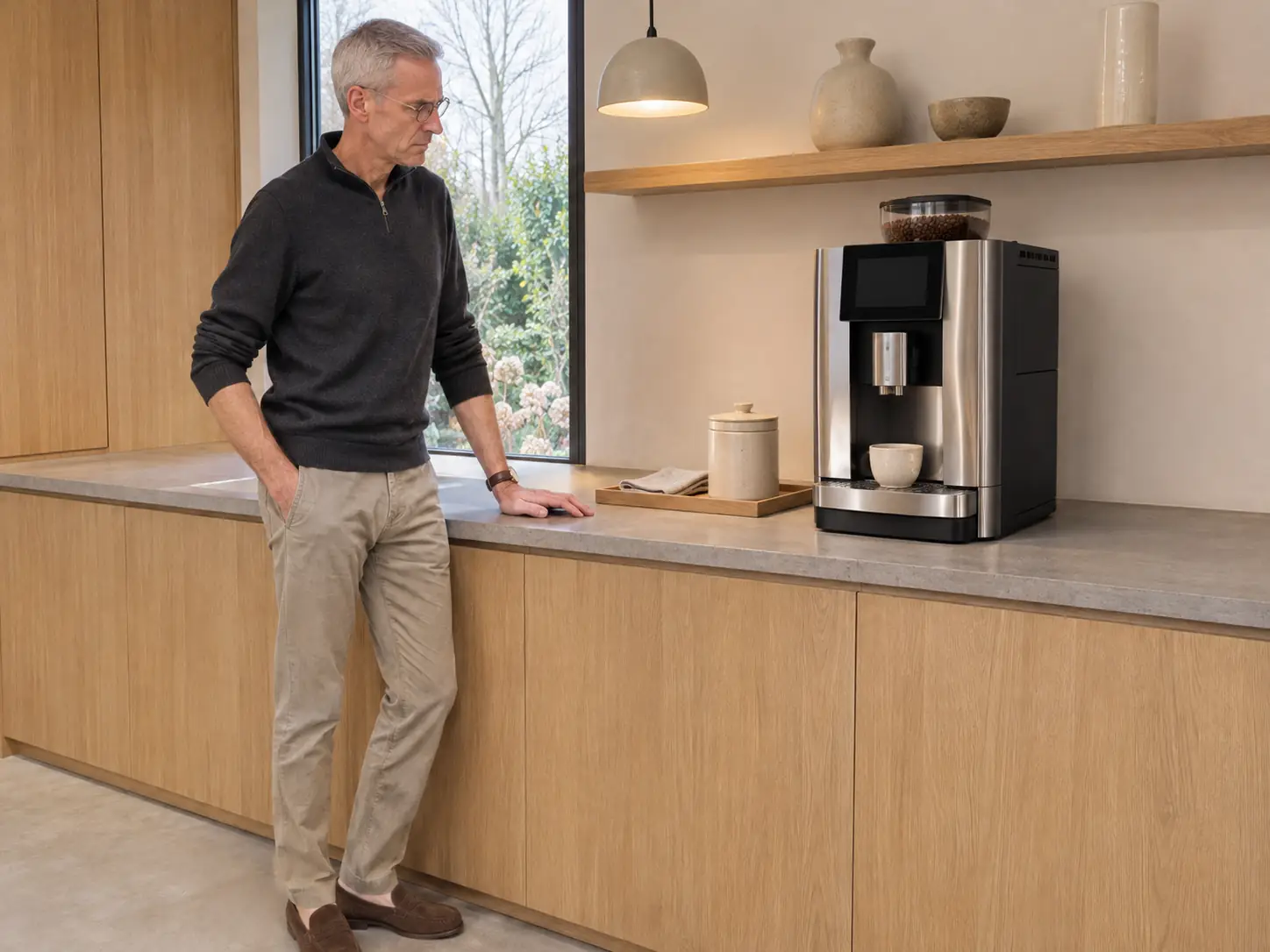
The first chore to disappear is the grinder and the dose. The De’Longhi Dinamica LatteCrema ECAM35075SI is the clearest case: a built-in conical burr grinder with 13 settings, a brew unit that takes the ground dose and presses it for you, 18 recipes and automatic milk. A hopper that holds 10.5 ounces (300 grams) of beans means the whole path from bean to cup happens behind a single one-touch drink button.
That convenience has a cost on the cup side. The Dinamica’s weak spot is temperature: drinks tend to come out warm rather than hot, and milk often falls short of the temperature asked for. Try the hottest of its three coffee temperature settings and a preheated mug before judging it. Durability is the larger flaw: some units fail early, within the first two months, and the milk system is the part most likely to stop after the first descaling cycles.
If the grinder is the step you want removed, it does not take a machine this size to get it. A drip maker with a grinder built in removes the same chore with far fewer parts around it, and the price of the difference is what you spend on the milk circuit, the brew unit and the screen.
The milk circuit and the screen
Milk is the most expensive convenience to keep working. Where a semi-automatic leaves the steam wand to you, a milk circuit does the frothing itself, and its tubes and frother carry milk residue after every drink and need rinsing every time, and a circuit that is skipped for a week announces it in the next latte.
The Breville BES881BSS Barista Touch Impress shows where the money goes in a machine that costs less than the Dinamica. It carries a built-in grinder with 30 settings, an automatic milk frother with three alternative-milk settings, an assisted 22 lb tamp and a touchscreen that walks you through the shot. Amazon files it as a semi-automatic, and that label matters: its automation is the milk and the tamp, and you still pull the shot yourself.
Reliability is mixed. Some units stop at around six months, and the grinder can jump to a different setting instead of holding the one you chose, which turns the dial into a suggestion.
A step you stop doing is a step you stop watching. On either machine, the first sign that the grinder has drifted is the cup, never the screen, because nothing on the screen measures a grind.
Three machines, three levels of doing it for you
Laid out as steps, the price gap stops looking mysterious. Each row below shows what the machine does for you, what stays in your hands, and what it costs you in practice.
| Machine type | What it does for you | What is still yours | What it costs you |
|---|---|---|---|
| Drip and espresso on one base (De’Longhi All-in-One COM532M) | Heats both brews at once | Grinding, dosing, tamping, frothing | No grinder or automation, so the cup depends on the grinder you add |
| Semi-automatic with a built-in grinder (Breville Barista Touch Impress) | Grinds and doses, guides the tamp, froths milk | Pulling the shot | Mixed reliability; the grinder can skip settings |
| Super-automatic (De’Longhi Dinamica LatteCrema) | Grinds, doses, brews, froths | Choosing the recipe and cleaning | Warm drinks; a milk system that can stop |
Pick the one chore you would gladly lose (the tamp, the froth, the grind) and shop only among machines that remove that chore. Paying for four automated steps when you wanted one is how a tag climbs without the cup following.
What the Price Buys Back in an Ordinary Kitchen
A high price is more than the machine. The same tag has to be weighed against the counter it takes, the water in your tap and what you keep pouring in afterwards.
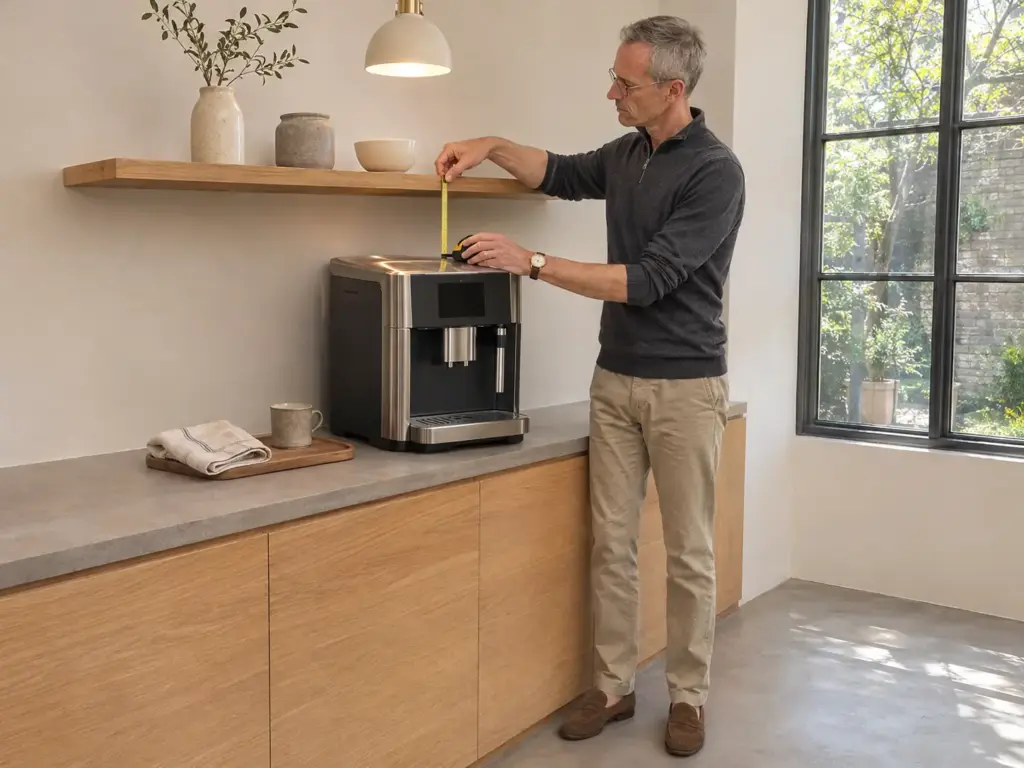
The counter it takes
Listings give the dimensions, and they differ more than the prices suggest. The Dinamica measures 16.9 × 9.3 × 13.7 inches (about 43 × 24 × 35 cm) and weighs 23.17 lb (10.5 kg); the Breville measures 13.4 × 14.2 × 16.3 inches (about 34 × 36 × 41 cm) and weighs 24.18 lb (11 kg). The two shapes sit differently under a shelf, so the gap above the counter decides before the price does.
Tap water and the descaling that repeats
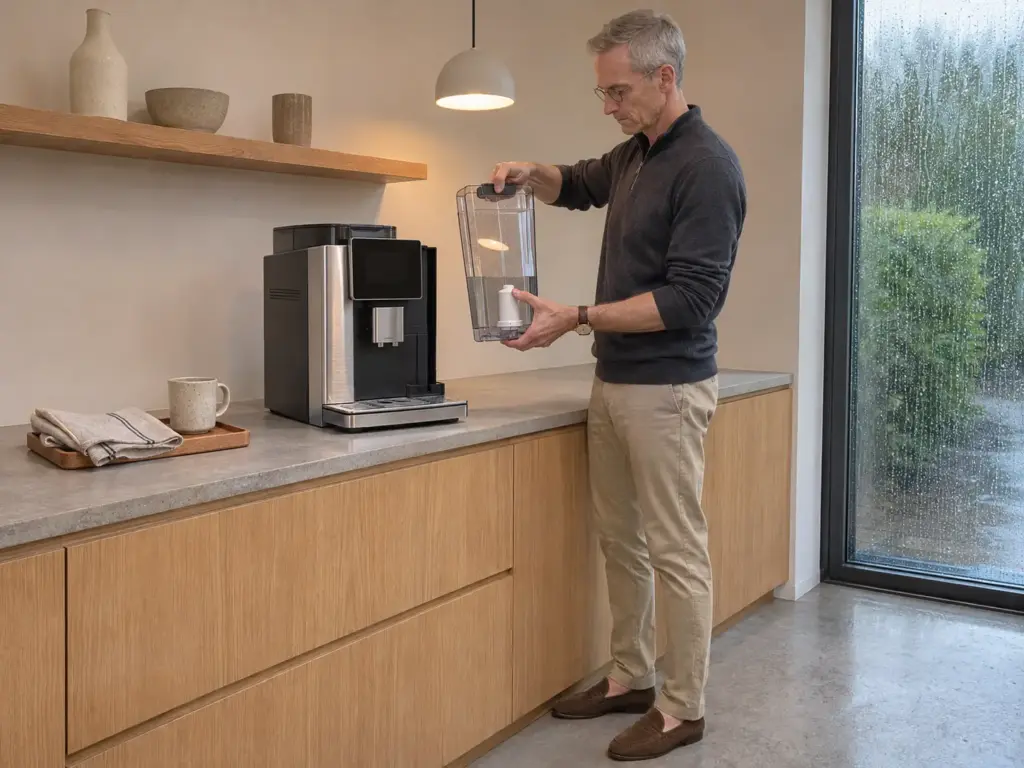
Tap water is the ordinary kitchen’s water, and any machine that heats it builds scale. That is why these machines ask for a filter cartridge and a descaling cycle on a schedule set by the maker’s manual; follow the manual’s schedule and products, because the procedure differs from model to model.
The quiet warning comes through the ears and the cup. A pump that sounds different when the tank runs low, and a cup that comes out short, mean the tank or the filter needs attention.
What keeps costing after the purchase
Electricity per cup is small next to the coffee itself. A machine that heats only the water for each cup does not run up the bill the way a bag of beans does, so what repeats is the coffee (why beans cost what they do covers that side), the filter cartridge and the descaler.
Any payback figure depends on how many cups a week you make and what you would otherwise buy. Run that sum with your own week; a number from somebody else’s kitchen rarely survives yours.
Measure the gap under the shelf and the distance to the nearest outlet before comparing machines. One that does not fit is the most expensive mistake in this price range, and no warranty covers it.
Where the Cup Tops Out, and What to Change Before Upgrading
You now know what the price pays for. What remains is whether the price lifts the cup, and it lifts it only as far as the grinder allows. That limit is the cup ceiling, so the fixes that cost nothing come first.
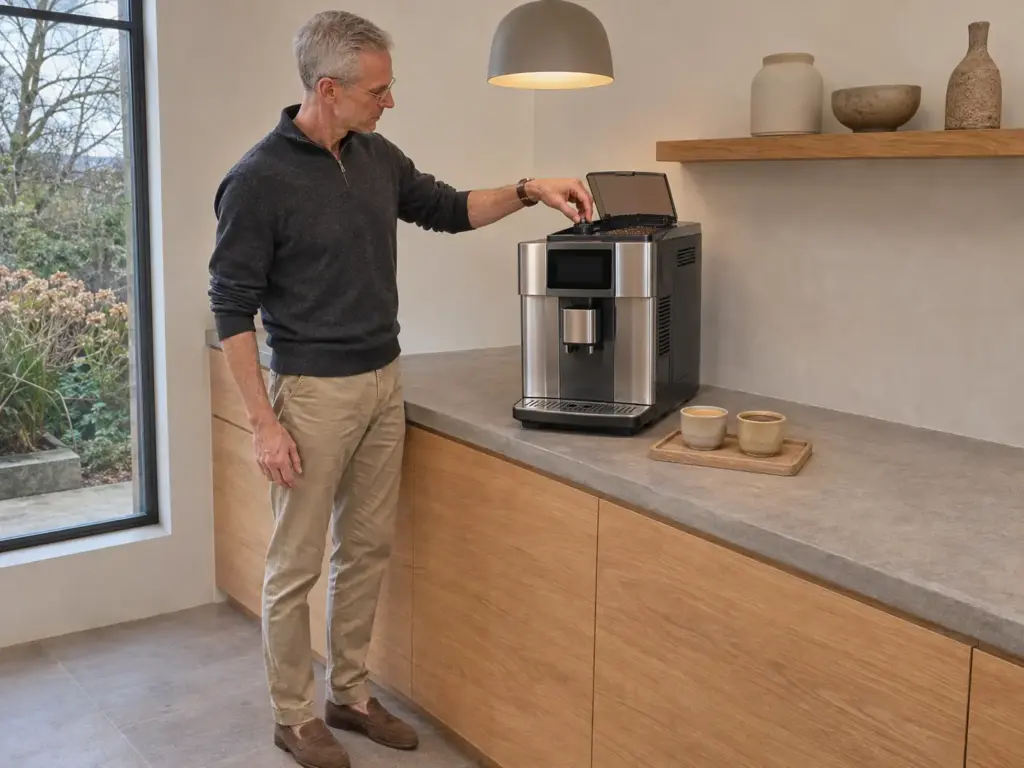
Which way the cup is off
A cup that tastes sour and weak points one way: the water left the grounds before it finished. A cup that tastes bitter and harsh points the other way: the water stayed too long or pulled too much. The direction decides which setting moves, and an expensive machine does not change that.
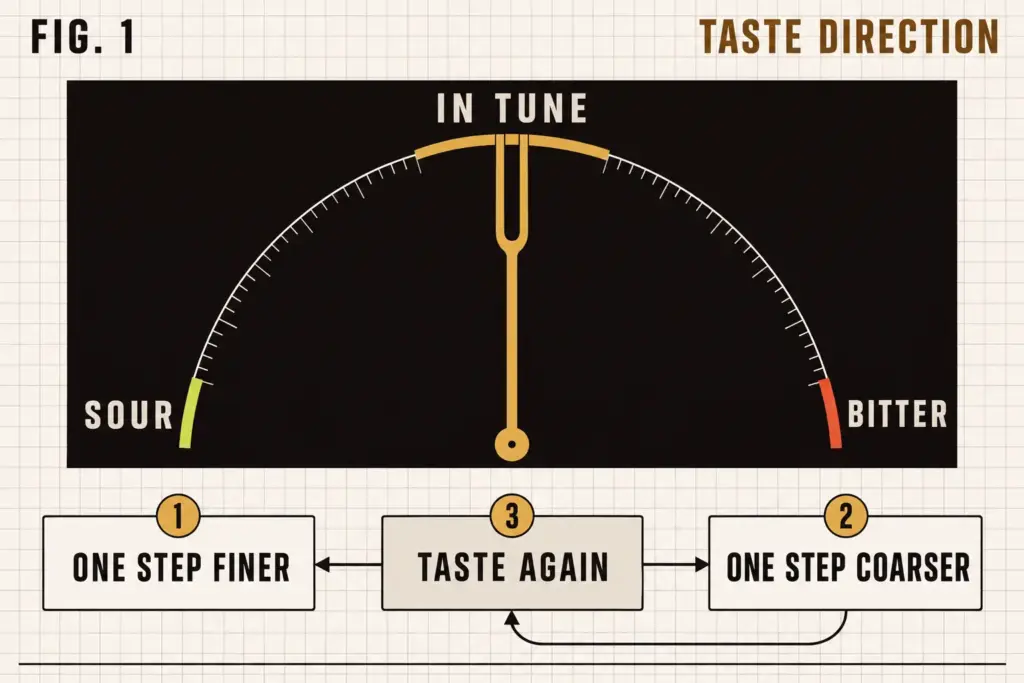
On a super-automatic the grind dial is one of very few controls you have, so it is the first one to read. Going finer slows the water down and extracts more, which pulls a sour cup toward sweet; going coarser lets it through faster, which calms a bitter one. Overshooting in either direction trades one fault for the other.
The grinder sets the ceiling
Grinders do not agree with each other even when their dials do. At the same median grind size, different grinding technologies deliver a different share of fines, the smallest particles, which extract fastest, according to a 2024 study in Scientific Reports on how fines change espresso extraction, which starts from the fact that “Finely ground coffee for espresso has a characteristically bimodal particle size distribution.” The grinder moves the cup and not only its dial, and a built-in grinder carries that limit too.
The range matters as well. The Dinamica has 13 settings, so the cup can move only within those 13 steps, and if the finest of them is still too coarse, the situation described in when the grinder is already at its finest setting is the one you are in. A grinder that skips settings, as the Breville’s can, makes it worse, because the number on the screen may not be the grind in the chute. Why the burr set decides so much is covered in burr and blade grinders; a conical burr inside a machine beats a blade, but it still has a range and a limit.
Free changes first, in order
Move one thing, taste, and only then move the next. I would work through them in this order:
- Move the grind one step toward the direction the cup points (what the numbers on a grinder dial mean explains the scale). Grounds stay in the chute after a change, so the first cup still comes out at the old setting; brew a throwaway cup, then judge the next one. If it worked, sour turns flatter and sweeter; if you overshot, a bitter edge appears and you step back half a step.
- Check the beans and the dose. Beans stale from a long time in the hopper taste thin however fine the grind, and an under-filled dose pulls a weak espresso shot. Fresh beans and the same dose should bring back a rounder middle.
- Clean the tank and descale per the manual. Scale cools the water and slows the pour, so a descaled machine should run hotter and the cup should lose the dull, flat note.
- Only then think about hardware. If the finest and coarsest settings both fail and the other three changes made little difference, the grinder is what is left. What a better standalone grinder adds to the cup is the next thing to weigh.
Write the current grind setting on a sticky note inside the hopper lid. By Friday, nobody remembers whether the dial sat at 5 or 6, and a taste you cannot link to a setting is a taste you cannot fix.
What Month Two Looks Like
Week one hides what the price does to a machine. A conversation about cost is incomplete until it counts the parts that wear and the bills that arrive after the warranty has been forgotten.
The milk circuit and the seals
In a machine with many moving parts, every part wears on the same clock, and the wear shows up as a machine that stops doing what it did in the first weeks. A single worn part rarely announces itself with an error message; it shows up as a cup that drifts. A pressure seal that fails early sends coffee out of the wrong place. The more steps the price automates, the more parts a repair can reach, and the milk circuit and the brew unit are the likeliest to be involved.
Picture a machine that poured fine at the start and now runs warm, with a cup that tastes flat. Before asking for a repair quote, run the free list again: grind, beans, tank and filter.
Grinder wear and the service interval
A burr set dulls with use, and the cup drifts before anything looks wrong: the grind that used to be fine now gives a sour, uneven cup at the same setting. The signs that a burr set is worn are worth learning before the machine needs them.
The water filter cartridge and the descale are what you notice first when they are missed, as a slower pour and a taste of scale. They are also the cheapest line on any service schedule, so they are the one to keep up with.
A separate grinder outlasts the electronics
A simple burr grinder can outlast the electronics around it, and it can be replaced alone. An integrated one is replaced with the machine, which is a good reason to keep the two apart when the budget allows, and why a drip coffee maker with a separate grinder is a real alternative to the one-touch machine. How long a grinder lasts is counted in years, so a good one is worth keeping when the machine around it is replaced.
A used machine costs far less than a new one, but nobody can see the boiler’s condition from the outside, so ask for its history first. And ask what the warranty and the service cover and for how long, because both are part of the price you are comparing.
When the cup goes flat after the first few months, check the tank, the filter and the grind setting before blaming the beans. Those three cost almost nothing to check, and they explain most flat cups.
Taste After One Grind Step Before You Pay for Anything
The price of a coffee machine pays for heat and pressure that stay steady, then for every step the machine takes over, and the built-in grinder caps what the cup can become. So the free changes come first, in order, and the counter and the months belong in the sum before the tag does.
After the first filter cartridge swap and the first descale, brew a cup at the setting you settled on today and compare. If it has gone flat, the grind setting, the tank and the filter explain it more often than the machine does.
For tomorrow, move the grind one step in the direction your cup points, brew a throwaway, and taste the next one. Sour should come back sweeter; if bitter appears, step back half a step. If the free changes run out, the grinder is the part left to weigh.
Frequently Asked Questions
01Why are coffee makers so expensive now?
The price follows the parts that hold heat and pressure steady plus the number of steps the machine does for you, such as grinding, dosing, brewing and frothing. Each added step is another part to build, clean and eventually replace.
02Are expensive coffee machines worth it?
That depends on which chore you want out of your hands and on how even the built-in grinder is, because the grinder sets how good the cup can get. A higher price removes chores; it does not guarantee a better cup. Try the free fixes first.
03Why are espresso machines so overpriced?
Much of it is hardware that holds heat and pressure steady, built in small runs with a brand, a warranty and a service network behind it. More valves, seals and connections mean more parts that must work every time.
04Is there a difference between cheap and expensive coffee makers?
Yes: the difference is how many steps the machine does and how steadily it holds heat and pressure, while the coffee itself comes from the same beans. A cheap maker with a good grinder can beat a pricey one with an uneven grinder.
05Does a built-in grinder make the coffee better?
It removes a step, but the cup improves only as far as that grinder produces an even grind. Move the setting one step, taste, and descale per the manual before blaming the machine.

How did your cup turn out?
No comments yet. Tell us what you changed — and whether the needle moved.