


We may earn a commission when you buy through links on this page. It never changes what we recommend. How we pick
On this page7 parts
- De'Longhi Sells Five Different Machines Under One Name
- Rule Out the Upkeep Before You Blame the Family
- Drip and Combination, the Two That Brew a Full Pot
- What the Warranty Leaves Open When Month Two Arrives
- Super-Automatic and Pod, the Two That Make the Drink at One Touch
- Find the Product Name, Then Work Down the Free Checks
- Frequently Asked Questions
Say “I have a De’Longhi” at a counter and you could mean a drip machine with a conical burr grinder built in, a combination that brews a glass pot and pulls espresso, a bean-to-cup machine that steams its own milk, a capsule machine, or an espresso machine where your hand does the tamping. Each one makes a different cup, so a coffee maker De’Longhi is a label in the plainest sense: it names the maker and says nothing about what the water does to the grounds. The mechanism sits one level down, in whether the machine grinds, how many heaters it carries and what the water meets on its way through. Below, the name is sorted into its five families, each with the one part that sets its cup and the flaw that tends to show up in the first months, and the free checks come ahead of any purchase.
Find the row that matches the product name printed on your machine, then read across.
| Family | What comes out | The part that sets the cup | Check first |
|---|---|---|---|
| Drip with a grinder (TrueBrew) | A pot in sizes from 8 oz to 24 oz | The built-in conical burr grinder | The dose per size in the manual |
| All-in-one combination (COM532M) | A 10-cup glass pot or an espresso, and both can run at once | The dual heating system | The water filter’s replacement date |
| Super-automatic (Dinamica, Magnifica Evo) | A finished drink from beans, milk included, at one touch | The 13-setting grinder and the milk system | The descale, then the frother |
| Pod (Nespresso Vertuo Pop+) | A capsule drink in five cup sizes | The tank and the cup size | The descaling alert and the base of the machine |
| Manual pump (La Specialista Arte) | An espresso you pull yourself at 15 bar | The grinder and the hand that tamps | Grind setting, dose and tamp |
De’Longhi Sells Five Different Machines Under One Name
Once the family is known, the rest of a De’Longhi becomes answerable: what it can make, how it tends to fail and which warranty question applies. The reverse does not work. Ask whether the brand is any good and the useful reply is a question back, because a drip pot and a pod machine share a logo and very little else. The first job is sorting.
The Five Families and What Each One Brews
The maker’s catalog sells five families, and its drip machines are filed under the espresso and coffee-maker categories with no drip heading at all, which helps explain why the name misleads.
Drip machines brew a pot by running hot water over a basket of grounds. The all-in-one combination puts a drip pot and a pump espresso machine in one housing, the kind covered in the guide to an all-in-one machine that brews both. Super-automatic machines go from whole beans to a finished drink at the press of a button, grinder and milk frother included. Pod machines, here the Nespresso Vertuo line carried in De’Longhi’s catalog, take a capsule. And the manual pump espresso machine leaves the grinding, dosing and tamping to you.
Each family leaves out drinks the others make. A pod machine never grinds, a plain drip pot never steams milk, and a manual pump machine produces nothing until someone tamps. That is the reason “a De’Longhi” is no answer to the question of what it will make.
The One Part That Sets Each Family’s Cup
Every family has a single part that decides most of what lands in the mug. On the drip machine it is the built-in grinder: coffee ground seconds before the water arrives is as fresh as the bag allows. On the combination it is the dual heating, since two heaters are what let the pot and the espresso run together. On the super-automatic it is the 13-setting grinder plus the milk system, and the pod machine hands the decision to the tank and the cup size, because a capsule has no grind to adjust.
The manual pump family is the one with no automation at the cup. The De’Longhi La Specialista Arte EC9155.W pairs an 8-setting conical grinder with a 15-bar pump, and the maker claims three selectable brew temperatures: 198, 201 and 205°F (92, 94 and 96°C). The drawback is built into the design. The shot depends on your grind, your dose and your tamp, and the control costs a learning curve that a one-touch machine never asks of you.
Start From the Product Name on the Machine, Not the Brand
The way in is the product name printed on the machine and repeated on the manual’s cover: TrueBrew, Dinamica, Vertuo, La Specialista. The letters and digits that follow are the model number, useful when you search for a manual or a spare part, but the product name is what puts the machine in a family, and the family tells you which questions are worth asking. A reader who owns a TrueBrew has a different afternoon ahead than one who owns a Dinamica. For the wider question of which brand of drip coffee maker holds up, the brand-level answer is argued in its own guide.
Rule Out the Upkeep Before You Blame the Family
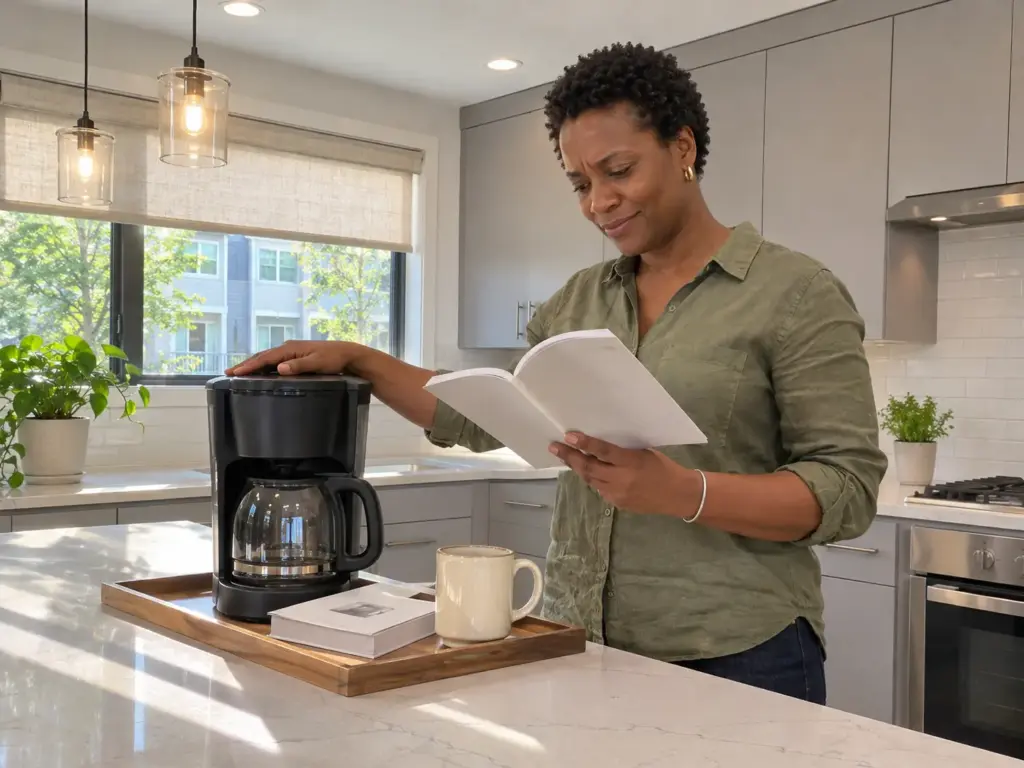
Sorting the machine tells you what to expect from it. It does not tell you whether the machine has been looked after, and a thin or lukewarm cup at month two is more often an unmaintained machine than a flawed family. The order for a bad cup runs: grams and grind, then the filter, then the descale, and the family comes last. Each step costs little or nothing, and each gets a taste before the next.
The Descale Nobody Ran
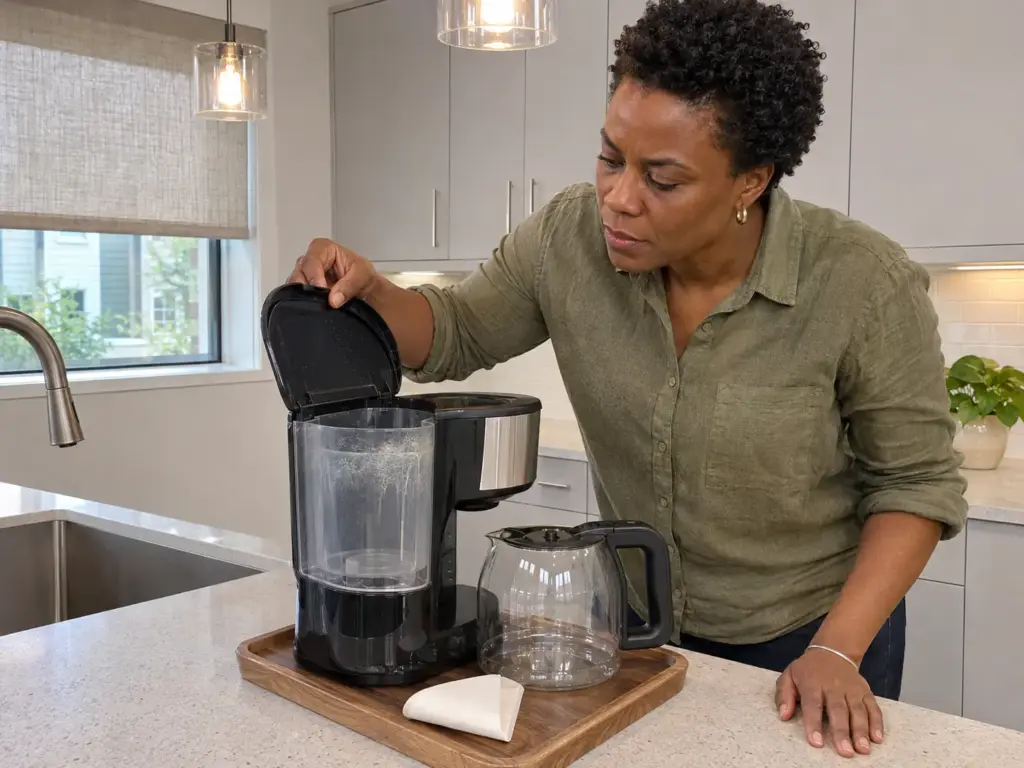
Tap water leaves scale wherever it gets hot, and a heater coated in scale warms slowly and hands cooler water to the grounds. The cup comes out thin and flat while the machine looks fine from the outside. That is the usual moment people start shopping for a replacement, and the descale is the cheaper answer. The maker sells its own descaler (EcoDeCalk), the combination ships with a descaler solution in the box, and each family’s procedure lives in its manual, so follow that rather than a video’s version.
Taste is the test. The first cup after a cycle may come out hotter and fuller, and if it is no different the descale was never the cause, so move down the list. The bean-to-cup line adds a warning: the milk frother stops working after the first descale cycle on several units, so froth milk the same day and find out while the receipt is still in the drawer.
The Filter That Comes With an Interval
The combination’s box includes an anti-chlorine filter, and the maker’s interval for replacing it is “after 80 cycles or 6 months, whichever comes first.” Count one brew as one cycle and the arithmetic is quick: a daily pot reaches 80 in a little under three months, so the six-month figure only applies to a machine brewed about three times a week or less. A filter that has outlived its interval is a recurring cost the box does not announce, and the first thing to check before blaming the pump.
A drip pot has a second filter too, the one that holds the grounds. Whether you run paper or permanent, whichever keeps the cup clean changes how much fine sediment and oil reaches the mug, and it is a free swap.
The Grind and the Grams Before the Machine
The first pot off a drip machine comes out thin, a little sharp at the edges, and the dose has never been weighed.
Name the direction before touching anything. Thin with a sour edge means the water left the grounds early, and bitter with a dry finish means it stayed too long. For the thin pot the likeliest cause is too little coffee, so weigh the coffee in grams instead of trusting a scoop. A scoop measures volume, and a scoop of dark roast weighs less than a scoop of light roast.
Brew the same dose again and taste. If the cup is still sharp, move the grind a notch finer and nothing else; a rounder, fuller cup means it worked, and a dry bitter finish means you passed it, so come back half a notch.
Only after dose and grind are settled does the filter earn a look, then the descale. A pod machine skips most of this, since it has no grind to fix and no filter to change. Its free check shrinks to the descaling alert the Vertuo Pop+ carries.
Weigh one level scoop of your current beans and write the gram number on the bag. When the roast changes, weigh again: the scoop stays the same size while the coffee inside it changes weight, and that drift alone can turn last month’s good pot into this month’s thin one.
Drip and Combination, the Two That Brew a Full Pot
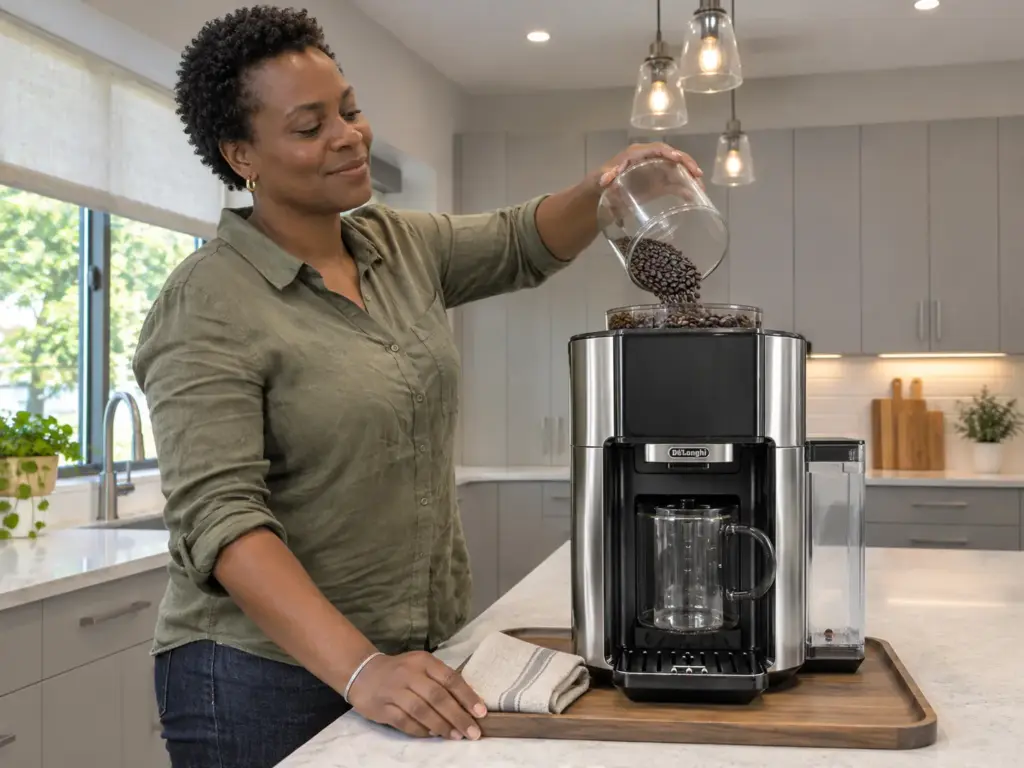
If the free checks pass and the machine really is the limit, the two families that brew a pot are where most readers end up choosing, and the difference between them is a second heater. One grinds for the pot and does a single job. The other covers two jobs and asks for more counter.
The TrueBrew Drip Machine and the Grinder Inside It
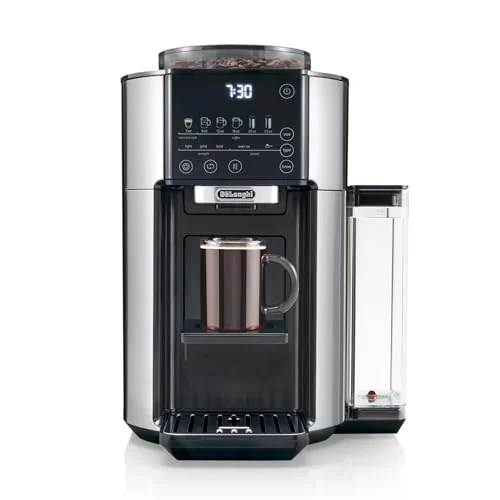
The TrueBrew CAM51025MB is a drip machine with a grinder built in, and the grinder is a conical burr set. It brews six sizes from 8 oz to 24 oz, adds a 3 oz espresso-style cup, and offers five brew styles. The fresh grind was the free fix in the section above; here it arrives inside the machine, which saves a separate grinder and one more thing to clean.
The listing does not say how much coffee each size uses. Check the manual before trusting a size for the cup, because a 24 oz setting with an 8 oz dose is the quickest way to a thin pot that gets blamed on the burrs.
The Combination Machine and Its Two Heaters
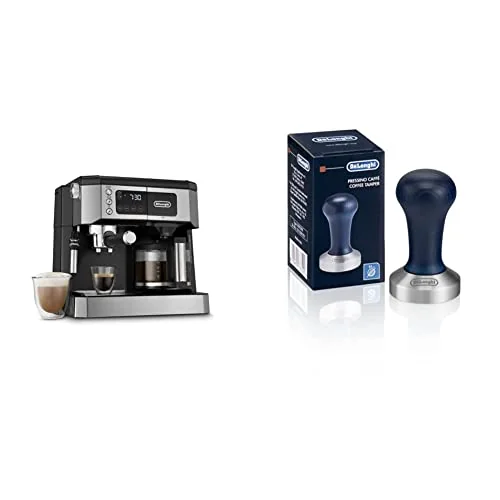
The COM532M brews a 10-cup glass carafe and pulls espresso through a 15-bar pump, and the dual heating system is the reason the two jobs can run at once. With a single heater the machine would have to switch between them. Here the second heater removes that wait, and the housing grows to hold it. Set one next to a drip maker and the footprint is the difference you notice at the counter before any cup is brewed.
What the extra heater costs over time belongs to the all-in-one guide, so this section stays at the level of the family.
What Month Two Looks Like on the Pot Machines
Week one tells you little about either machine. On the TrueBrew line the durability complaint arrives early: units quitting at about three months on the CAM51025MB, and failures inside six months on its sibling, the CAM51035M. A pot machine that is meant to run every morning should not be quitting at the point where the warranty question starts.
The combination’s complaint is quieter. Its brew temperature is occasionally inconsistent, which matters because a drip cup lives or dies on how hot the water actually runs. Run the descale and the filter check from the previous section before deciding the heater is at fault.
The verdict by family: the drip card is the one that grinds for the pot, and the combination is the one that covers two jobs. Neither deserves a recommendation without its early flaw in the same breath.
On the first day, brew an 8 oz pot at the dose the manual lists for that size, then a 24 oz pot at the dose listed for it, and taste them in that order. If the large pot is the thinner of the two, the dose is the problem and the machine is fine. If both are thin, the grind or the descale comes next.
What the Warranty Leaves Open When Month Two Arrives
Month-two failures are what a warranty exists for, and for this brand the number printed on the page is not the number that applies to every family. The brand banner reads “Industry-Leading Warranty: Up to 3 Years,” and the page it sits on does not tie that figure to any particular machine. Treat “up to” literally.

The maker’s registration page adds a concrete line: “Receive 1 additional year of warranty when you register your machine.” That is the figure to count on, and it is exactly one extra year. The brand’s pages also carry an “Out of Warranty Repair Service” and a spare-parts page, so out-of-warranty repair is a route the maker offers once the coverage ends.
Both of the failure marks in this guide, month three and month six, are early, so the question is less how long the coverage runs than whether you can prove the purchase and the model when the claim comes. Register the machine the week it arrives, while the box and receipt are in the same drawer, then keep the receipt and the model name together. Read the terms for your family before counting on the long figure, because the banner is a ceiling and your machine’s own terms are the floor.
Take one photo that shows the product name on the machine and the receipt together, and file it with the registration confirmation. A claim at month four goes faster when the model name, the date and the proof of purchase are one picture instead of three searches.
Super-Automatic and Pod, the Two That Make the Drink at One Touch
The last two families skip the pot entirely, so their flaws no longer sit in the brew itself. They sit in the milk path and in the tank, and both show up in a kitchen that uses the machine daily.

The Dinamica and Its 13-Setting Grinder
The Dinamica LatteCrema ECAM35075SI has a conical burr grinder with 13 settings, 18 recipes and an automatic milk frother. The grinder is the dial that changes the shot, and the milk path, steam wand and frother included, is where the trouble is reported. If you are wondering why bean-to-cup machines cost what they do, the grinder and the milk system are most of the answer.
The failure is specific. The frother stops working after the first descale cycle on several units, and drinks come out warm rather than hot. Imagine the milk drink that never reaches temperature, when the cup is already the most expensive part of the morning: the machine has done its job and the mug is still lukewarm.
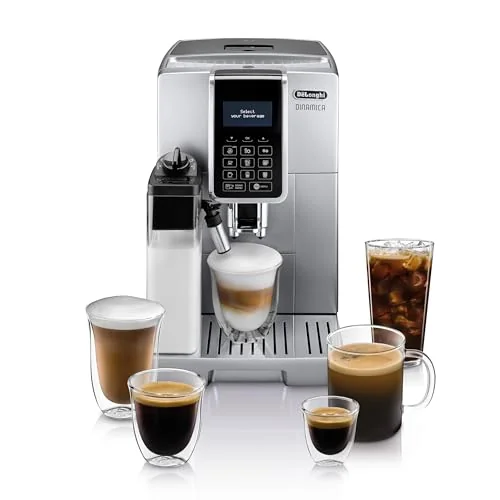
Right after the first descale cycle, steam a mug of milk and feel the mug. If the frother has stopped or the drink comes out only warm, you learn it on day one with the receipt in hand, instead of discovering it three weeks later when the return conversation is harder.
A Lower Rung of the Same Family
The De’Longhi Magnifica Evo ECAM29084SB keeps the same 13-setting conical burr grinder and trims the menu to 7 one-touch recipes, at well under the Dinamica’s cost. For a reader who will only ever pull a few drinks, 18 recipes is paying for a menu nobody orders from.
The obvious pick stops being obvious on reliability. The cheaper rung has an early failure too: some units break at about two months, and others work correctly for one month only. A lower price buys fewer recipes and an earlier version of the same worry, so the smarter call depends on whether the 13-setting grinder is what you want and whether you are willing to register the machine on day one.
Two reviews cover the neighbors. How another bean-to-cup machine holds up through month two follows a Jura through the same months, and a competing bean-to-cup brand gives the Philips view of the same trade-offs.
The Vertuo Pop+ and the Tank That Sets the Cup
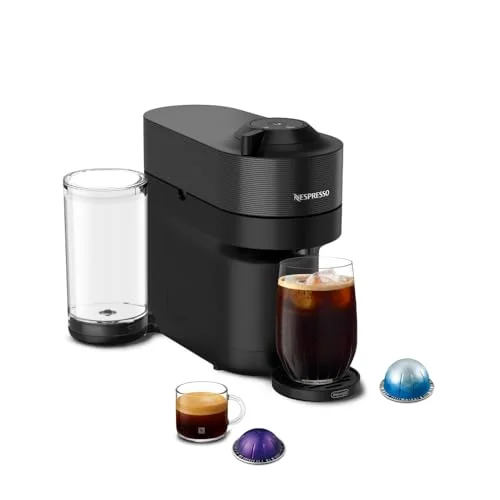
The Nespresso Vertuo Pop+ ENV92B carries the Nespresso name, with De’Longhi on its listing. Its spec is a 25 fl oz side tank, a 30-second heat-up and five cup sizes, with a descaling alert. A capsule has no grind to adjust, so the tank and the cup size are the parts that set the cup, and the tank sets the rhythm of a weekday: 25 fl oz covers at most about three 8 fl oz cups before it asks for water. How the Vertuo sizes differ explains what each cup size holds.
The drawbacks are mechanical: the machine is loud, and it can leak water from the bottom. If you are choosing between pod systems rather than between De’Longhi families, pick the pod system by the cup before the brand.
Find the Product Name, Then Work Down the Free Checks
The brand on the box decides nothing, and the family decides the cup. Find the product name on your machine, put it in its row of the table and spend the free minutes first: weigh the dose, move the grind a notch, check the filter date, run the descale. Every family arrives with an early flaw, whether a drip unit that quits around month three, a frother that stops after the first descale, or a pod machine that leaks from the base, and knowing which one belongs to yours is most of the buying decision.
The check for later is a strip of tape on the machine with the date of the last filter change or descale written on it. On the combination, the maker’s 80-cycle mark comes up in under three months of daily brewing, and on every family the tenth pot should taste like the first. If it does not, the date on the tape answers before the warranty does.
For tomorrow, brew one pot at a measured dose, taste it, and only then move the grind. A fuller, steadier cup means the dose was the fault; a dry finish means you went too far. That leaves the next question, which grind the machine wants, covered in the grind that suits a drip machine.
Frequently Asked Questions
01Is a De’Longhi coffee maker a good brand?
It depends on the family, because De’Longhi sells five different kinds of machine under one name and each one fails in its own way. Drip units quit at three to six months, a super-automatic frother can stop after a descale, and the pod machine is loud and can leak.
02What are the common problems with De’Longhi coffee machines?
The recurring complaints differ from one family to the next, so check which family you own before comparing notes. Drip units quit between three and six months, the super-automatic frother can stop after the first descale, and the Vertuo Pop+ is loud and leaks from the bottom.
03How do I use my De’Longhi coffee maker?
Start by finding the product name printed on the machine, then open the manual written for that exact family before you run anything. A drip pot, a combination and a pod machine do not share a first step, so the manual for your model comes before any general routine.
04Does a De’Longhi drip coffee maker have a built-in grinder?
The TrueBrew line does, with a conical burr grinder that grinds for the pot and six brew sizes from 8 oz to 24 oz. For any other model, check the spec list for that exact product name before assuming it grinds.
05How long is the De’Longhi warranty?
The brand banner reads up to 3 years, and registering the machine adds 1 additional year on top of whatever term applies to your model. The banner does not tie the long figure to a family, so read the terms for your model.


How did your cup turn out?
No comments yet. Tell us what you changed — and whether the needle moved.