
We may earn a commission when you buy through links on this page. It never changes what we recommend. How we pick
On this page8 parts
- Cold Water for Brewing Coffee Means Two Different Things
- Why the Bag Says Cold Tap, Not Hot Tap
- The Oxygen Explanation Does Not Survive the Kettle
- Brewing With Cold Water Swaps Heat for Time
- What Cold Water Pulls Out of the Grounds, and What It Leaves
- Fix a Weak Cold Batch in This Order, and Watch What Wears Out
- Draw the Tank Cold Tomorrow, Weigh the Next Jar
- Frequently Asked Questions
The booklet says to use cold water, so you looked the sentence up and every explanation turned out to be about a twelve-hour steep in a jar. Why is cold water better for brewing coffee? That depends on which half of the sentence you meant: an instruction about the water you pour into a drip machine’s tank, or a method that brews the coffee itself without heat. They are two different questions that share one word, and the water temperature that decides the cup is the one at the wet grounds, never the one in the tank.
Whether a cold cup is easier on the stomach is a question for a doctor that no brew method answers, so this page stays with what the water does to the cup. Below you will find why the cold tap and not the hot one, the oxygen explanation checked, what cold brewing costs in grams and hours, what the cup tastes like, and the order for fixing a weak batch.
Quick Answer
On a bag or in a manual, cold water means filling the reservoir from the cold tap, not the hot one. The brewer heats it, and the cup depends on the temperature at the grounds. Brewing with cold water is a separate method, cold brew, that swaps heat for 12 to 24 hours of steeping.
Cold Water for Brewing Coffee Means Two Different Things
The sentence on a coffee bag or in a machine’s booklet has two readings, and they get mixed up constantly. Each has its own answer, its own numbers and its own mistakes, so it pays to know which one is yours before anything else. The first is about the water you pour in; the second is about how the coffee is brewed at all.
Fill the Tank From the Cold Tap
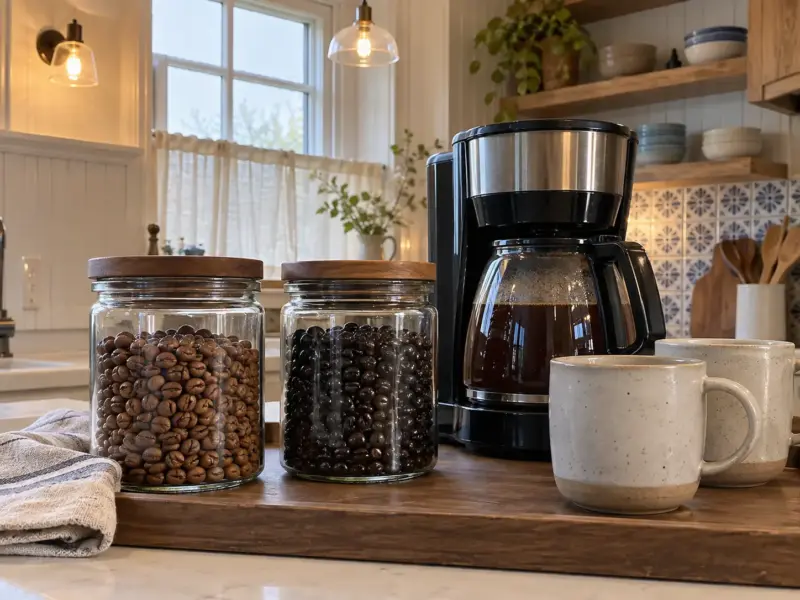
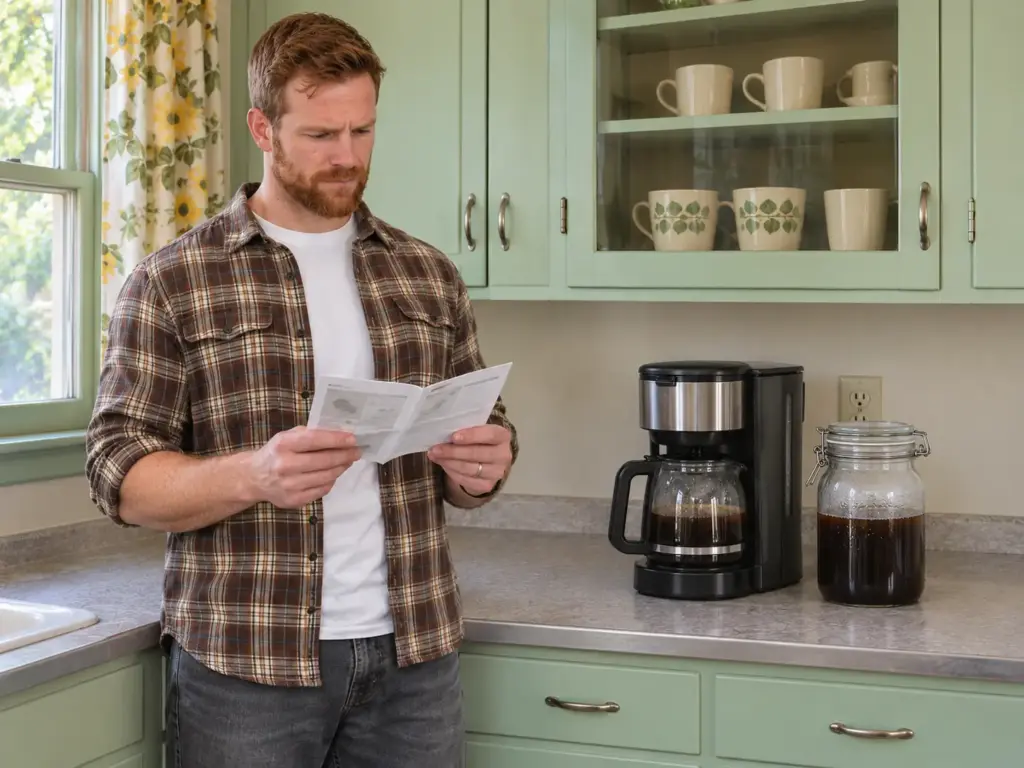
When a drip coffee maker’s booklet or a percolator’s label says to use cold water, it is talking about the reservoir, the water tank behind or beside the carafe. Fill it with fresh cold tap water and the machine does the heating itself. That is why a cold fill is what its thermostat expects, and why a hot fill is no shortcut: the heater still runs, and the pot comes out no hotter.
The temperature inside the tank is not the one that matters (the number that does comes in the next section), so the tank only needs to hold clean, cold water. For the wider picture of what makes water worth brewing with in the first place, that page starts from the glass and works toward the cup.
Brew the Coffee With Cold Water
The second reading is the cold brew method: coarse grounds, cold or room-temperature water, many hours and no heat at all. It is cold extraction by immersion (a slow cold drip tower is the other cold route, and this page stays with the jar). It is also not iced coffee, which is brewed hot and chilled afterward.
It is a different drink with its own ratio, its own grind and its own clock. Both readings use the word cold, and cold brew is the better-known of the two, so the word often gets read as the method. If your booklet belongs to a drip machine, the cold tap and the machine take up the next two sections, and the cold brew method follows after them.
Why the Bag Says Cold Tap, Not Hot Tap
The cold fill is the common reading and the cheaper one to follow. The reason behind it has to do with pipes rather than coffee, and it is not the one most explanations give. Here is the reason, what the brewer does once the water is in, and the free habit that covers both.
The Hot Line Has Been Sitting in a Tank
The hot tap draws from a water heater, a tank where sediment settles, through pipes that hold the water still for hours. According to the EPA’s guidance on lead in drinking water, “Hot water dissolves lead more quickly than cold water and is therefore more likely to contain greater amounts of lead.” The agency says never to use hot tap water for drinking, cooking or formula, and boiling does not remove lead, so heating a hot-tap fill afterward undoes nothing.
Drawing cold and heating it yourself does. Sediment from the tank can also ride into the reservoir, and the cup tells on it: a metallic or flat edge, strongest in the first cup of the day, when the line has sat still overnight.
The Brewer Heats It Itself
Once the water is in, the machine takes over. The number that decides extraction is the one at the grounds: the Specialty Coffee Association’s brewing window is 195 to 205 °F (90 to 96 °C), and the home brewers it certifies are listed holding 198 to 205 °F (92 to 96 °C) through the brew. A cold fill is what the heater was built around, so a warm start gains nothing. If the pot comes out sour or thin, the machine’s real temperature becomes the question, and why a drip machine heats its own fill is where that is worked out.
Draw Cold, Let It Run a Few Seconds
Draw from the cold tap and let it run for a few seconds if the line has been still, then fill the tank and brew. Taste the first cup. If the water tastes fine and the pot still comes out flat, descaling the machine is the next check. If an off edge remains, the water itself is the next suspect: what to smell for in a glass of tap water is the quickest test, and which filter takes out the off taste is the step after it.
Put a strip of tape on the tank at the line you actually brew to. The whole point of the cold tap is lost on the one morning the tank runs short and gets topped up from the hot side, because that second fill brings the hot line into the cup after all.
The Oxygen Explanation Does Not Survive the Kettle
Plenty of explanations say cold water brews better because it holds more oxygen. The claim is half true, and the missing half is the one that matters. This section follows the water from the tap to the grounds and ends on the variable that actually moves the cup.
Cold Water Does Hold More Air
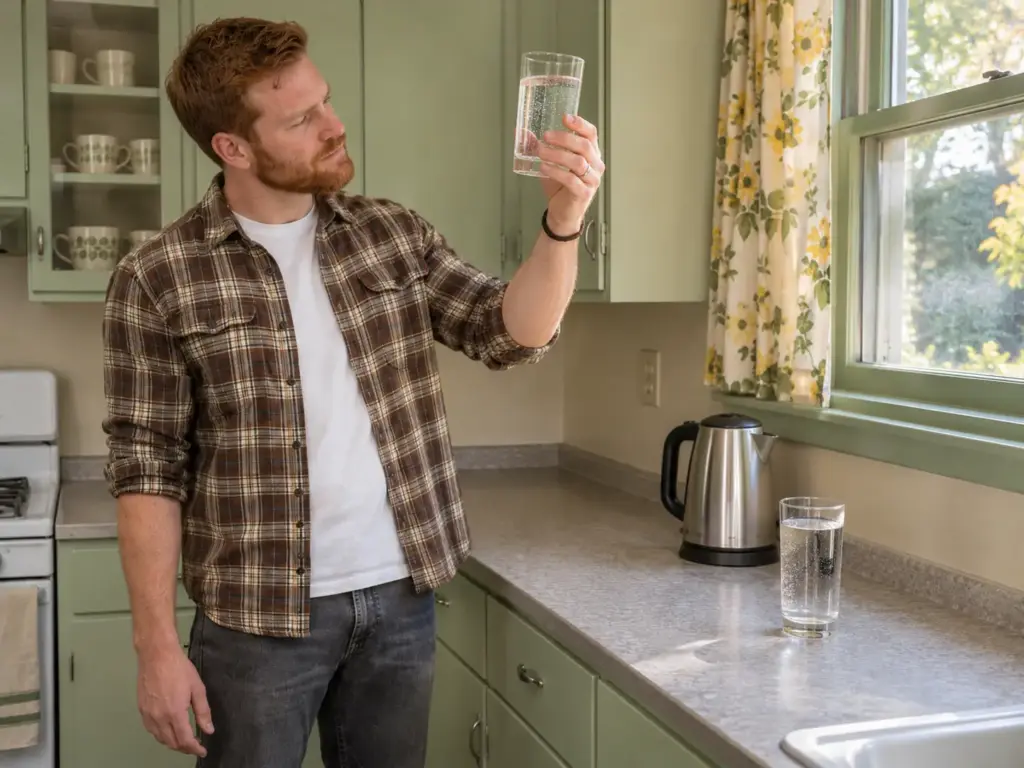
The true part first: the amount of air that dissolves in water falls as the water heats, so a glass from the cold tap carries more of it than a warm one. The tiny bubbles that cling to the inside of a glass left standing are that air coming out as the water warms. Nothing in the folklore is wrong yet.
A Kettle Takes It Back Out
Here the story skips a step. By the time water is hot enough to brew, the extra dissolved oxygen has left it, and water taken to a boil is deaerated.
A jug of cold water poured into a kettle is, when it reaches the grounds, the same as any other boiled water, and a machine’s heater drives the air out on the way up in the same way. For what a boil does change, what boiling does to the water and the cup goes through it. A fresher or colder tank buys nothing extra in the cup.
Temperature Sets the Speed, Not the Flavor
What the research does support is a speed dial. In the SCA’s interview with the UC Davis Coffee Center, coffee brewed at about 189, 194 and 199 °F (87, 90 and 93 °C), with strength and extraction held equal, could not be told apart by trained tasters; hotter water only got there faster. In the SCA’s words, “Again, it’s the destination that matters, not the exact route you took to get there.”
So the variable to watch is the temperature at the wet grounds, against the 195 to 205 °F window, together with the grind size and the brew time. If the pot comes out sour or thin, the grind and the machine’s real temperature are the first suspects; the oxygen in the tank is not on the list. Move the grind a step finer, taste, and only then look at the machine. For where each direction leads, how a few degrees move the cup from sour toward bitter lays it out.
Brewing With Cold Water Swaps Heat for Time
The second meaning is a different method, and its price is written in grams and hours instead of degrees. This section gives the numbers briefly, with the free way to start before any brewer, and each brewer’s flaw stated.
A Concentrate Uses Twice the Coffee
A published concentrate recipe runs 1 to 8, coffee to water by weight: 125 g of coffee (about 4.4 oz) to 1,000 g of water (roughly 34 fl oz). It calls for an extra-coarse grind of about 1,000 to 1,400 microns and 12 to 18 hours of steeping, then straining and diluting about 1 to 1 before drinking. A laboratory cold brew used 1 to 10. A hot drip pot at 16 to 1 comes to about 62.5 g of coffee per liter, so the concentrate takes about twice the coffee and half a day of counter or fridge space.
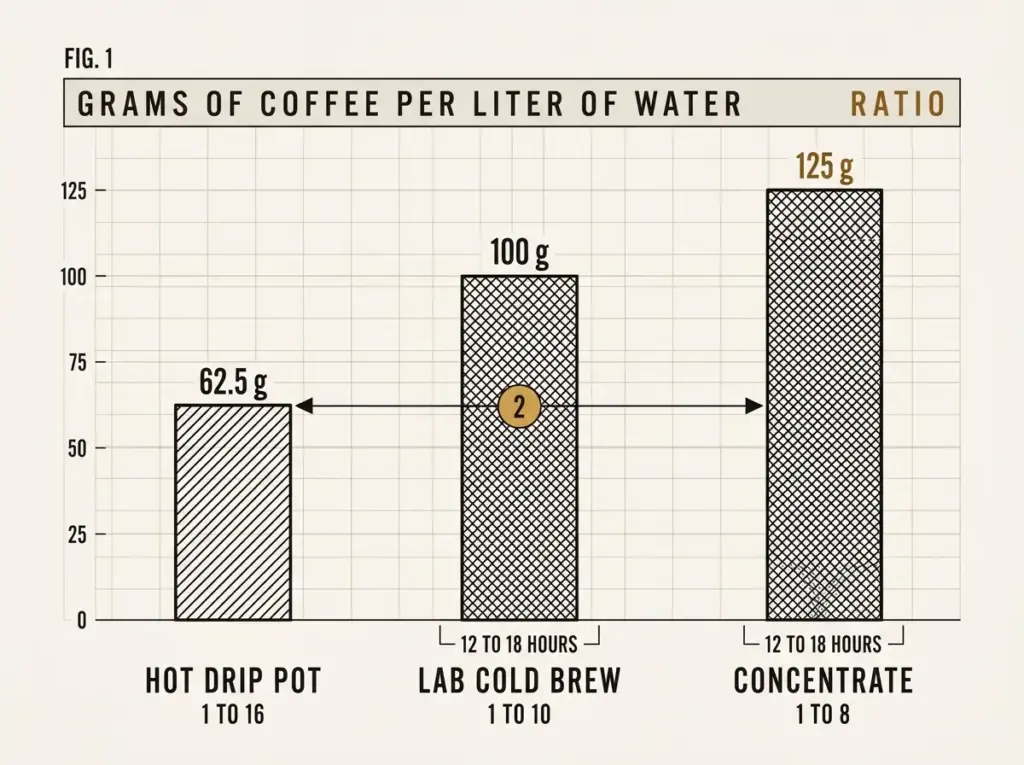
Heat does the work in minutes in a hot pot; here time does it, and the coffee bill doubles. Weigh in grams, because a scoop of coarse grounds weighs something different from every bag, and the same recipe by volume lands differently each batch.
Coarse, Because the Clock Does the Work
With no heat, the long steep takes the place of temperature, and contact time becomes the dial that sets how much comes out of the grounds.
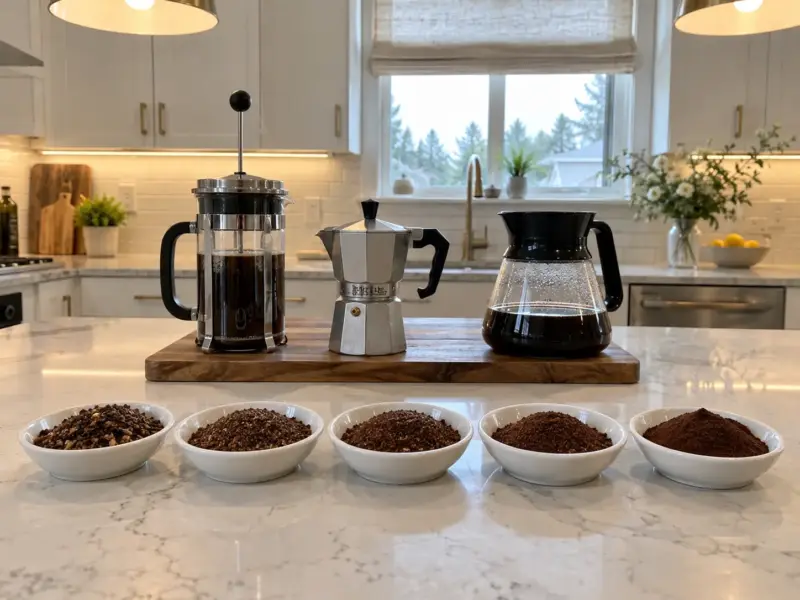
So the grind goes coarse enough that twelve hours do not pull in fines and turn the glass bitter. A grinder that cannot go coarse enough is the first limit, and the coarse setting a long steep needs depends on the filter you use. A French press setting is the nearest coarse grind most home grinders offer, and the coarse setting cold brew borrows is a sensible place to start. Steep on the counter if the clock is short, then move the jar to the fridge: the fridge is only storage, and a fridge steep needs more hours than the same recipe on the counter.
A Jar First, Then a Brewer
A clean mason jar, a sieve and a paper filter do the same job as a dedicated brewer; the brewer buys tidiness and sometimes a tap, not a better cup. Strain twice, mesh first and paper second, because the mesh lets silt through and the paper takes it out. That costs less than a finer basket.
When the jar gets tiresome, the OXO Good Grips Cold Brew Coffee Maker is the tidy step up. It is a 32 oz borosilicate glass carafe with a reusable stainless mesh insert and a rainmaker top that spreads the water over the grounds instead of emptying it in one spot, and its listing gives the batch as 10 oz of coarse grounds for up to 14 drinks on a 12 to 24 hour steep. The glass can break in normal use, and the spout keeps dripping after the release switch is shut.
Write the ratio on the jar in grams, something like 125 to 1,000, together with the day you started it. A scoop changes from bag to bag, and the label settles the question when the next batch tastes different.
Neither brewer changes the recipe: both want the same coarse grounds and the same scale. At a lower cost, the Hario Mizudashi Cold Brew Coffee Maker is a 1 liter heatproof glass pot with a reusable polyester mesh basket and an 80 g dose, which makes about a week of concentrate for one drinker on roughly half the coffee of an OXO batch. The basket rinses in seconds and the pot pours straight from the fridge. The glass can crack in the cold, it stands too tall for shallow shelves, and the instructions come only in Japanese.
A Week of Drinking, Not a Month
A concentrate is kept and drunk as one: the makers state up to two weeks in the fridge, so planning the batch around a week of drinking leaves a margin. Keep it sealed and cold, and dilute each glass as you pour it, about 1 to 1 for the published recipe.
What Cold Water Pulls Out of the Grounds, and What It Leaves
A cold steep tastes different from the same bag brewed hot, and the percentage most often quoted for the difference is not one any measurement backs. Here is what was measured, what the cup tastes like, and what the cold method gives up. Everything below stays on the flavor side of the glass.
Same pH, Fewer Acids You Can Taste
The 2018 study on cold brew acidity in Scientific Reports found that cold and hot brews from the same beans landed at a comparable pH, about 4.85 to 5.13, and that the hot brews carried more total titratable acidity. So the cold cup does not sit at a different pH; it has fewer of the acids you can taste, which is why it reads smoother and less bright. The 60 to 67 percent figure that circulates for how much less acid cold brew has appears nowhere in that paper, which gave no percentage. Any percentage attached to cold brew acidity is unmeasured.
Strong Because It Is a Concentrate
Caffeine is a measured quantity here.
In a 2020 caffeine measurement of cold and hot brews in the journal Foods, a cold brew at 1 to 10 measured about 1,114 mg per liter for a light roast and 1,036 mg per liter for a medium roast, which comes to roughly 245 to 265 mg in 8 fl oz of the undiluted brew. The matched hot brews fell in the same range. A concentrate is strong mainly because it is a concentrate, and the dilution sets what ends up in the glass: a 1 to 1 dilution halves those figures. That is a figure for the cup and nothing more.
What a Cold Steep Gives Up
The trade is brightness. The sharper fruity notes come through less in a cold steep, while chocolate notes and sweetness sit more in front, and the cup reads less bitter and less astringent than the hot one from the same bag.
Set next to it, the cold cup can read flatter on the tongue. Pick by what you want in the glass: a hot cup keeps more of the acid edge of a light roast, and a cold steep rounds it off. A bag that suits a cold steep is a roast question, and which roast suits a cold steep works through it.
Fix a Weak Cold Batch in This Order, and Watch What Wears Out
The first batch usually comes out thin, and the instinct is to add hours. The fixes have an order, with a taste between each, and the brewer you pick has parts that give out before the coffee does.
Thin and Watery Points to the Grind and the Ratio
Thin and watery means too little came out of the grounds; bitter and woody means too much of the wrong thing did. The two point opposite ways, so name yours before touching anything.
For a thin batch, work in this order: weigh the coffee instead of scooping it, go one notch finer, raise the coffee-to-water ratio a little, and only then add hours, tasting after each step. A fridge steep needs more hours than the same jar on the counter, so compare like for like. The same beans one notch finer can turn a batch that tasted like iced tea into a real concentrate, and how a grind setting moves a cup from thin to harsh shows what each notch does.
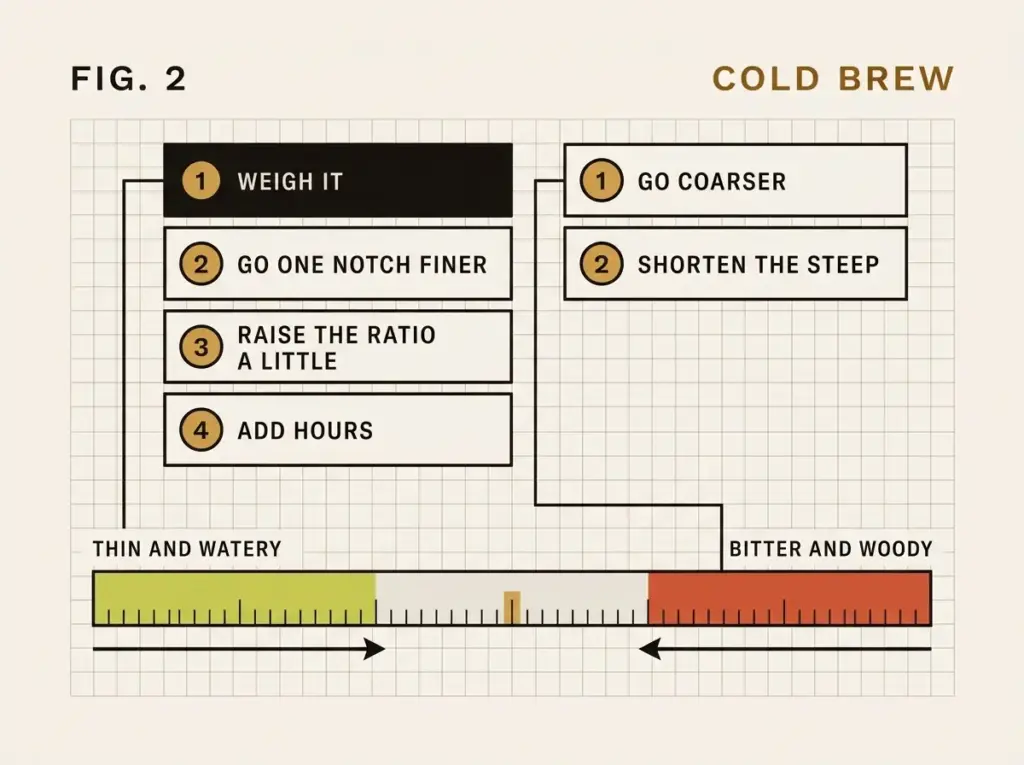
If the glass swings to bitter and woody, you went past it: back off half a notch or shorten the steep, and taste again.
Write what you altered on the jar lid, whether the grind notch, the grams or the hours, and alter only that between batches. The next glass then tells you whether it worked.
A Grinder That Cannot Go Coarse Enough
A grinder that tops out at its coarsest setting still throws fines into a long steep, and the batch comes out bitter at 13 hours. The cure is a coarser setting or a different grinder; a shorter clock only hides the fines by under-extracting everything else.
The Part That Fails First in the Fridge Door
Month two is when the glass carafe goes: crack lines appear after a few months in the fridge door. The tap on a fridge-door brewer is the leak, a small drip that ends with coffee on the shelf below, and you notice the shelf before the tap looks wrong. The mesh basket gives out before the glass does, and it cannot be bought loose for every model.
That ranking shapes the choice. The Takeya Premium Quality Cold Brew Coffee Maker 2 Quart is a Tritan pitcher, so it does not shatter where glass does, with a fine-mesh filter and an airtight twist lid that lets it lie on its side in the fridge door, and it goes in the dishwasher. The mesh filter is the fragile part, and the 2 quart size splits households: right for one person, small for a family.
A tap trades that sturdiness for convenience. The KitchenAid 28 oz Cold Brew Coffee Maker KCM4212 pairs a glass carafe with a stainless steeper that has the fill line printed on it and a built-in stainless tap, so you pour without lifting it. The tap is the weak point, with drips and, in the worst cases, the contents emptying into the fridge; the OXO costs less and does the same job without one.
If all of this sends you back to the hot pot, the 195 to 205 °F window for the hot cup is where to start, and a drip machine that actually reaches that window is the machine that holds it.
Draw the Tank Cold Tomorrow, Weigh the Next Jar
Cold water on a bag or in a manual means a tank filled from the cold tap: the hot line sits in a heater and a pipe, and the brewer does the heating. The oxygen explanation falls apart by the time water is hot enough to brew, and the temperature at the grounds sets how fast extraction runs. Brewing with cold water is a different method that swaps heat for time and uses about twice the coffee. The cold cup keeps about the same pH as the hot one but has fewer acids you can taste, and a weak cold batch gets fixed with the grind and the ratio before the clock.
After a few months of fridge-door use, look again at the carafe, the tap and the mesh basket; they are the parts that wear before the coffee does.
Tomorrow, draw the tank from the cold tap, let it run a few seconds and taste the first cup: the metallic edge should be gone. If you start a cold batch, weigh the coffee, turn only the grind a notch if it comes out thin, and taste before the next jar. The cold brew grind and roast pages come next for that route, and the temperature page for the hot cup.
Frequently Asked Questions
01Is cold water better for brewing coffee, or only for filling the tank?
For filling the tank, yes: draw fresh water from the cold tap and let the drip machine do all the heating itself. Brewing with cold water is a separate method, cold brew, that trades heat for 12 to 24 hours of steeping and about twice the coffee.
02Can I fill the coffee maker with hot tap water to save time?
No: the EPA says hot water dissolves lead more quickly than cold and advises against using the hot tap for drinking or cooking. Boiling does not remove lead, and the machine reaches brewing temperature from a cold fill anyway.
03How long does cold brew concentrate last in the fridge?
Plan a batch around one week of drinking, though the makers state up to two weeks in the fridge when it is kept sealed and cold. Dilute each glass as you pour it instead of diluting the whole jar.
04Does cold brew concentrate have more caffeine than hot coffee?
At the same 1 to 10 ratio, measured caffeine in cold and hot brews fell in the same range, so dilution is what sets the amount in your glass. The undiluted cold brew measured about 245 to 265 mg in 8 fl oz, and a 1 to 1 dilution halves that.
05Why is my cold brew watery?
Watery cold brew is usually a grind or ratio problem before it is a time problem, so check those two before leaving the jar longer. Weigh the coffee, go one notch finer, raise the ratio a little, then add hours, tasting between each step.

How did your cup turn out?
No comments yet. Tell us what you changed — and whether the needle moved.