




We may earn a commission when you buy through links on this page. It never changes what we recommend. How we pick
On this page8 parts
- Two Different Ceilings Hide Under the Words "Coffee Maker"
- What the Money Buys Inside the Machine
- The Grinder Is the Part the Money Skips
- What the Top Rungs Ask of Your Kitchen
- What Year Two Asks of the Machine
- Which Rung Fits the Way You Actually Drink Coffee
- Settle the Bag and the Grinder Before the Machine
- Frequently Asked Questions
Stand at the counter with a plain drip machine and the question writes itself: does the most expensive coffee maker for home use do something yours physically cannot? It does, but only on one side of the aisle. At the top of the home market the machine is almost always a top-of-the-range espresso machine, either a semi-automatic or a super-automatic espresso machine, and the extra spending goes into heat control, steam and parts a technician can replace, while the grinder that decides the shot is missing from the box. The sections below run from the two ceilings, to what is inside the machines, to the grinder, to what your kitchen has to give, to year two, and finally to choosing.
Quick Answer
The most expensive coffee makers for a home are espresso machines: dual-boiler semi-automatics, super-automatics and commercial units. The extra money buys steadier temperature, steam that does not wait and parts a technician can replace. It never buys the grinder, the beans or the skill, and the ceiling of filter coffee sits far below the espresso one.
Two Different Ceilings Hide Under the Words “Coffee Maker”
Two scales sit under those three words, and they measure different kinds of object. One tops out at a certified batch brewer that plugs in beside the toaster; the other climbs through dual boilers into machines that get plumbed and drained. Say where each one ends before comparing a single model.
What the top of the filter side actually is
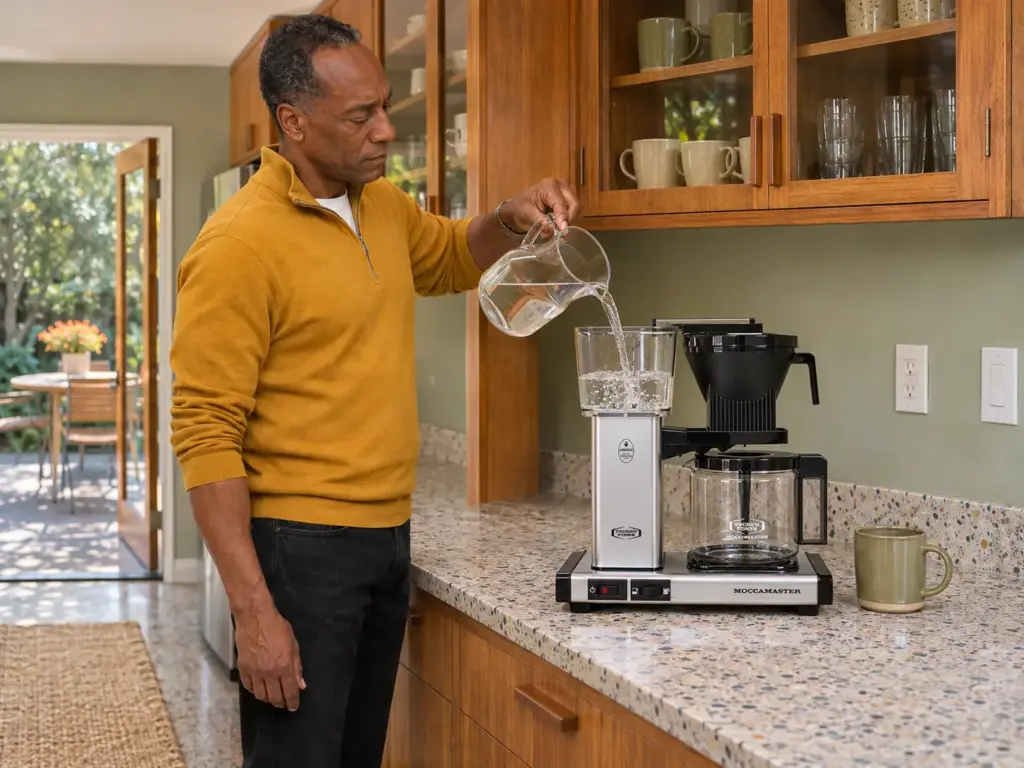
Start with a unit that surprises people: a drip machine’s “cup” is 5 fluid ounces, so a box that says 12 cups holds about 60 ounces and one that says 14 holds about 70. The top of the filter side is therefore a volume of coffee brewed at the right temperature, and nothing about it is exotic. According to the SCA’s certified home brewer list, “SCA Certified Home Brewers are coffee makers that meet SCA’s rigorous standards for brewing quality, consistency, and performance.” In practice that means a 198–205 °F (92–96 °C) brew band with even coverage of the grounds, tested by a third party, and the list carries a 40-ounce batch brewer: the Technivorm Moccamaster KBGV Select, an SCA certified brewer that takes a paper filter in its brew basket.
The Moccamaster is the ceiling case, and how the Moccamaster holds up at small batches is a separate question from where it sits on the ladder. It runs a 1475 W copper element, brews 40 ounces in 4 to 6 minutes, has a half or full switch and carries a five-year warranty. It still parks the finished pot on a hot plate held at 175–185 °F (79–85 °C), so the best filter machine keeps cooking the coffee it just made, which no espresso machine does. Its flaws are plastic parts that feel flimsy and a few units that never worked from the first brew.
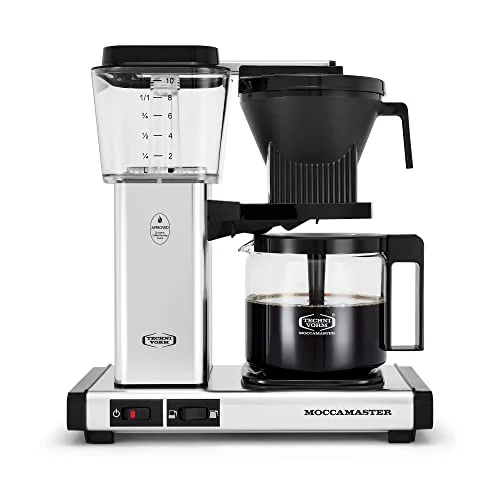
Against that ceiling, the honest bottom is the machine most counters already hold. The Cuisinart DCC-3200 14-Cup brews into a 70-ounce glass carafe, with a PerfecTemp setting for hotter water, an adjustable warming plate and a 1 to 4 cup switch. A share of units quits inside a year, and which cheap machines still hit the right temperature sorts the ones worth keeping. Between those two filter machines the whole filter ladder fits on one short shelf.
The whole ladder fits in one table: what each class puts in the box and what it asks of the house.
| Class | What the money buys | What it asks of the house | Warm-up | Its flaw |
|---|---|---|---|---|
| Filter ceiling | A certified 198–205 °F band and an even bed | An ordinary outlet and tap water | 40 oz in 4–6 minutes | The hot plate keeps cooking the pot |
| Semi-automatic dual boiler | Two boilers, PID, a 58 mm group, brewing and steaming at once | An ordinary outlet, 36.5 lb of counter, a refillable tank | Roughly 10–25 minutes | Needs a separate grinder and a learning curve |
| Super-automatic | A grinder, a milk system and one button | Tap water and a rinse at the end of the day | About 3 seconds | The built-in grinder sets the ceiling of the cup |
| Commercial class | Larger boilers, 64 mm burrs, parts a technician services | 40 to 66 kg of counter and, on some models, a plumbed inlet and a drain | Varies by model: read the maker’s sheet | An install, not an appliance |
What the top of the espresso side actually is
The name that keeps appearing at the very top of the home espresso machine class is the La Marzocco Linea Micra: a 0.25 L coffee boiler plus a 1.6 L steam boiler, PID control, a 58 mm group, 1800 W at 120 V and a 19 kg (about 42 lb) casing. It plugs into an ordinary US outlet, so the top of espresso does not need a special line. Its flaws are the obvious one, a cost that arrives before the grinder does, and a warm-up longer than the appliance machines need.
Notice what that boiler layout is built to do. It holds a small volume of coffee water at a set temperature and keeps a large volume of steam in reserve, and none of that is something a drip machine tries to do.
Why a comparison across the two sides tells you nothing
A Moccamaster and a Micra answer different questions. One makes a pot for the house; the other makes a shot, and then milk, to order. Ranking them on one list implies the cheaper one is a smaller version of the dearer one, and it is nothing of the sort. The decision that comes first is the class, and picking the machine class by mugs a day settles it before any model name matters.
What the Money Buys Inside the Machine
Once the two sides are separated, the extra spending on the espresso side turns out to be a short list of parts, and each one explains a complaint from the cup. Where the money goes inside a machine is the same question asked of the one-button class; here it is the semi-automatic class, part by part.
Temperature control that holds, and what it fixes in a sour or harsh shot
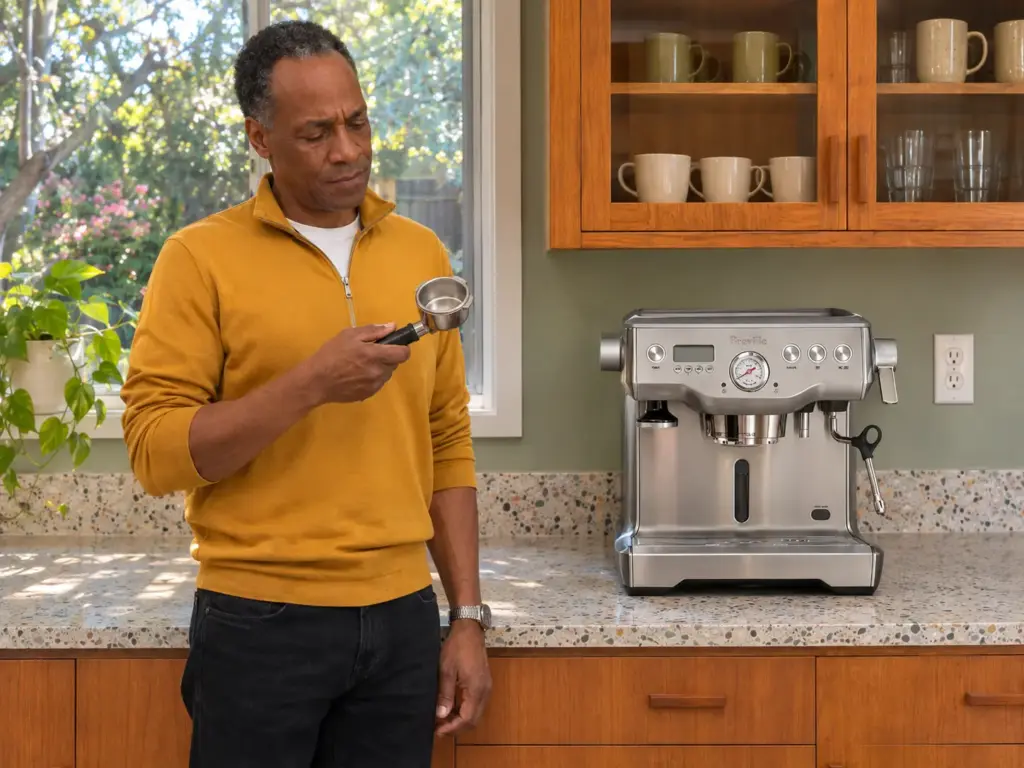
PID temperature control holds the brew temperature at a set number. On a machine without it, the habit is to time the shot off the boiler light, called temperature surfing, and the water temperature drifts a few degrees from shot to shot. That drift reads in the cup as a swing between two directions: sour when the water left the grounds early or too cool, bitter or harsh when it ran too long or too hot.
The same beans and the same grind pulling sour one shot and harsh the next is very often this drift, and the beans are innocent.
A second benefit is the freedom to add preinfusion, a short low-pressure soak of the grounds before full pressure, which some machines at this rung offer and which is only worth having when the water temperature stays put. What water temperature a coffee maker really brews at sets the 195–205 °F (91–96 °C) band that PID is meant to hold the water inside.
On a machine with no PID, wait the same count of seconds after the boiler light every time and pull three shots in a row with an identical dose. If the sour-to-harsh swing narrows, temperature was the cause. If it stays, the grinder is next.
One boiler, a heat exchanger or two boilers
A single boiler cannot brew and steam at the same time: it has to change temperature between the two jobs. A heat exchanger can do both, and it is the layout behind the classic E61 group, but it is also the layout with the long warm-up, roughly 10 to 25 minutes to come fully up to temperature. The Lelit Mara X is the rung where that tradeoff is plainest: the classic look and workflow, a hot group head, no automation at all and a wait that belongs in the buying decision.
A dual boiler brews and steams at once and holds each at its own temperature. The value route to it on a normal circuit is the Breville BES920XL Dual Boiler: 1700 W at 110–120 V, an 84-ounce tank, a 36.5 lb frame and a two-year warranty. It is the machine that makes the Micra’s layout reachable without the Micra’s weight or install, though durability and build quality come out mixed and leaks show up next to the praise.
A 58 mm group and steam that does not wait
The 58 mm group is the commercial group size, and the Dual Boiler, the Oracle Jet, the Silvia Pro X and the Micra all use it. That keeps baskets and tampers easy to find, and it means a machine at this rung can be fitted out with ordinary café-size accessories.
Steam is the other thing the money pays for. A steam wand that has power on tap turns milk into microfoam without a pause, and for milk drinks made one after another a dual boiler does not wait between the shot and the milk. A single boiler makes you stand there while it changes temperature.
Parts a technician can replace
The last thing the extra money buys is repairability: service and repair on a machine built from commercial parts, with spare parts that stay on the shelf. The Rancilio Silvia Pro X is the hobbyist version: dual brass boilers with PID on both, a 2 L reservoir, a 58 mm group and about 44 lb of commercial parts that a technician can service. It is big and heavy, it needs a quality grinder, and it costs more than some of its dual-boiler rivals. A machine that can be opened and repaired is the one still on the counter in year three, and which brands keep parts available is the page that matters before the badge does.
The Grinder Is the Part the Money Skips
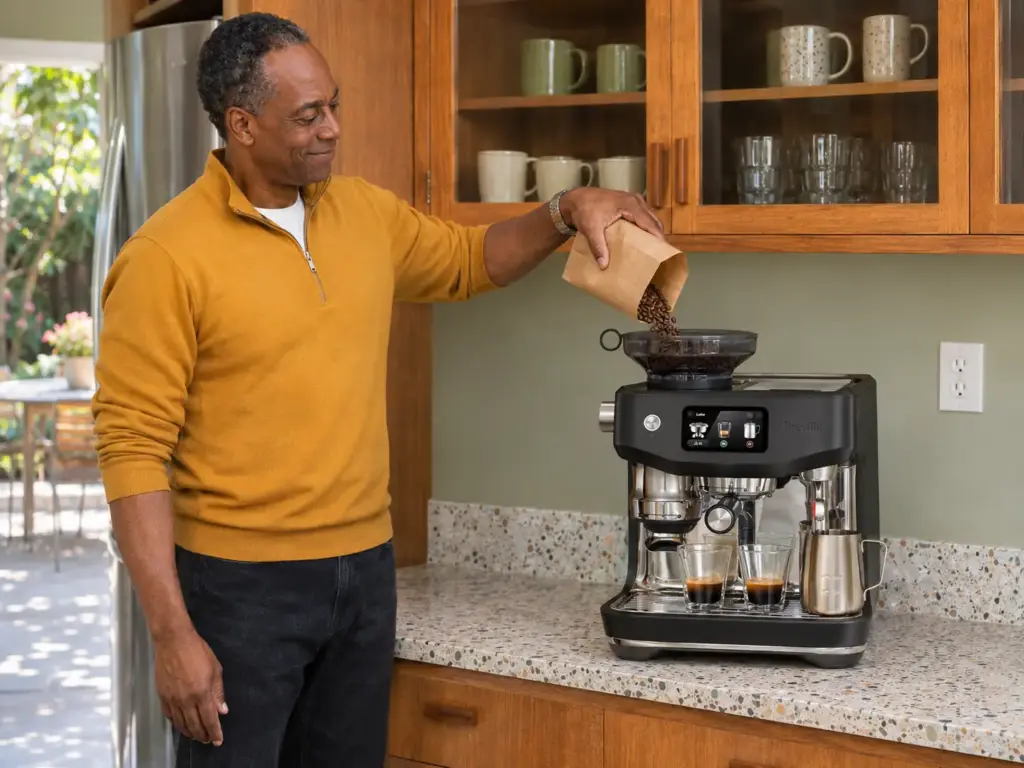
The one component that decides the shot is the one most of these machines do not include, and the machine that does include it is the one that caps the cup. Every espresso machine named so far needs a separate grinder except the Oracle Jet. That changes how the budget should be split.
Why a ceiling machine with a weak grinder tastes worse than a modest one with good burrs
A blade grinder makes boulders and dust at once, so even the best machine pulls a shot that is sour and bitter together: the dust over-extracts while the boulders under-extract. Espresso needs a burr grinder that is fine, even and adjustable, and the cup is the evidence. Buy the machine first and the grinder second and the cup will tell you which half was neglected. The better call is to treat the grinder as the first purchase and the machine as the second, and what a pricier grinder changes in the cup shows where that money starts to show up in the shot.
The one box that grinds, doses, tamps and steams
The Breville Oracle Jet is the one pick that carries its own grinder: Baratza steel burrs with 45 grind settings, a 58 mm portafilter, a ThermoJet group head adjustable in 1-degree steps, a 2.2 L reservoir and a 14.5 × 15 × 16.7 in footprint at 27.8 lb. It grinds, doses, tamps and steams in one box. How built-in grinders compare, blade against burr explains why that convenience is also the ceiling.
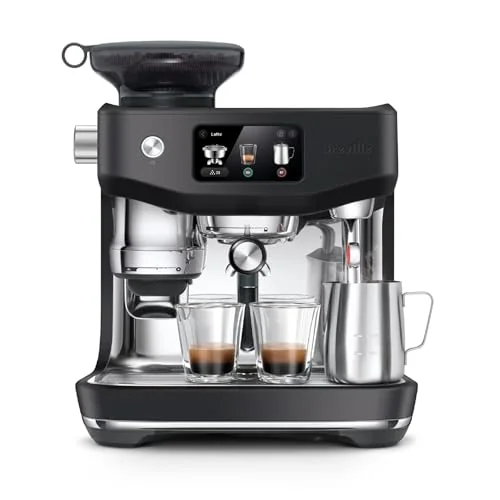
Those two flaws interact. A unit that fails takes its grinder with it, and a grinder that cannot be replaced means the cup never gets better than the burrs it shipped with. Pairing a Dual Boiler with a separate espresso grinder buys the same cup in parts, and it lets either half be upgraded or repaired alone.
A grinder keeps grounds inside, so the first dose after any change still comes out at the old setting. Discard that dose, grind the next, and judge the new setting on the second shot, not the first.
Where the returns flatten, said without a number
A grinder’s returns flatten at a point above which the extra money buys workflow more than a different cup: quieter operation, a better dosing mechanism, a finer step between settings. Below that point every step up in grinder is audible in the shot.
Fresh whole bean with a roast date on the bag matters as much as the box it goes into, because a stale bag tastes flat on every machine on this page. The free fix comes before any rung of this ladder: check the date on the bag, check the grind setting and check the water. A scale that weighs the dose and the yield in grams changes more cups than a new machine.
What the Top Rungs Ask of Your Kitchen
A listing says what a machine does; the house says whether it fits, and at the very top the house starts saying no. The rungs below run from the one that still plugs into a normal outlet to the one that wants a drain.
The rung that still plugs into a normal outlet
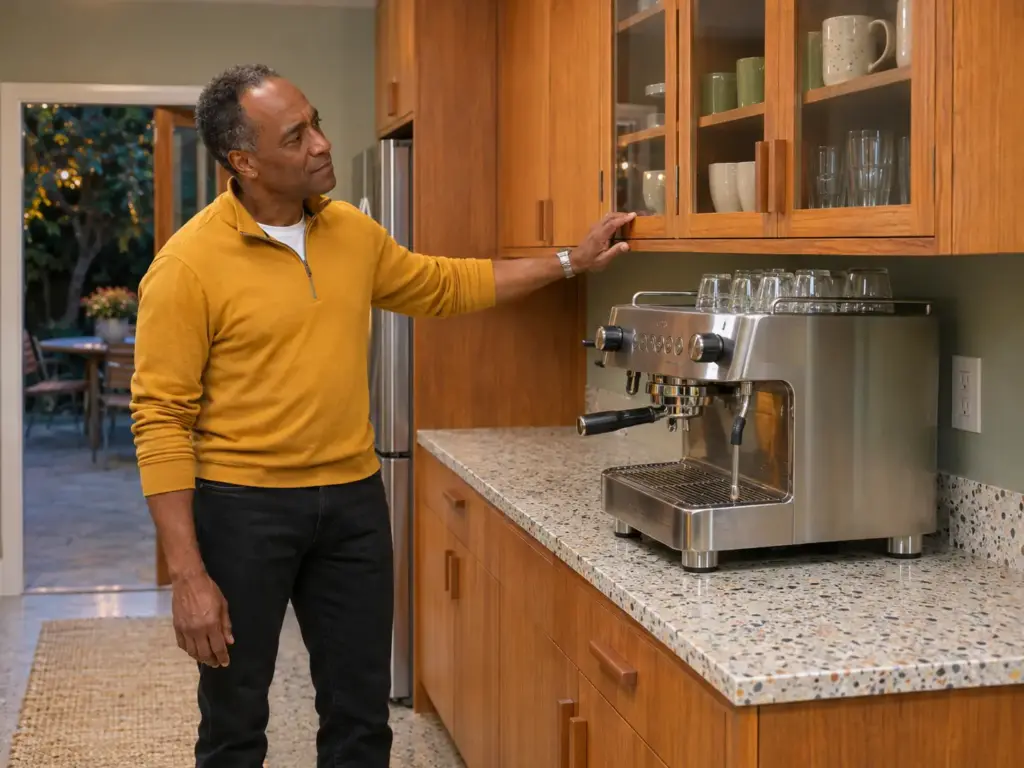
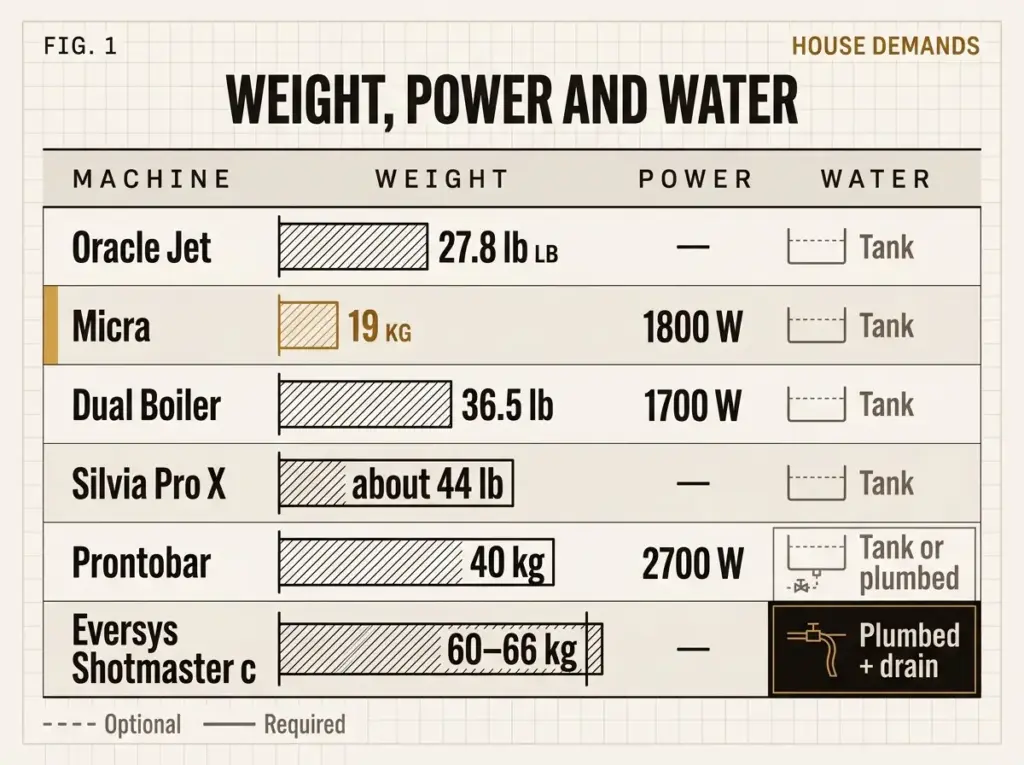
The Micra is 1800 W at 120 V, 19 kg and 33.8 cm (about 13.3 in) tall, so it goes on an ordinary US outlet and a normal counter, with no 220 volts line and no plumber. The Dual Boiler draws 1700 W on the same kind of circuit and weighs 36.5 lb, and the Oracle Jet is 14.5 × 15 × 16.7 in. Counter space is the first limit, so measure the height under the upper cabinet before anything else, and check whether the reservoir fills from the top: a deep machine that needs front or side access to refill is a bad fit for a counter with a cabinet over it.
The commercial class, and what it asks of the room
Commercial machines appear here as a class, with no recommendation attached. The Nuova Simonelli Prontobar touch draws 2700 W, weighs 40 kg and measures 33 × 52 × 60 cm; it comes either with a 5-liter tank or with a direct water connection with inlet and outlet, so plumbing is an option on it, though it still takes 40 kg of counter and a power draw well above any home machine. The Eversys Shotmaster c goes further: two 1.5 L coffee boilers, two 64 mm burrs, two 1.5 kg hoppers and 60 to 66 kg, and the maker’s water sheet asks for a plumbed inlet at 2.5–4 bar plus a drain hose. That is a 130-plus pound install with a drain hose attached.
The 3 seconds against the 25 minutes
The warm-up time is the daily difference: a super-automatic is ready in about 3 seconds; E61 and dual-boiler machines take roughly 10 to 25 minutes to come fully up to temperature. One-button machines that grind and brew for you trade that wait for a grinder you cannot upgrade, and what a super-automatic asks for after two months covers the hardness setting, the descale prompt and the filter cartridge that follow. The arithmetic of the wait is easy to run: 25 minutes a day is about 150 hours a year spent waiting for metal to heat.
The electricity is smaller than the time. A 1700 W machine running 25 minutes draws under 0.75 kWh at the very most, and nearly all of that goes into heating cold metal at start-up. Once the machine is hot, the element cycles for seconds every few minutes to hold temperature, so the cold start is the expensive part of the day and leaving the machine off between sessions is what saves energy.
The 6 a.m. shot on a machine that needs half an hour looks like this: switched on at 5:30, the group head still cool to the hand at twenty minutes and hot at thirty.
A smart plug on a timer, set an hour before you wake, makes a long warm-up cost nothing. Leave the portafilter locked into the group head while it heats so the metal is warm for the first shot.
What Year Two Asks of the Machine
The first week flatters every machine; the second year is where the expensive layout starts costing in ways the listing never mentions. Scale, service and a built-in grinder that cannot be replaced are what separate a machine still working in year two from one that is not.
Scale is what ends an expensive machine
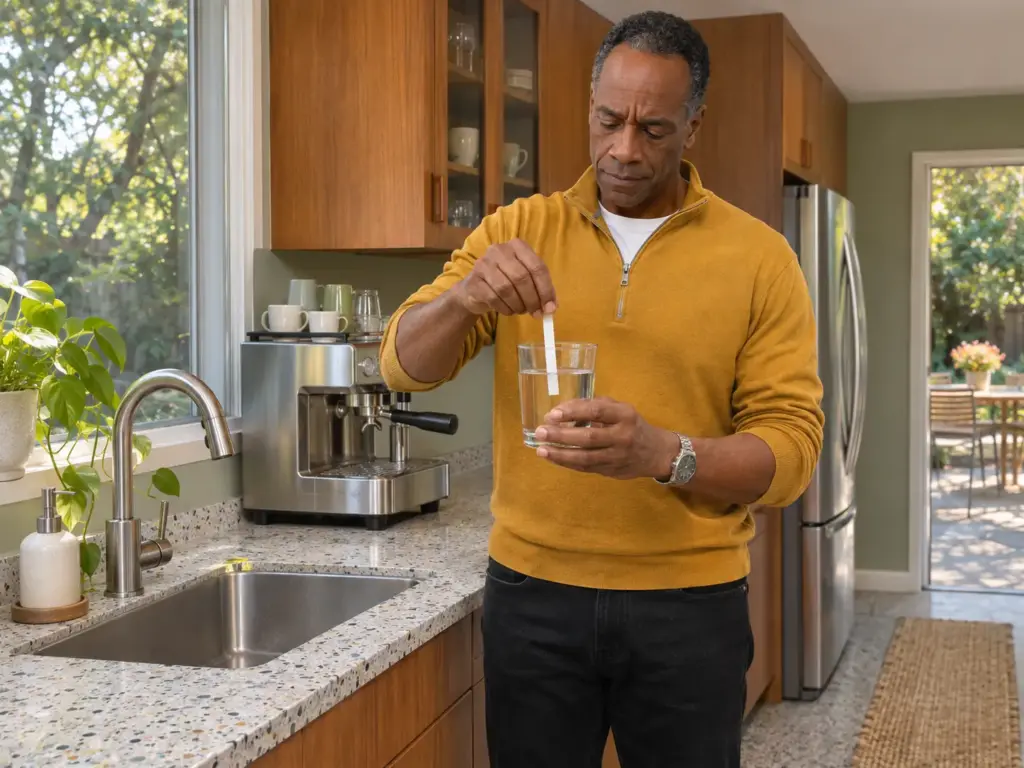
Scale is the mineral crust that narrows the water path and dulls the heat. A flake that breaks loose can block the water path and force a strip-down to individual parts, and in hard water the limescale arrives faster; the dual-boiler layout is the hardest to descale at home because rinsing the solution out of two boilers is hard, so the job is often left to a technician. The small sign that scale has arrived, before any warning light, is a shot that runs slower and cooler on the same grind, with a sputter at the start.
Test the water with hardness strips made for coffee machines, not pool strips, and treat bottled water as unknown until it has been tested. A filter or an inline scale reducer is the cheapest insurance against all of it, and what each water filter takes out tells you which one fits your water.
Run the hardness strip on the exact water that goes into the tank, whether tap or bottled, before the first brew and again after any change of source. A machine bought in a hard-water town with an unknown tank fill is the one that starts sputtering in the first season.
Service, warranty and the parts you will need
Service and repair differ more than the price of the box suggests, and so does the warranty: the Dual Boiler carries two years and the Moccamaster five, and service on the Breville goes through Breville rather than a local technician. Commercial-grade parts can be serviced by a technician, which is part of why the commercial rung can outlast the appliance one. Backflushing the group through the three-way valve is a maintenance step too, and the manual is the authority on it, so follow the manual and skip the shortcut from somebody’s counter.
What does not get better with time
Three things do not improve with age. The built-in grinder in a one-box machine cannot be replaced, a stale bag stays stale, and the learning curve belongs to you: dialing in means moving the grind and the dose until the shot runs in the target time, and no machine does that for you. How long a grinder lasts and which parts wear is the year-three test for the part that is hardest to swap.
Which Rung Fits the Way You Actually Drink Coffee
Three questions sort the whole ladder: how many milk drinks in a row, how much you want to learn, and how much counter and time you can give it.
Milk drinks one after another, with no learning curve
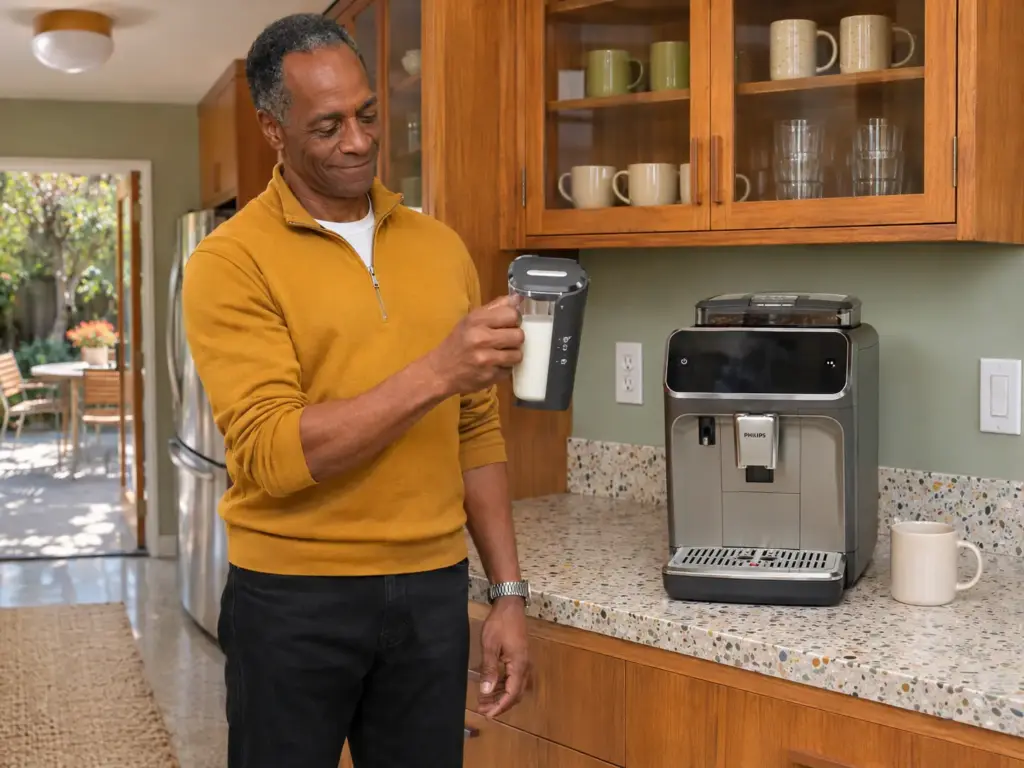
The super-automatic rung does this: one button for a milk drink, a ceramic grinder inside and no separate grinder to buy. The Philips 5500 LatteGo (15 bar, 20 presets, 4 profiles, the LatteGo milk system, an AquaClean filter, ready in about 3 seconds) is the example, and you can buy it from Amazon. Some units would not function at all, and the value verdict splits between those who say it earns its keep and those who call it overpriced. The milk jug needs a rinse at the end of each day, and that habit is what keeps the second year as good as the first.
Espresso alone, and you want to learn it
A dual boiler plus a separate espresso grinder, bought as parts, is the learning route. The cup depends on the grinder’s step size and a dated bag, and drip, pod and espresso counters compared at month two shows which of those setups still feels like a pleasure when the novelty is gone. If the plan is to learn espresso, settle the grinder first and the machine second.
When the cheap rung does the same job
The cheap rung does the same job when the question is a pot of coffee for the house: the certified batch brewer, or a drip coffee maker that already hits the band. The expensive pick is not worth it for a mug a day of filter coffee. Ownership cost is the sum of the time arithmetic above and of what each rung leaves out (a grinder to add, a water filter, a service visit), not of a sticker figure, and prices move. Whether an expensive coffee maker is worth it at all is the question this page does not answer, and how to split a small budget across the whole setup covers the spending-less end.
Settle the Bag and the Grinder Before the Machine
The top of the home market is an espresso machine, and the filter side tops out far lower. The money buys temperature control, a boiler layout, a 58 mm group, steam and parts that can be replaced; it never buys the grinder, the beans or the skill. At the very top, the kitchen is asked for an outlet, counter, height and, at the commercial end, plumbing and a drain. Year two belongs to scale and service.
Over a season of hard-water use, watch for the shot that runs a little slower and cooler on the same grind: scale arriving, and the cue for the first descale of a dual boiler. The first move for tomorrow’s cup costs nothing: read the roast date on the bag, move the grind setting one step, and taste again. If the money is going to a machine after that, settle the grinder first, and which espresso grinder to pair with it is the place to start.
Frequently Asked Questions
01Do expensive coffee makers make better coffee?
Only up to a point: the money buys steadier temperature, steam and repairable parts, so the cup improves until the grinder, the beans and the water become the limit.
02Why is La Marzocco so expensive?
The maker’s own sheet for the Linea Micra lists the parts: dual boilers (0.25 L coffee, 1.6 L steam), PID control, a 58 mm group and 1800 W at 120 V in a 19 kg casing.
03What’s the best coffee maker for home use?
It depends on mugs per day and milk drinks. A certified filter machine suits a pot for the house, a super-automatic suits one-button milk drinks, and a dual boiler suits learning espresso.
04Do you need a separate grinder with an expensive espresso machine?
Yes, for every machine named here except the Oracle Jet, which carries Baratza steel burrs with 45 settings. The grinder is the part that decides the shot.
05Can a commercial espresso machine go in a home kitchen?
Some can, so check the maker’s sheet. The Eversys class asks for a plumbed inlet at 2.5–4 bar and a drain, the Prontobar comes with a 5-liter tank or a mains connection, and weight runs 40 to 66 kg.



How did your cup turn out?
No comments yet. Tell us what you changed — and whether the needle moved.